Department of Infection, Immunity and Cardiovascular Disease, University of Sheffield, Sheffield, United Kingdom.
Department of Infection, Immunity and Cardiovascular Disease, University of Sheffield, Sheffield, United Kingdom
J Virol. 2019 Jan 4;93(2). doi: 10.1128/JVI.01659-18. Print 2019 Jan 15.
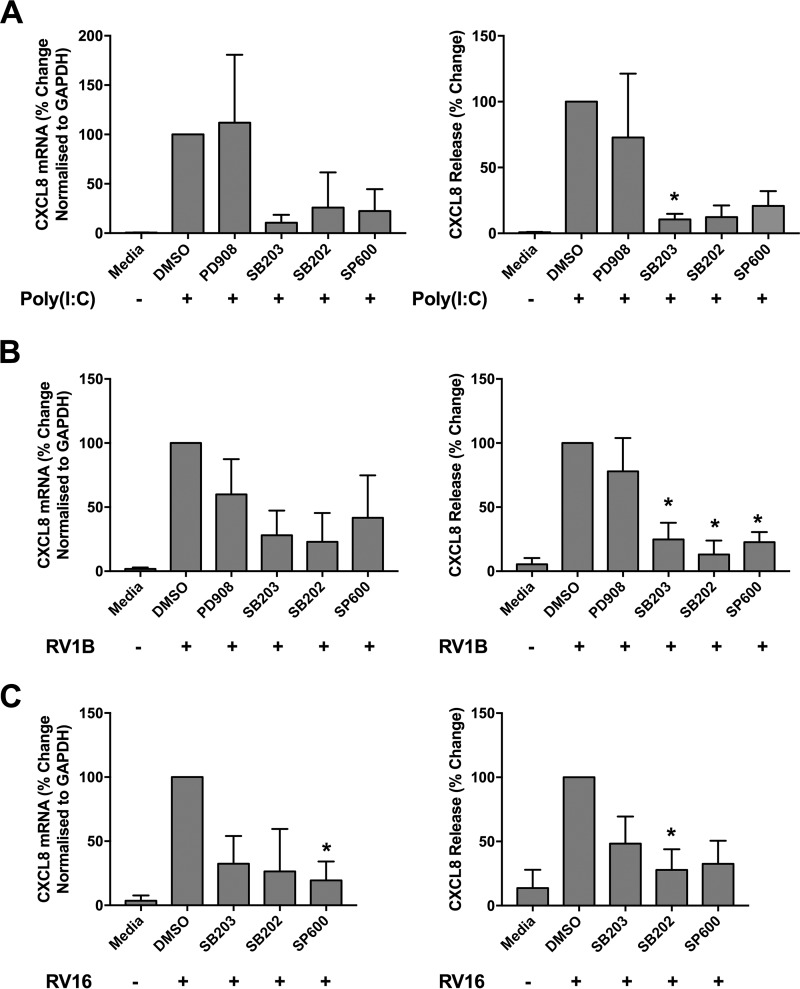
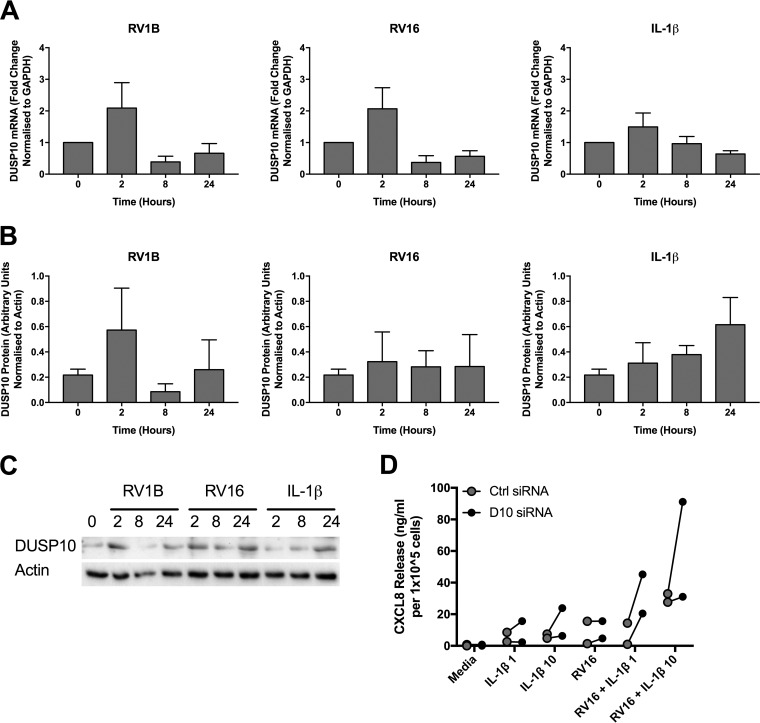
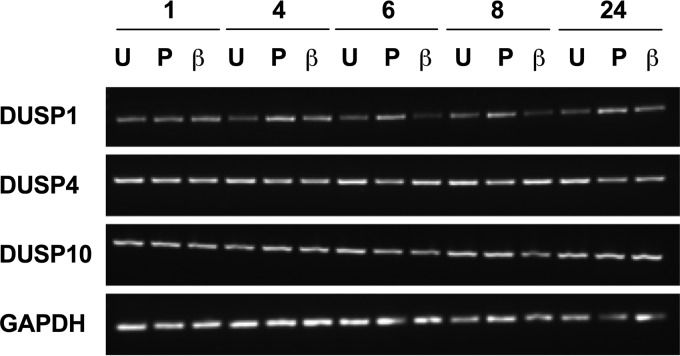
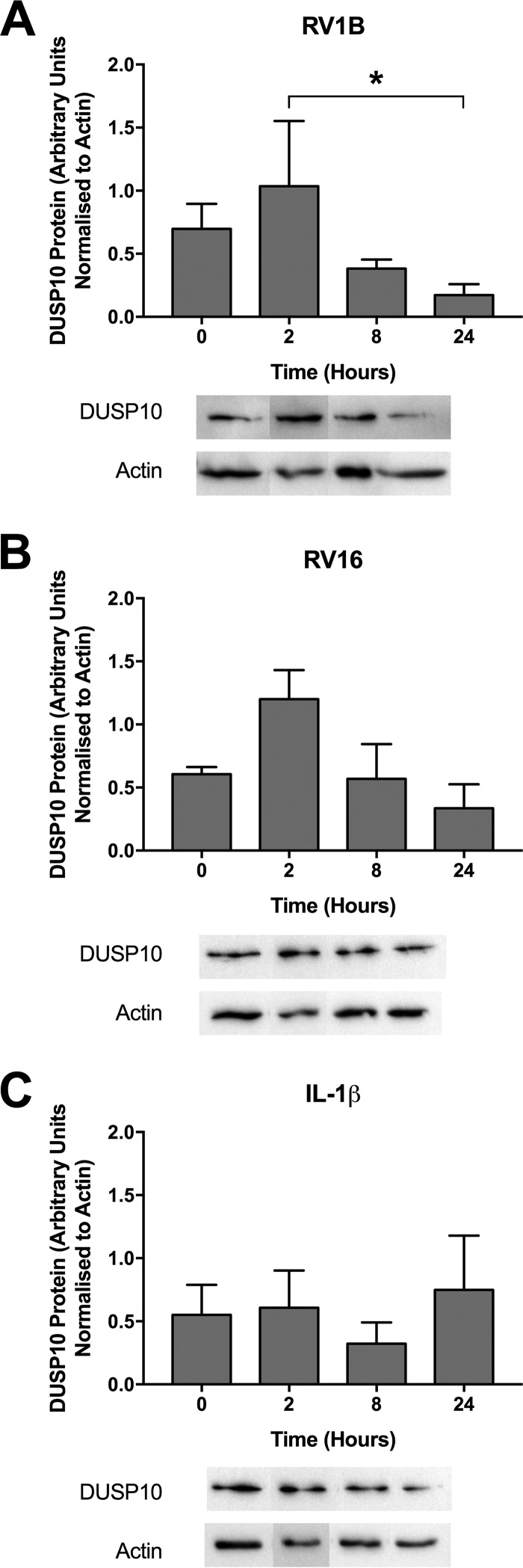
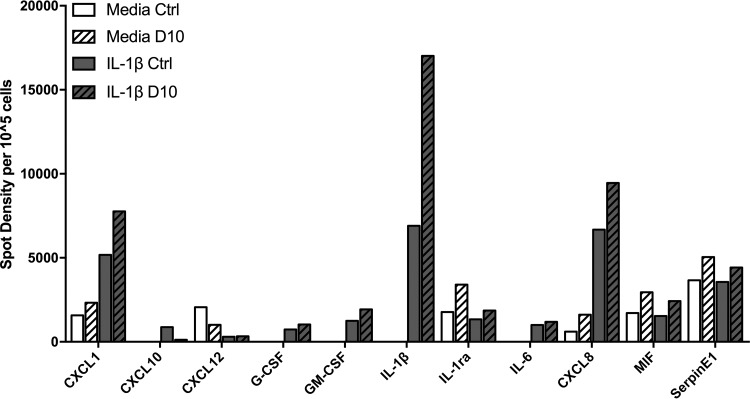
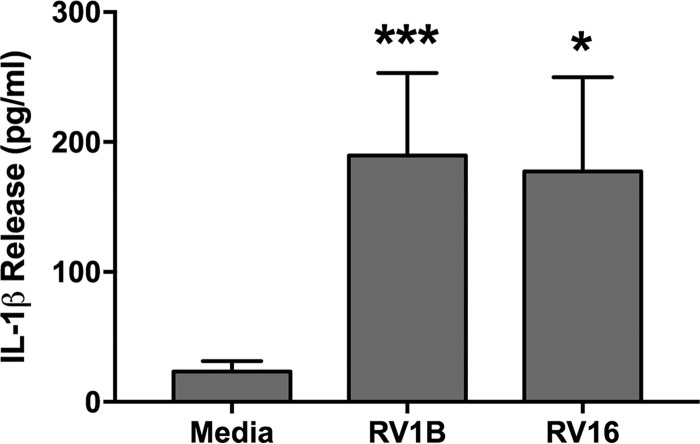
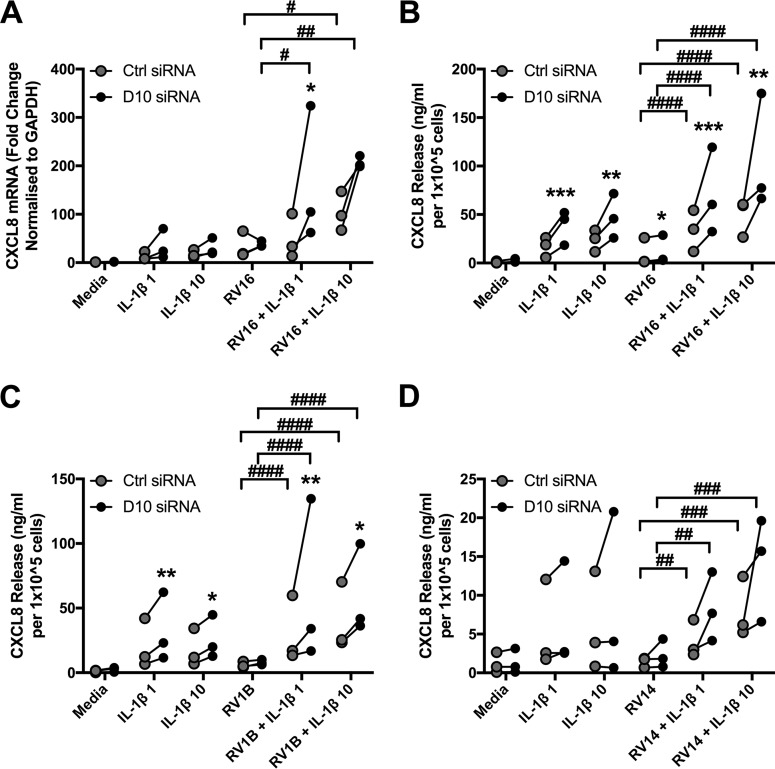
Rhinoviral infection is a common trigger of the excessive inflammation observed during exacerbations of asthma and chronic obstructive pulmonary disease. Rhinovirus (RV) recognition by pattern recognition receptors activates the mitogen-activated protein kinase (MAPK) pathways, which are common inducers of inflammatory gene production. A family of dual-specificity phosphatases (DUSPs) can regulate MAPK function, but their roles in rhinoviral infection are not known. We hypothesized that DUSPs would negatively regulate the inflammatory response to RV infection. Our results revealed that the p38 and c-Jun N-terminal kinase (JNK) MAPKs play key roles in the inflammatory response of epithelial cells to RV infection. Three DUSPs previously shown to have roles in innate immunity (DUSPs 1, 4, and 10) were expressed in primary bronchial epithelial cells, and one of them, DUSP10, was downregulated by RV infection. Small interfering RNA-mediated knockdown of DUSP10 identified a role for the protein in negatively regulating inflammatory cytokine production in response to interleukin-1β (IL-1β), alone and in combination with RV, without any effect on RV replication. This study identifies DUSP10 as an important regulator of airway inflammation in respiratory viral infection. Rhinoviruses are one of the causes of the common cold. In patients with asthma or chronic obstructive pulmonary disease, viral infections, including those with rhinovirus, are the commonest cause of exacerbations. Novel therapeutics to limit viral inflammation are clearly required. The work presented here identifies DUSP10 as an important protein involved in limiting the inflammatory response in the airway without affecting immune control of the virus.
鼻病毒感染是哮喘和慢性阻塞性肺疾病恶化期间观察到的过度炎症的常见诱因。模式识别受体识别鼻病毒(RV)会激活丝裂原活化蛋白激酶(MAPK)途径,这是炎症基因产生的常见诱导剂。双特异性磷酸酶(DUSPs)家族可以调节 MAPK 功能,但它们在鼻病毒感染中的作用尚不清楚。我们假设 DUSPs 将负调控对 RV 感染的炎症反应。我们的结果表明,p38 和 c-Jun N 末端激酶(JNK)MAPK 在呼吸道上皮细胞对 RV 感染的炎症反应中起关键作用。先前在先天免疫中具有作用的三种 DUSPs(DUSPs 1、4 和 10)在原代支气管上皮细胞中表达,其中一种 DUSP10 被 RV 感染下调。DUSP10 的小干扰 RNA 介导的敲低鉴定了该蛋白在负调控细胞因子产生中的作用,该蛋白可单独和与 RV 一起作用,而对 RV 复制没有任何影响。这项研究确定 DUSP10 是呼吸道病毒感染中气道炎症的重要调节剂。鼻病毒是普通感冒的原因之一。在哮喘或慢性阻塞性肺疾病患者中,病毒感染,包括鼻病毒感染,是恶化的最常见原因。显然需要新型治疗方法来限制病毒炎症。这里介绍的工作确定 DUSP10 是一种重要的蛋白,可在不影响病毒免疫控制的情况下限制气道中的炎症反应。