Department of Biological Sciences, Kenneth P. Dietrich School of Arts and Sciences, University of Pittsburgh, Pittsburgh, Pennsylvania, USA.
Department of Biological Sciences, Kenneth P. Dietrich School of Arts and Sciences, University of Pittsburgh, Pittsburgh, Pennsylvania, USA
mSphere. 2018 Oct 17;3(5):e00471-18. doi: 10.1128/mSphere.00471-18.
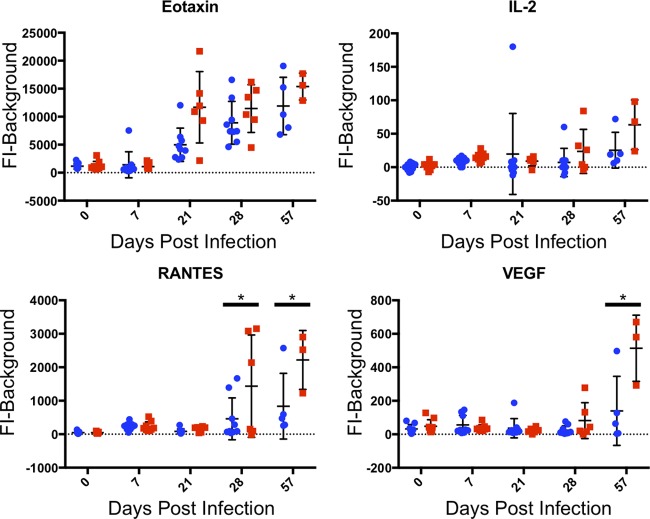
The opportunistic intracellular parasite causes a lifelong chronic infection capable of reactivating in immunocompromised individuals, which can lead to life-threatening complications. Following invasion of the host cell, host mitochondria associate with the parasitophorous vacuole membrane. This phenotype is strain specific and is mediated by expression of a host mitochondrial association-competent (HMA) paralog of the parasite protein mitochondrial association factor 1 (MAF1b). Previous work demonstrated that expression of MAF1b in strains that do not normally associate with host mitochondria increases their fitness during acute infection However, the impact of MAF1b expression during chronic infection is unclear. In this study, we assess the impact of MAF1b expression on cyst formation and cytokine production in mice. Despite generally low numbers of cysts generated by the culture-adapted strains used in this study, we find that parasites expressing MAF1b have higher numbers of cysts in the brains of chronically infected mice and that MAF1b cyst burden significantly increases during the course of chronic infection. Consistent with this, mice infected with MAF1b parasites have higher levels of the serum cytokines RANTES and VEGF (vascular endothelial growth factor) at day 57 postinfection, although this could be due to higher parasite burden at this time point rather than direct manipulation of these cytokines by MAF1b. Overall these data indicate that MAF1b expression may also be important in determining infection outcome during the chronic phase, either by directly altering the cytokine/signaling environment or by increasing proliferation during the acute and/or chronic phase. The parasite currently infects approximately one-third of the world's population and causes life-threatening toxoplasmosis in individuals with undeveloped or weakened immune systems. Current treatments are unable to cure infection, leaving infected individuals with slow-growing tissue cysts for the remainder of their lives. Previous work has shown that expression of the parasite protein mitochondrial association factor 1 (MAF1b) is responsible for the association of parasites with host mitochondria and provides a selective advantage during acute infection. Here we examine the impact of MAF1b expression during chronic infection. We find that mice infected with MAF1b-expressing parasites have higher cyst burden and cytokine levels than their wild-type counterparts. A better understanding of the genes involved in establishing and maintaining chronic infection will aid in discovering effective therapeutics for chronically infected individuals.
机会性病原体 引起终生慢性感染,能够在免疫功能低下的个体中重新激活,从而导致危及生命的并发症。在宿主细胞被入侵后,宿主线粒体与寄生泡膜结合。这种表型是 菌株特异性的,由寄生虫蛋白线粒体相关因子 1(MAF1b)的宿主线粒体关联能力(HMA)的同源物表达介导。以前的工作表明,在通常不与宿主线粒体结合的菌株中表达 MAF1b 会增加其在急性感染期间的适应性。 然而,MAF1b 表达在慢性 感染中的影响尚不清楚。在这项研究中,我们评估了 MAF1b 表达对小鼠囊形成和细胞因子产生的影响。尽管本研究中使用的培养适应株通常产生的囊数量较少,但我们发现表达 MAF1b 的寄生虫在慢性感染小鼠的脑中形成的囊数量更多,并且在慢性感染过程中 MAF1b 囊负担显著增加。与此一致的是,感染 MAF1b 寄生虫的小鼠在感染后第 57 天血清细胞因子 RANTES 和 VEGF(血管内皮生长因子)水平升高,尽管这可能是由于此时寄生虫负担较高,而不是 MAF1b 直接操纵这些细胞因子。总的来说,这些数据表明 MAF1b 表达也可能在决定慢性阶段的感染结果方面很重要,无论是通过直接改变细胞因子/信号通路环境,还是通过在急性和/或慢性阶段增加增殖。寄生虫 目前感染了世界上约三分之一的人口,并在免疫系统未发育或减弱的个体中引起危及生命的弓形体病。目前的治疗方法无法治愈 感染,使受感染的个体在其余生中都带有缓慢生长的组织囊肿。以前的工作表明,寄生虫蛋白线粒体相关因子 1(MAF1b)的表达负责寄生虫与宿主线粒体的关联,并在急性感染期间提供选择性优势。在这里,我们研究了 MAF1b 表达在慢性 感染期间的影响。我们发现,感染表达 MAF1b 的寄生虫的小鼠的囊负荷和细胞因子水平高于其野生型对照。更好地了解参与建立和维持慢性感染的基因将有助于为慢性感染个体发现有效的治疗方法。