Muso, Bamako, Mali, and San Francisco, California, USA.
Malaria Research & Training Center, University of Sciences Techniques and Technologies of Bamako, Mali.
J Glob Health. 2018 Dec;8(2):020418. doi: 10.7189/jogh.08.020418.
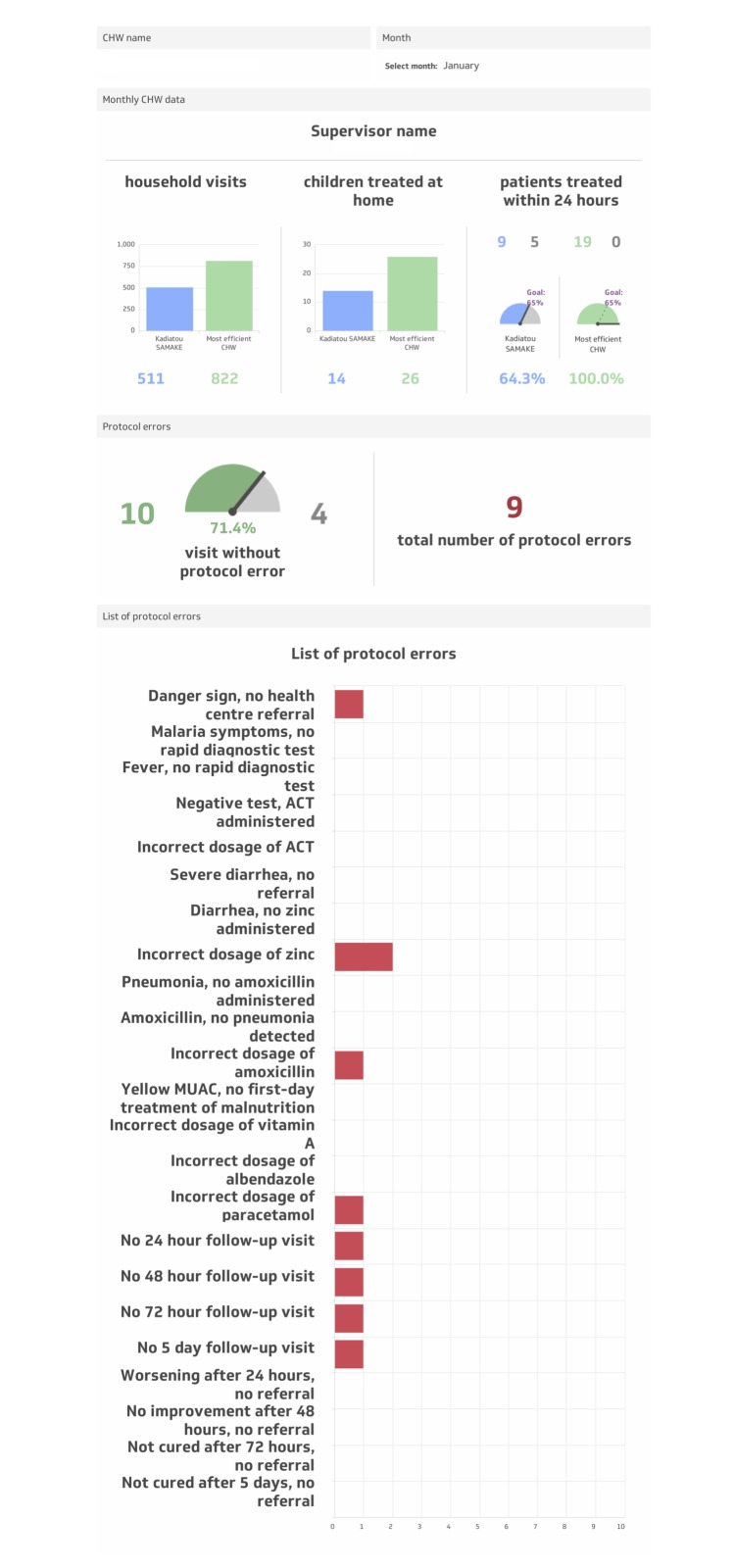
Countries across sub-Saharan Africa are scaling up Community Health Worker (CHW) programmes, yet there remains little high-quality research assessing strategies for CHW supervision and performance improvement. This randomised controlled trial aimed to determine the effect of a personalised performance dashboard used as a supervision tool on the quantity, speed, and quality of CHW care.
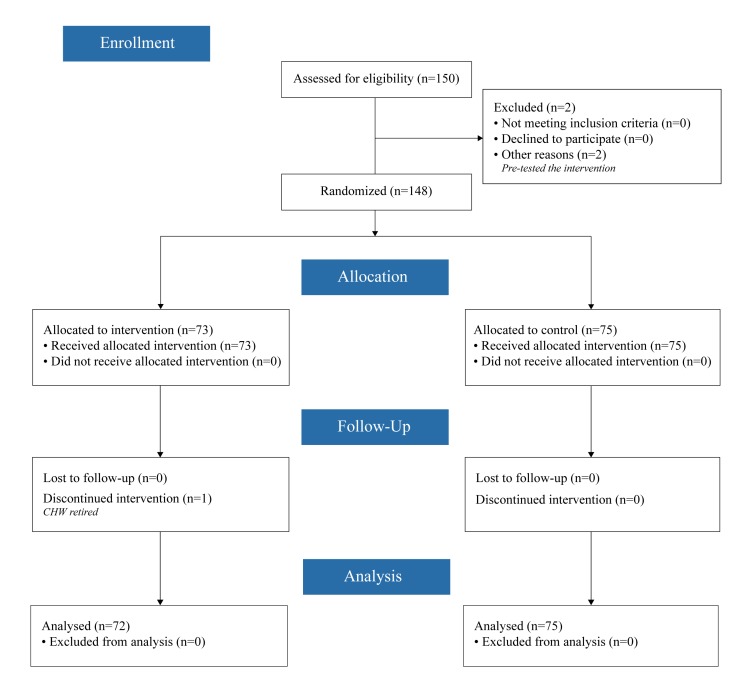
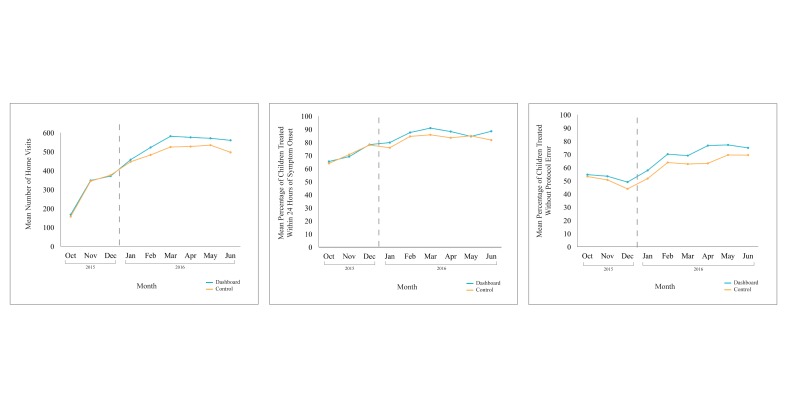
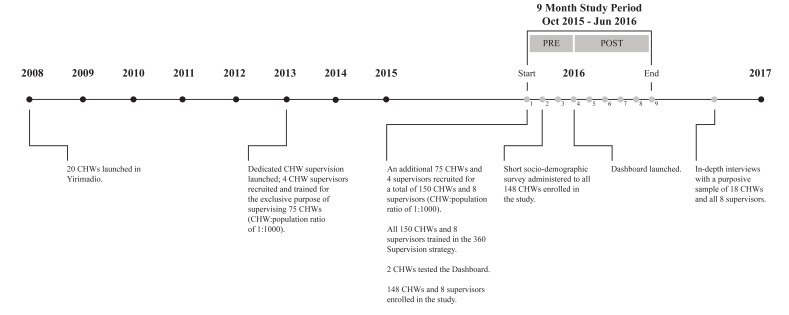
We conducted a randomised controlled trial in a large health catchment area in peri-urban Mali. One hundred forty-eight CHWs conducting proactive case-finding home visits were randomly allocated to receive individual monthly supervision with or without the CHW Performance Dashboard from January to June 2016. Randomisation was stratified by CHW supervisor, level of CHW experience, and CHW baseline performance for monthly quantity of care (number of household visits). With regression analysis, we used a difference-in-difference model to estimate the effect of the intervention on monthly quantity, timeliness (percentage of children under five treated within 24 hours of symptom onset), and quality (percentage of children under five treated without protocol error) of care over a six-month post-intervention period relative to a three-month pre-intervention period.
Use of the Dashboard during monthly supervision significantly increased the mean number of home visits by 39.94 visits per month (95% CI = 3.56-76.3; = 0.031). Estimated effects on secondary outcomes of timeliness and quality were positive but not statistically significant. Across both study arms, CHW quantity, timeliness, and quality of care significantly improved over the study period, during which time all CHWs received dedicated monthly supervision, although effects plateaued over time.
Our findings suggest that dedicated monthly supervision and personalised feedback using performance dashboards can increase CHW productivity. Further operational research is needed to understand how to sustain the performance improvements over time.
ClinicalTrials.gov (NCT03684551).
撒哈拉以南非洲各国正在扩大社区卫生工作者(CHW)计划,但几乎没有高质量的研究评估 CHW 监督和绩效改进策略。这项随机对照试验旨在确定使用个性化绩效仪表板作为监督工具对 CHW 护理数量、速度和质量的影响。
我们在马里城郊的一个大型卫生服务区进行了一项随机对照试验。148 名主动进行家访的 CHW 被随机分配在 2016 年 1 月至 6 月期间接受每月一次的监督,或接受监督加 CHW 绩效仪表板。随机化按 CHW 主管、CHW 经验水平和 CHW 基线每月护理数量(家访次数)进行分层。我们使用回归分析,采用差异中的差异模型,来估计干预对六个月干预后相对于三个月干预前的每月护理数量、及时性(症状出现后 24 小时内治疗的五岁以下儿童比例)和质量(无方案错误治疗的五岁以下儿童比例)的影响。
在每月监督中使用仪表板显著增加了每月家访的平均次数,增加了 39.94 次/月(95%CI=3.56-76.3; = 0.031)。对及时性和质量的次要结果的估计效果为正,但无统计学意义。在研究期间,两个研究组的 CHW 数量、及时性和护理质量都显著提高,在此期间,所有 CHW 都接受了专门的每月监督,尽管随着时间的推移效果趋于平稳。
我们的研究结果表明,专门的每月监督和使用绩效仪表板的个性化反馈可以提高 CHW 的工作效率。需要进一步的运营研究来了解如何随着时间的推移保持绩效的提高。
ClinicalTrials.gov(NCT03684551)。