
是什么让节奏难以演奏?史蒂夫·赖克的《拍手音乐》的调查研究。
What makes rhythms hard to perform? An investigation using Steve Reich's Clapping Music.
机构信息
Music Cognition Lab, Queen Mary University of London, London, United Kingdom.
出版信息
PLoS One. 2018 Oct 18;13(10):e0205847. doi: 10.1371/journal.pone.0205847. eCollection 2018.
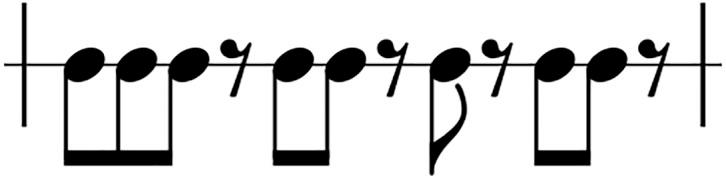
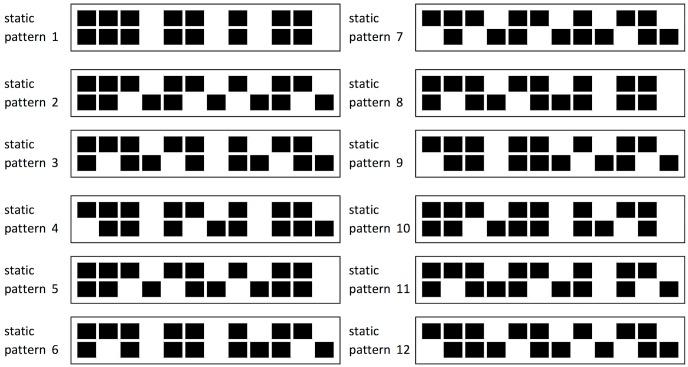
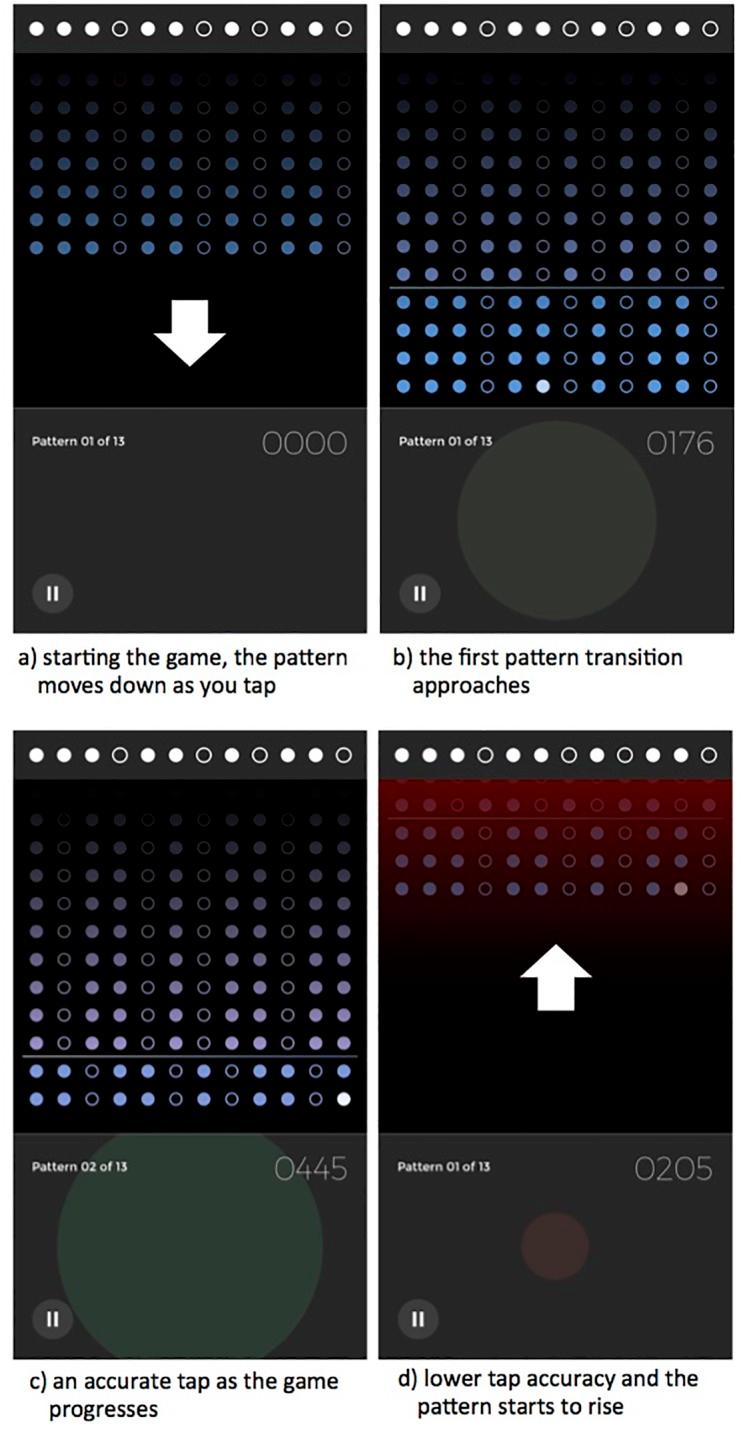
Clapping Music is a minimalist work by Steve Reich based on twelve phased variations of a rhythmic pattern. It has been reimagined as a game-based mobile application, designed with a dual purpose. First, to introduce new audiences to the Minimalist genre through interaction with the piece presented as an engaging game. Second, to use large-scale data collection within the app to address research questions about the factors determining rhythm production performance. The twelve patterns can be differentiated using existing theories of rhythmic complexity. Using performance indicators from the game such as tap accuracy we can determine which patterns players found most challenging and so assess hypotheses from theoretical models with empirical evidence. The app has been downloaded over 140,000 times since the launch in July 2015, and over 46 million rows of gameplay data have been collected, requiring a big data approach to analysis. The results shed light on the rhythmic factors contributing to performance difficulty and show that the effect of making a transition from one pattern to the next is as significant, in terms of pattern difficulty, as the inherent complexity of the pattern itself. Challenges that arose in applying this novel approach are discussed.
拍手音乐是史蒂夫·赖希(Steve Reich)的极简主义作品,基于节奏模式的 12 个分阶段变化。它已被重新构想为基于游戏的移动应用程序,具有双重目的。首先,通过将呈现为引人入胜的游戏的作品与互动,将新观众引入极简主义流派。其次,利用应用程序内的大规模数据收集来解决关于决定节奏产生性能的因素的研究问题。可以使用现有的节奏复杂度理论来区分这 12 种模式。使用游戏中的表现指标,例如点击精度,我们可以确定玩家认为哪些模式最具挑战性,从而用经验证据来评估理论模型的假设。自 2015 年 7 月推出以来,该应用程序已被下载超过 14 万次,已收集了超过 4600 万行游戏数据,这需要大数据分析方法。结果揭示了导致演奏难度的节奏因素,并表明从一种模式过渡到另一种模式的效果与模式本身的固有复杂性一样,对模式难度有重大影响。讨论了在应用这种新颖方法时遇到的挑战。




 Zotero 插件