Department of Biomedical Engineering, University of Houston, 3517 Cullen Blvd, Houston, TX, USA.
Mischer Neuroscience Associates and the Vivian L. Smith Department of Neurosurgery University of Texas Health Science Center in Houston, UTHealth and Memorial Hermann, 6400 Fannin St. Suite 2800, Houston, TX, 77030, USA.
Sci Rep. 2018 Oct 18;8(1):15423. doi: 10.1038/s41598-018-33641-2.
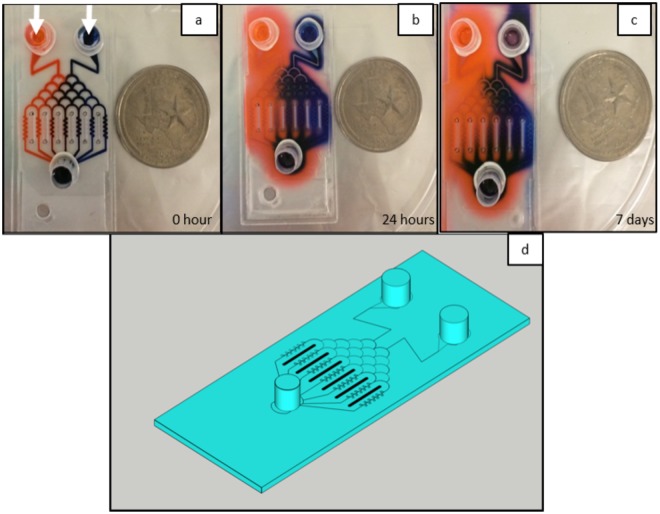
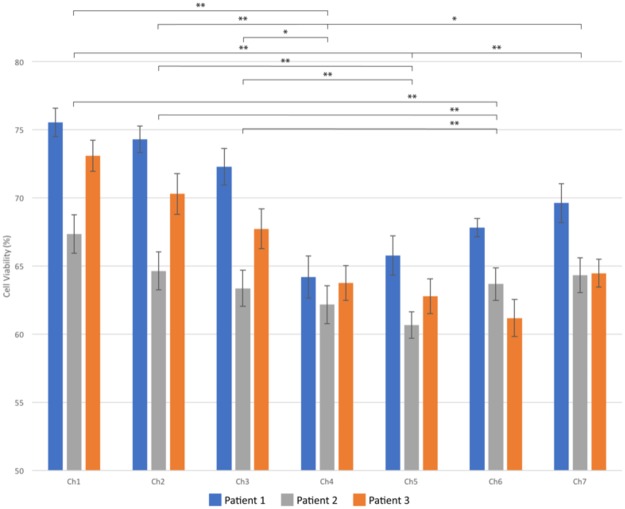
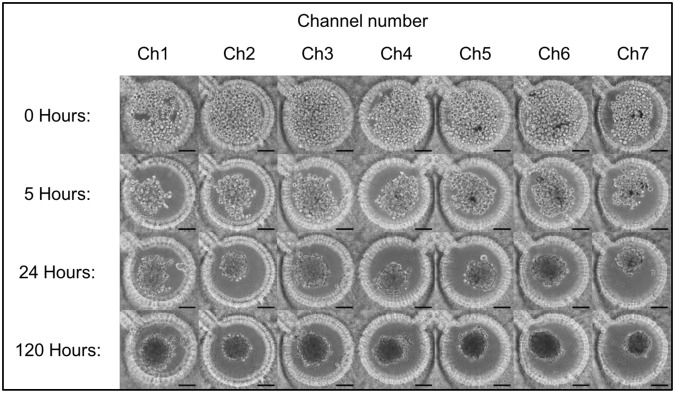
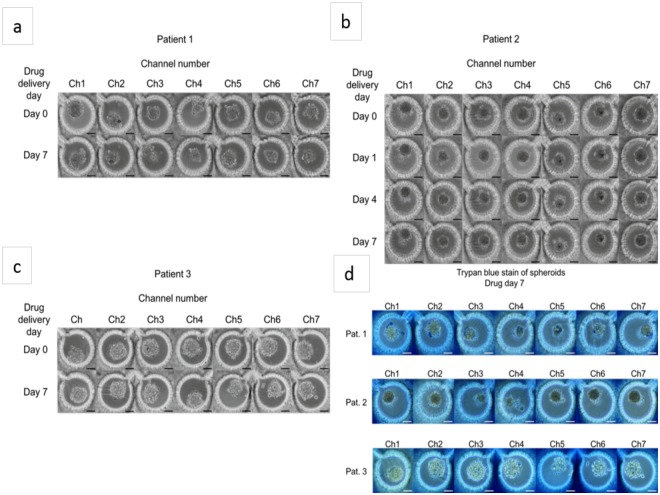
Glioblastoma multiforme (GBM), an extremely invasive and high-grade (grade IV) glioma, is the most common and aggressive form of brain cancer. It has a poor prognosis, with a median overall survival of only 11 months in the general GBM population and 14.6 to 21 months in clinical trial participants with standard GBM therapies, including maximum safe craniotomy, adjuvant radiation, and chemotherapies. Therefore, new approaches for developing effective treatments, such as a tool for assessing tumor cell drug response before drug treatments are administered, are urgently needed to improve patient survival. To address this issue, we developed an improved brain cancer chip with a diffusion prevention mechanism that blocks drugs crossing from one channel to another. In the current study, we demonstrate that the chip has the ability to culture 3D spheroids from patient tumor specimen-derived GBM cells obtained from three GBM patients. Two clinical drugs used to treat GBM, temozolomide (TMZ) and bevacizumab (Avastin, BEV), were applied and a range of relative concentrations was generated by the microfluidic channels in the brain cancer chip. The results showed that TMZ works more effectively when used in combination with BEV compared to TMZ alone. We believe that this low-cost brain cancer chip could be further developed to generate optimal combination of chemotherapy drugs tailored to individual GBM patients.
多形性胶质母细胞瘤(GBM)是一种极具侵袭性和高级别的(IV 级)神经胶质瘤,是最常见和侵袭性最强的脑癌形式。它的预后较差,在一般 GBM 人群中的中位总生存期仅为 11 个月,在接受标准 GBM 治疗(包括最大安全开颅术、辅助放疗和化疗)的临床试验参与者中为 14.6 至 21 个月。因此,迫切需要新的方法来开发有效的治疗方法,例如在药物治疗前评估肿瘤细胞药物反应的工具,以提高患者的生存率。为了解决这个问题,我们开发了一种具有扩散预防机制的改良脑癌芯片,该机制可以阻止药物从一个通道转移到另一个通道。在本研究中,我们证明了该芯片能够培养来自 3 名 GBM 患者的患者肿瘤标本衍生的 GBM 细胞的 3D 球体。两种用于治疗 GBM 的临床药物替莫唑胺(TMZ)和贝伐单抗(Avastin,BEV)被应用,并且通过脑癌芯片中的微流道产生了一系列相对浓度。结果表明,TMZ 与 BEV 联合使用比单独使用 TMZ 更有效。我们相信,这种低成本的脑癌芯片可以进一步开发,以生成针对个体 GBM 患者的最佳化疗药物组合。