Instituto Cajal, Consejo Superior de Investigaciones Científicas (CSIC), Madrid, Spain.
CIBERNED, Instituto de Salud Carlos III, Madrid, Spain.
Sci Rep. 2018 Oct 18;8(1):15381. doi: 10.1038/s41598-018-33713-3.
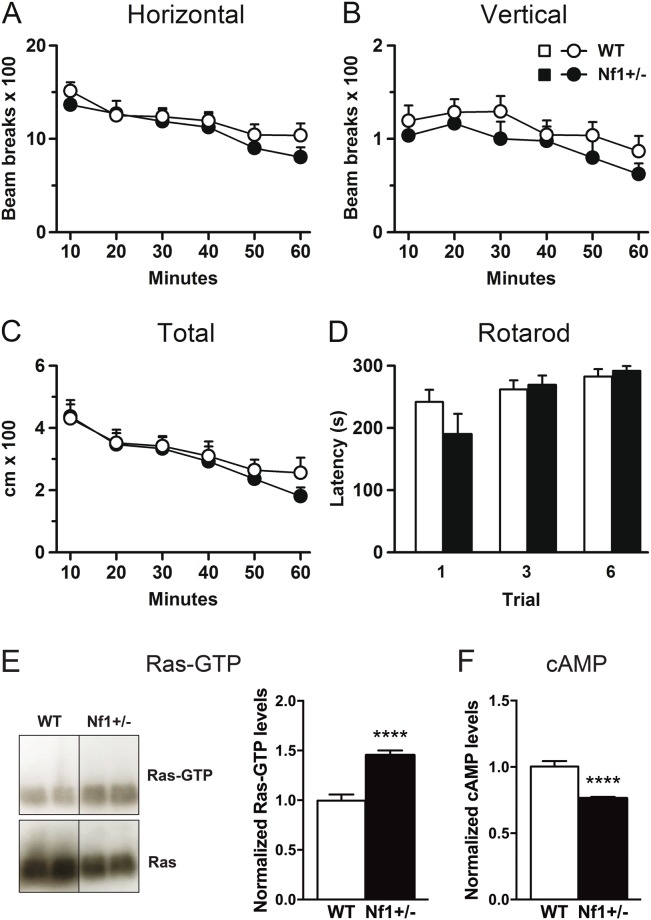
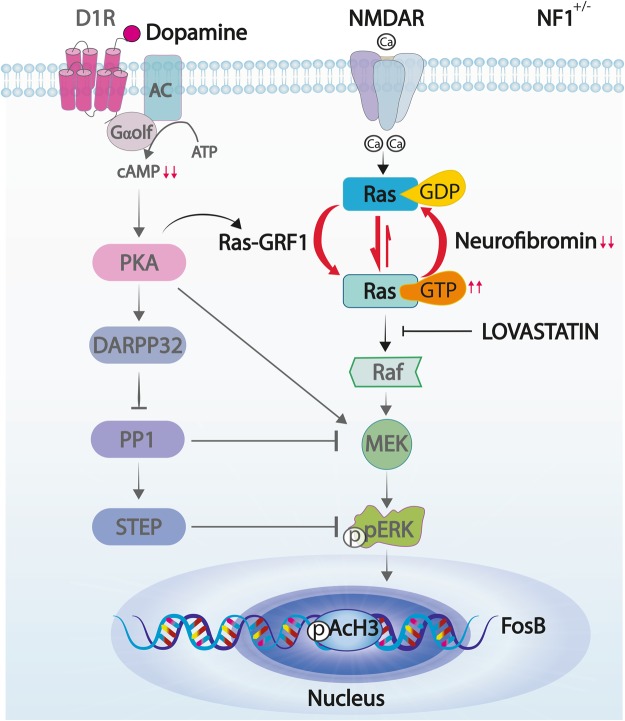
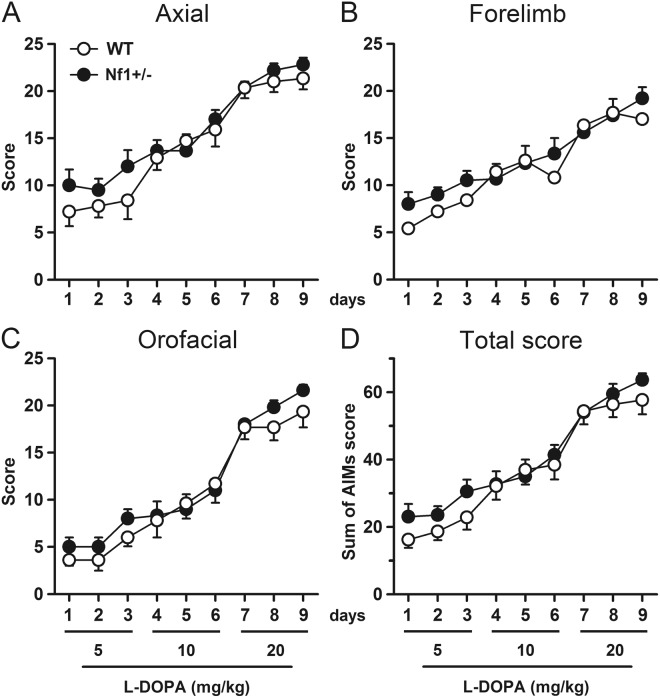
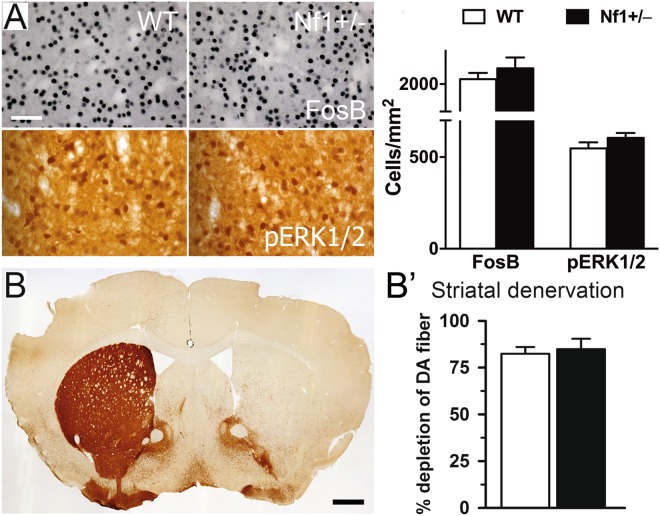
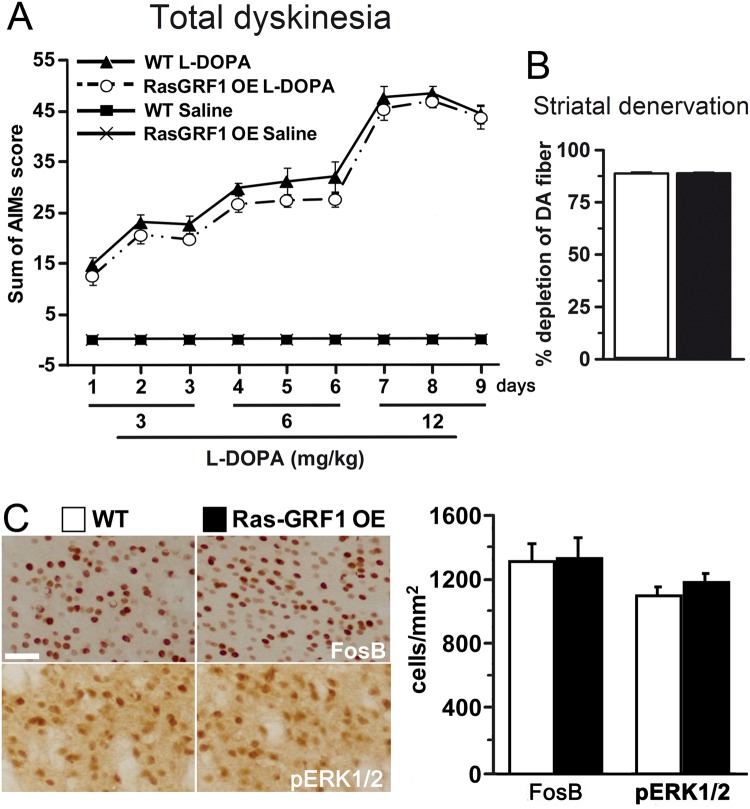
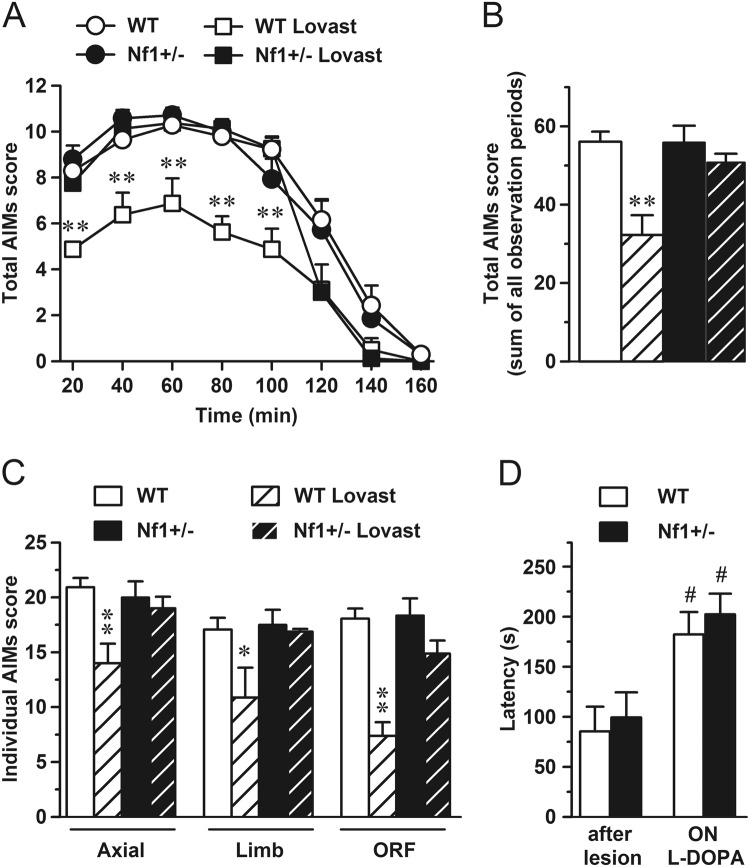
Increasing evidence supports a close relationship between Ras-ERK1/2 activation in the striatum and L-DOPA-induced dyskinesia (LID). ERK1/2 activation by L-DOPA takes place through the crosstalk between D1R/AC/PKA/DARPP-32 pathway and NMDA/Ras pathway. Compelling genetic and pharmacological evidence indicates that Ras-ERK1/2 inhibition prevents LID onset and may even revert already established dyskinetic symptoms. However, it is currently unclear whether exacerbation of Ras-ERK1/2 activity in the striatum may further aggravate dyskinesia in experimental animal models. Here we took advantage of two genetic models in which Ras-ERK1/2 signaling is hyperactivated, the Nf1 mice, in which the Ras inhibitor neurofibromin is reduced, and the Ras-GRF1 overexpressing (Ras-GRF1 OE) transgenic mice in which a specific neuronal activator of Ras is enhanced. Nf1 and Ras-GRF1 OE mice were unilaterally lesioned with 6-OHDA and treated with an escalating L-DOPA dosing regimen. In addition, a subset of Nf1 hemi-parkinsonian animals was also co-treated with the Ras inhibitor lovastatin. Our results revealed that Nf1 and Ras-GRF1 OE mice displayed similar dyskinetic symptoms to their wild-type counterparts. This observation was confirmed by the lack of differences between mutant and wild-type mice in striatal molecular changes associated to LID (i.e., FosB, and pERK1/2 expression). Interestingly, attenuation of Ras activity with lovastatin does not weaken dyskinetic symptoms in Nf1 mice. Altogether, these data suggest that ERK1/2-signaling activation in dyskinetic animals is maximal and does not require further genetic enhancement in the upstream Ras pathway. However, our data also demonstrate that such a genetic enhancement may reduce the efficacy of anti-dyskinetic drugs like lovastatin.
越来越多的证据表明 Ras-ERK1/2 在纹状体中的激活与 L-DOPA 诱导的运动障碍(LID)密切相关。L-DOPA 通过 D1R/AC/PKA/DARPP-32 途径和 NMDA/Ras 途径之间的串扰激活 ERK1/2。强有力的遗传和药理学证据表明,Ras-ERK1/2 抑制可预防 LID 的发生,甚至可能逆转已经确立的运动障碍症状。然而,目前尚不清楚纹状体中 Ras-ERK1/2 活性的加剧是否会进一步加重实验动物模型中的运动障碍。在这里,我们利用两种 Ras-ERK1/2 信号过度激活的遗传模型,即 Ras 抑制剂神经纤维瘤蛋白减少的 Nf1 小鼠和 Ras-GRF1 过表达(Ras-GRF1 OE)转基因小鼠,其中 Ras 的一种特定神经元激活剂被增强。Nf1 和 Ras-GRF1 OE 小鼠用 6-OHDA 单侧损伤,并接受递增剂量的 L-DOPA 治疗。此外,一部分 Nf1 半帕金森病动物还接受 Ras 抑制剂 lovastatin 的联合治疗。我们的结果表明,Nf1 和 Ras-GRF1 OE 小鼠表现出与野生型动物相似的运动障碍症状。这一观察结果得到了突变体和野生型小鼠之间纹状体与 LID 相关的分子变化(即 FosB 和 pERK1/2 表达)无差异的证实。有趣的是,用 lovastatin 减弱 Ras 活性并不能削弱 Nf1 小鼠的运动障碍症状。总之,这些数据表明,运动障碍动物中的 ERK1/2 信号转导激活是最大的,并且不需要在上游 Ras 途径中进一步进行遗传增强。然而,我们的数据也表明,这种遗传增强可能会降低 lovastatin 等抗运动障碍药物的疗效。