Yin Xiao-Lu, Xu Bing-Qing, Zhang Yu-Qing
Silk Biotechnology Laboratory, School of Biology and Basic Medical Sciences, Soochow University, RM702-2303, No. 199, Renai Road, Dushuhu Higher Edu. Town, Suzhou, 215123 People's Republic of China.
Nutr Metab (Lond). 2018 Oct 10;15:73. doi: 10.1186/s12986-018-0310-y. eCollection 2018.
Diabetes mellitus is one of the most common chronic diseases that accompanied by severe complications. (GD), a medicinal and edible plant that is usually used for the treatment of diabetes. Therefore, this study investigates the chemical components of GD with hypoglycemic effect and the possible mechanism lowering blood sugar in T2D diabetic mice.
The methanol extract of GD was analysed by HPLC-DAD. And then mice with type 2 diabetes induced by a high-fat diet in combination with streptozotocin feed the diet containing lyophilized GD powder for 4 weeks. During this period, fasting blood glucose (FBG) levels and body weight were measured.
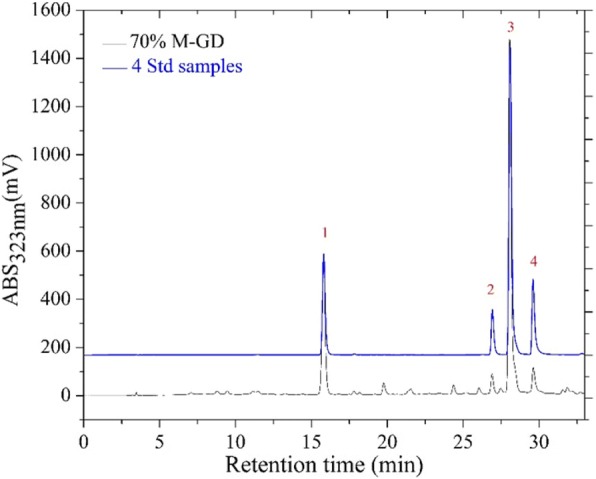
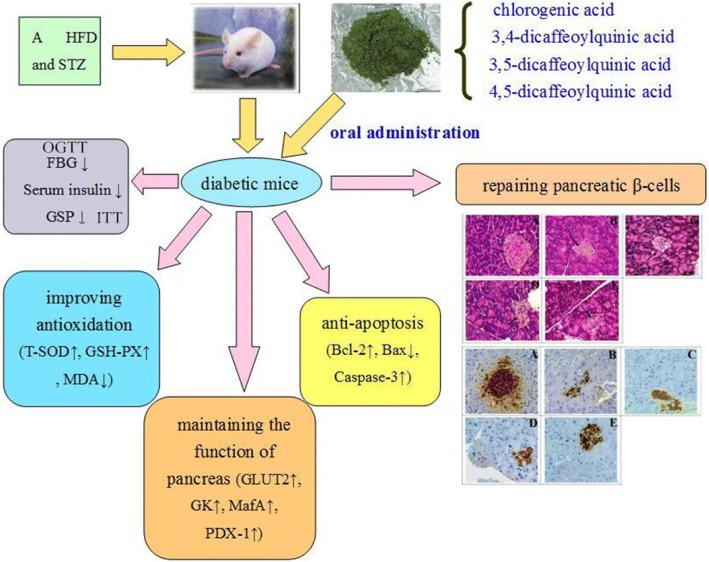
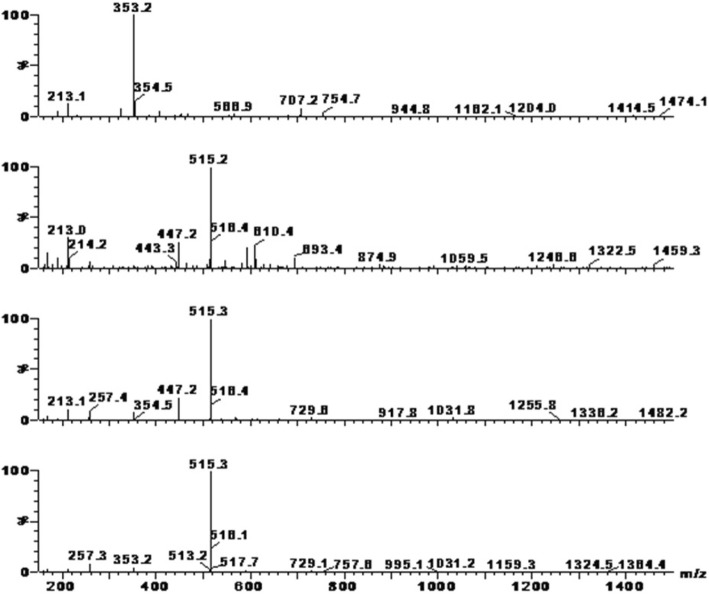
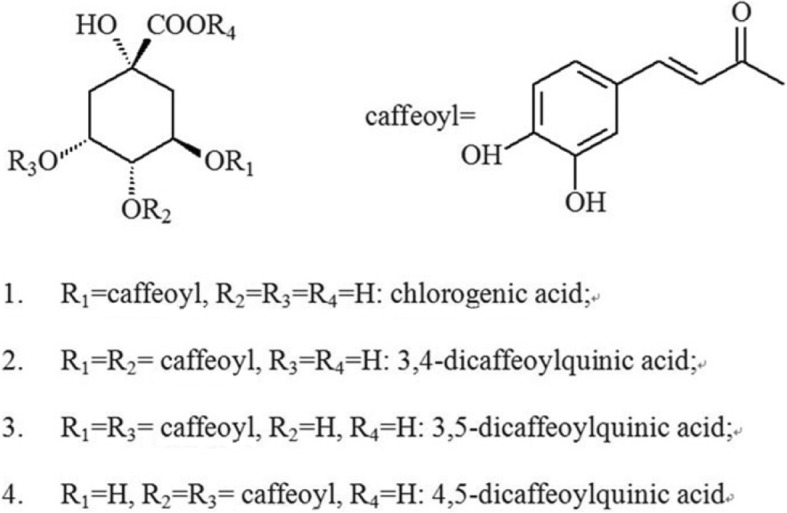
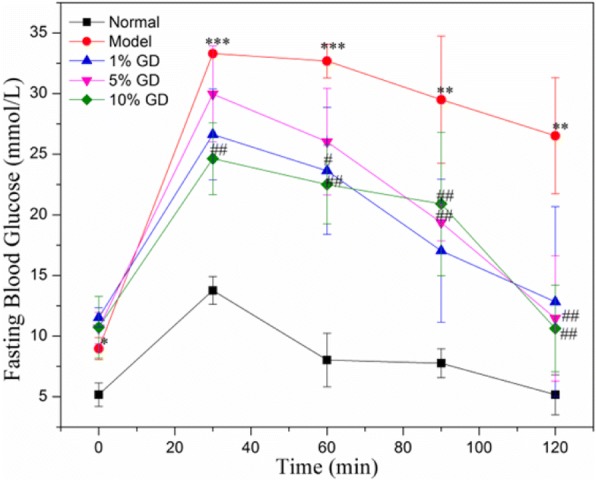
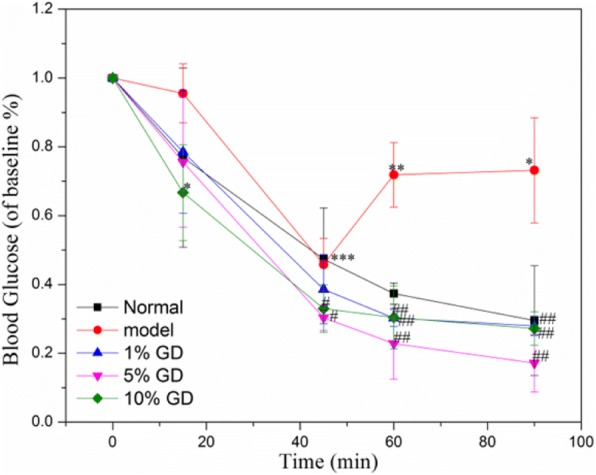
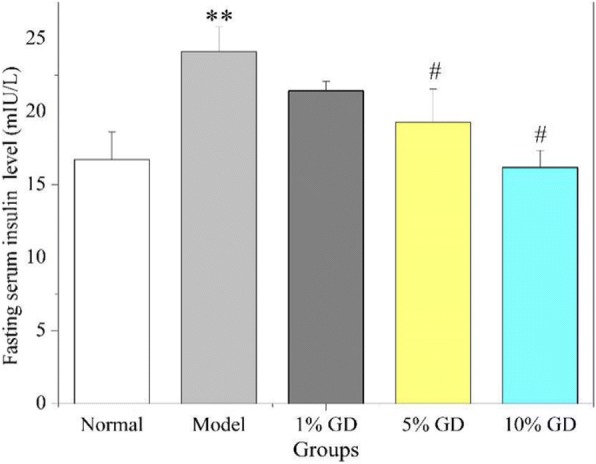
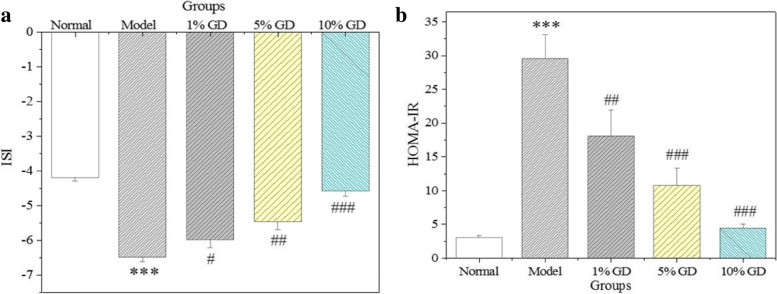
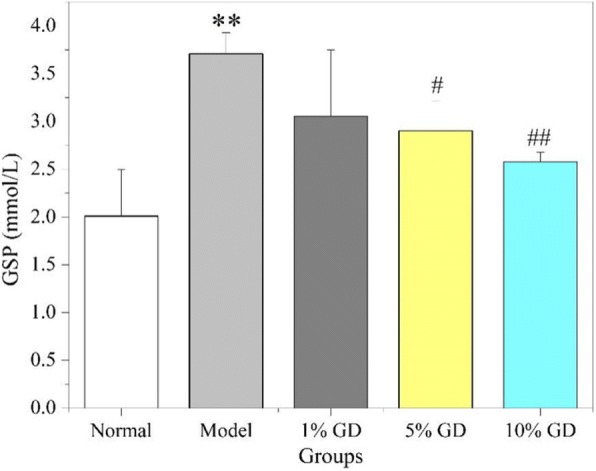
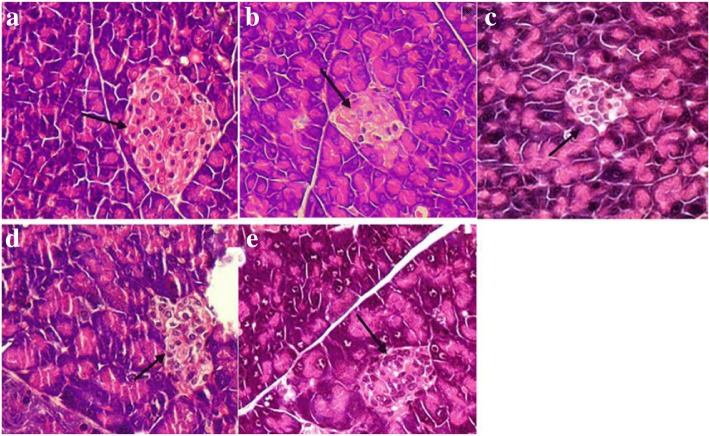
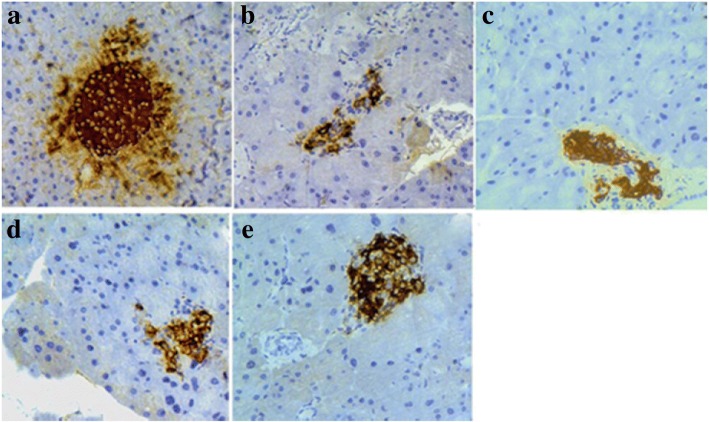
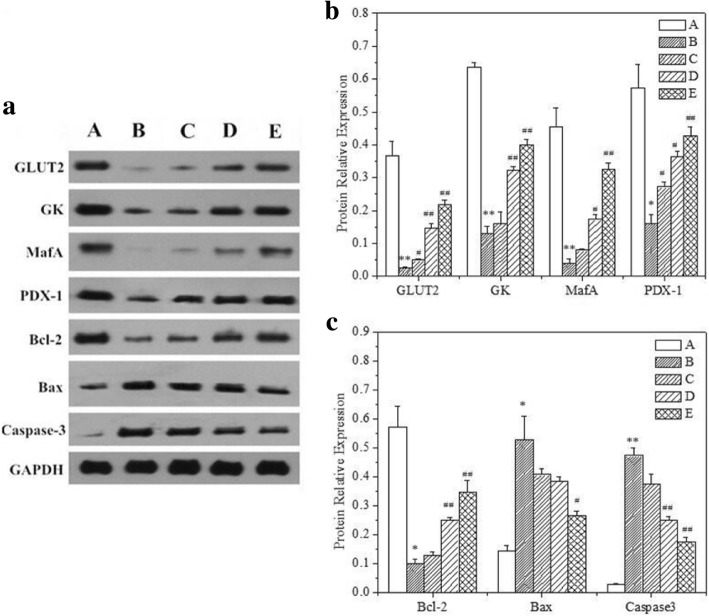
GD was rich in four bioactive components of dicaffeoylquinic acid and chlorogenic acid. These components occupied about 2.37% in the GD powder in which the highest level was 3, 5-dicaffeoylquinic acid. Oral GD significantly reduced FBG, fasting serum insulin, and glycosylated serum protein levels, and enhanced antioxidative activities. HE-staining showed that the pathological damage in pancreatic β-cells was ameliorated. An immunohistochemical assay also showed that GD promoted marked pancreatic β-cell regeneration. GD also caused notable increase in GLUT2, GK, MafA, PDX-1, and Bcl-2 as well as reduction in Bax and caspase-3 expression as shown by western blot analysis.
GD exerts the pronounced hypoglycaemic effect by inhibiting islet cell apoptosis and improving pancreatic function. Therefore, GD might have a potential to improve diabetes.
糖尿病是最常见的慢性病之一,常伴有严重并发症。绞股蓝(GD)是一种药食两用植物,常用于治疗糖尿病。因此,本研究调查了具有降血糖作用的绞股蓝化学成分及其降低2型糖尿病(T2D)小鼠血糖的可能机制。
采用高效液相色谱-二极管阵列检测器(HPLC-DAD)分析绞股蓝的甲醇提取物。然后,将高脂饮食联合链脲佐菌素诱导的2型糖尿病小鼠喂食含冻干绞股蓝粉末的饲料4周。在此期间,测量空腹血糖(FBG)水平和体重。
绞股蓝富含二咖啡酰奎宁酸和绿原酸这四种生物活性成分。这些成分在绞股蓝粉末中占比约2.37%,其中含量最高的是3,5-二咖啡酰奎宁酸。口服绞股蓝显著降低了FBG、空腹血清胰岛素和糖化血清蛋白水平,并增强了抗氧化活性。苏木精-伊红(HE)染色显示胰腺β细胞的病理损伤得到改善。免疫组织化学分析也表明绞股蓝促进了显著的胰腺β细胞再生。蛋白质免疫印迹分析显示,绞股蓝还使葡萄糖转运蛋白2(GLUT2)、葡萄糖激酶(GK)、MafA、胰腺十二指肠同源盒-1(PDX-1)和Bcl-2显著增加,同时使Bax和半胱天冬酶-3(caspase-3)表达降低。
绞股蓝通过抑制胰岛细胞凋亡和改善胰腺功能发挥显著的降血糖作用。因此,绞股蓝可能具有改善糖尿病的潜力。