Rashid S T, Haywood N J, Yuldasheva N Y, Smith J, Aziz A, Scott D J A, Kearney M T, Wheatcroft S B
Leeds Institute of Cardiovascular and Metabolic Medicine, Faculty of Medicine and Health University of Leeds Leeds UK.
Department of Vascular Surgery Manchester University NHS Foundation Trust Manchester UK.
Obes Sci Pract. 2018 Jun 26;4(5):490-496. doi: 10.1002/osp4.282. eCollection 2018 Oct.
Preservation of structural integrity of the endothelial monolayer and maintenance of endothelial cell function are of critical importance in preventing arterial thrombosis, restenosis and atherosclerosis. Obesity has been intimately linked with endothelial dysfunction, and reports of reduced abundance and functional impairment of circulating progenitor cells in obesity have led to the suggestion that defective endothelial repair contributes to obesity-related cardiovascular disease.
C57BL/6 mice were fed a high-fat diet for either 3 or 6 months to induce obesity; metabolic phenotyping was then carried out before femoral artery wire injury was performed. Endothelial regeneration was then quantified. Mononuclear cells and myeloid angiogenic cells were cultured and characterized for pro-angiogenic properties.
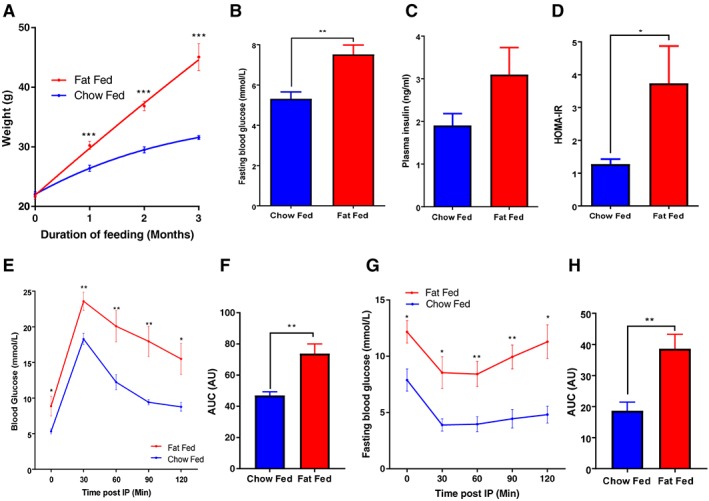
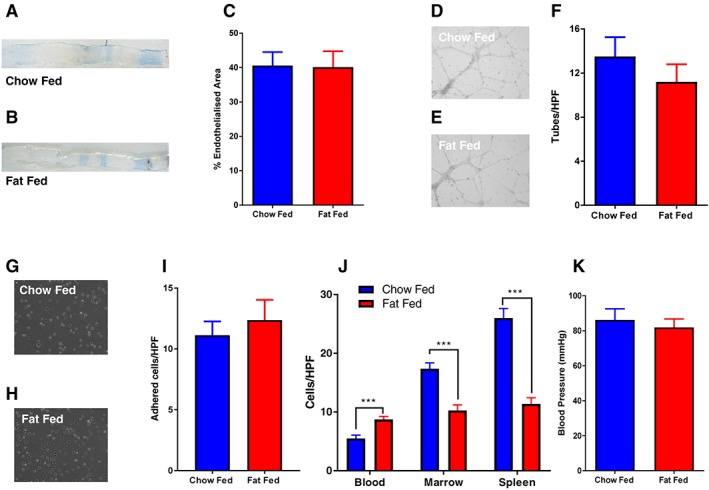
No impairment of endothelial regeneration following mechanical endothelial injury in diet-induced obese mice when compared with chow-fed controls was observed, despite the induction of an adverse metabolic phenotype characterized by glucose intolerance and insulin resistance. Dietary-obese mice had increased numbers of circulating myeloid angiogenic cells, which retained normal functional properties including intact paracrine angiogenic effects.
Preserved endothelial regeneration despite metabolic dysregulation in dietary obese mice suggests that compensatory mechanisms mitigate the deleterious influence of insulin resistance on endothelial repair in obesity.
维持内皮细胞单层的结构完整性以及保持内皮细胞功能对于预防动脉血栓形成、再狭窄和动脉粥样硬化至关重要。肥胖与内皮功能障碍密切相关,并且有报道称肥胖患者循环祖细胞数量减少且功能受损,这表明内皮修复缺陷与肥胖相关的心血管疾病有关。
给C57BL/6小鼠喂食高脂饮食3个月或6个月以诱导肥胖;然后在进行股动脉钢丝损伤之前进行代谢表型分析。随后对内皮再生进行定量分析。培养单核细胞和髓样血管生成细胞,并对其促血管生成特性进行表征。
与正常饮食对照组相比,饮食诱导的肥胖小鼠在机械性内皮损伤后未观察到内皮再生受损,尽管诱导了以葡萄糖不耐受和胰岛素抵抗为特征的不良代谢表型。饮食诱导肥胖的小鼠循环髓样血管生成细胞数量增加,这些细胞保留了正常的功能特性,包括完整的旁分泌血管生成作用。
饮食诱导肥胖的小鼠尽管存在代谢失调,但内皮再生得以保留,这表明代偿机制减轻了胰岛素抵抗对肥胖内皮修复的有害影响。