Uribe Alberto A, Arbona Fernando L, Flanigan David C, Kaeding Christopher C, Palettas Marilly, Bergese Sergio D
Department of Anesthesiology, The Ohio State University Wexner Medical Center, Columbus, OH, United States.
Department of Orthopedics, Jameson Crane Sports Medicine Research Institute, The Ohio State University Wexner Medical Center, Columbus, OH, United States.
Front Surg. 2018 Oct 3;5:59. doi: 10.3389/fsurg.2018.00059. eCollection 2018.
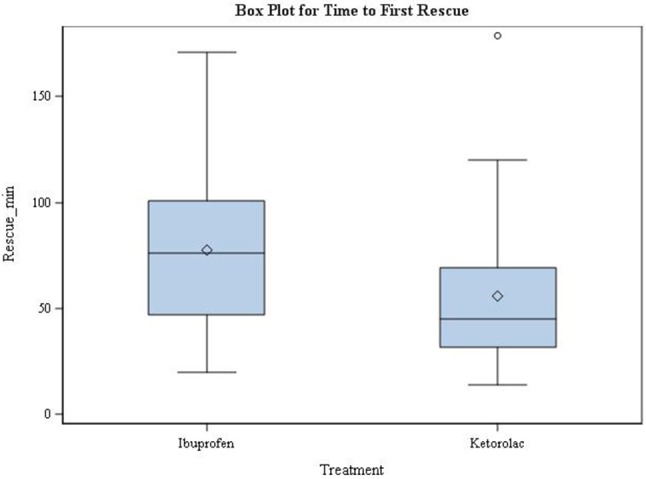
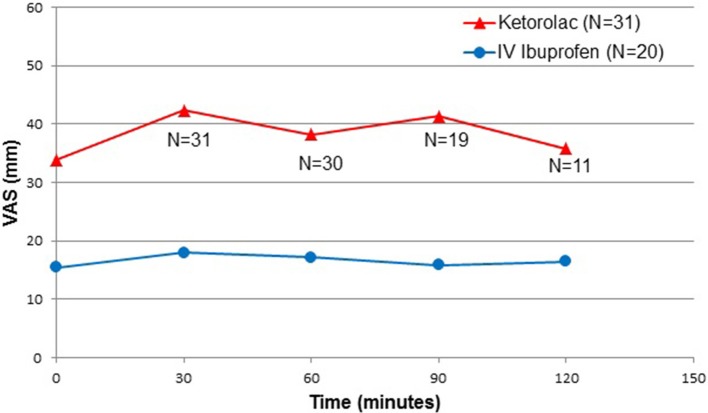
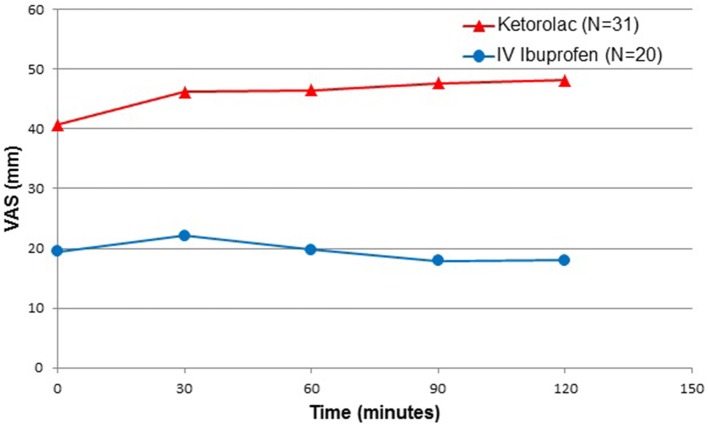
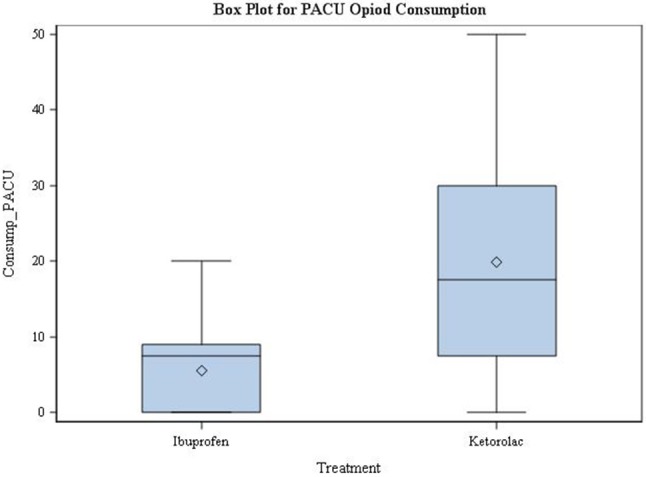
Acute postoperative pain following knee arthroscopy is common in orthopedic surgeries. Managing pain postoperatively combines usage of opioids and non-steroidal anti-inflammatory drugs. The aim of this clinical study was to assess the efficacy of two different analgesic treatment regimens: intravenous (IV) ibuprofen and IV ketorolac for the treatment of postoperative pain pertaining to arthroscopic knee surgery. This was a single center, randomized, double-blind, parallel, active comparator clinical pilot study. Subjects were randomized to receive either IV ibuprofen, administered as two 800 mg doses or IV ketorolac, administered as a single 30 mg dose. Subjects in the ibuprofen group received 800 mg of IV ibuprofen within 2 h prior to surgery and a repeated second dose 4 h after the initial dose if they had not been discharged. Subjects in the ketorolac group received IV ketorolac 30 mg at the end of surgery, as per the manufacturer's recommendations. Pain assessments and opioid consumption data were collected up to 24 h postoperatively. Of 53 randomized subjects, 51 completed the study. There were 20 subjects in the ibuprofen group and 31 subjects in the ketorolac group. The median (IQR) visual analog scale (VAS) pain score at resting upon post-anesthesia care unit (PACU) arrival was 33 (12, 52) vs. 9 (2, 25) ( = 0.0064) for the ketorolac and ibuprofen group, respectively. The median (IQR) visual analog scale (VAS) pain score at movement upon PACU arrival was 38 (20, 61) vs. 15 (6, 31) ( = 0.0018) for the ketorolac and ibuprofen group, respectively. Median VAS pain scores during movement taken at subsequent 30 min intervals in the ibuprofen group were less than half that of those reported in the ketorolac group for up to 90 min after arriving in PACU. The median VAS pain scores at rest and movement in the course of 120 min-24 h after PACU arrival was not statistically significant in both groups. Rescue opioid medication during PACU stay was required in 55.0% ( = 11) and 83.9% ( = 26), with a mean amount of narcotic consumption (oral morphine conversion) of 5.53 ± 5.89 mg vs. 19.92 ± 15.63 mg for the ibuprofen and ketorolac group, respectively ( < 0.001). However, opioid consumption during the first 24 h after PACU discharge was not statistically significant (-value = 0.637). The mean time to first rescue medication was 77.62 ± 33.03 and 55.78 ± 35.37 for the ibuprofen and ketorolac group, respectively (-value = 0.0456). There were no significant differences in patient satisfaction and documented adverse events during the first 24 h. This pilot study showed that the use of preemptive IV ibuprofen 800 mg could be considered to reduce postoperative pain and opioid consumption. Future prospective clinical trials using similar regimens should be conducted in order to gain a better understanding of how to best provide perioperative analgesic regimens. www.ClinicalTrials.gov, identifier NCT01650519.
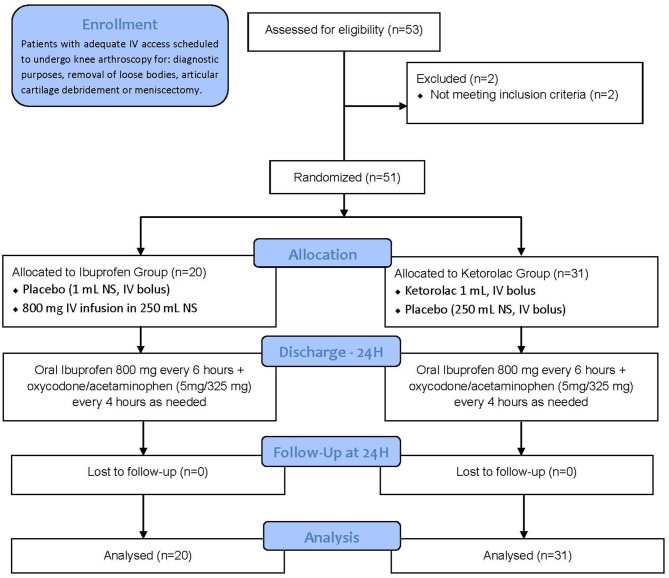
膝关节镜检查后的急性术后疼痛在骨科手术中很常见。术后疼痛管理需要联合使用阿片类药物和非甾体抗炎药。本临床研究的目的是评估两种不同镇痛治疗方案的疗效:静脉注射(IV)布洛芬和静脉注射酮咯酸用于治疗膝关节镜手术相关的术后疼痛。这是一项单中心、随机、双盲、平行、活性对照的临床试点研究。受试者被随机分为两组,分别接受静脉注射布洛芬(分两次,每次800mg)或静脉注射酮咯酸(单次30mg)。布洛芬组的受试者在手术前2小时内接受800mg静脉注射布洛芬,如果未出院,则在初始剂量后4小时重复第二剂。酮咯酸组的受试者根据制造商的建议在手术结束时接受30mg静脉注射酮咯酸。术后24小时内收集疼痛评估和阿片类药物消耗数据。53名随机分组的受试者中,51名完成了研究。布洛芬组有20名受试者,酮咯酸组有31名受试者。在麻醉后护理单元(PACU)到达时,酮咯酸组和布洛芬组静息时的视觉模拟量表(VAS)疼痛评分中位数(IQR)分别为33(12,52)和9(2,25)(P = 0.0064)。在PACU到达时,酮咯酸组和布洛芬组活动时的视觉模拟量表(VAS)疼痛评分中位数(IQR)分别为38(20,61)和15(6,31)(P = 0.0018)。在到达PACU后的90分钟内,布洛芬组随后每隔30分钟测量的活动时VAS疼痛评分中位数不到酮咯酸组报告值的一半。在PACU到达后120分钟至24小时期间,两组静息和活动时的VAS疼痛评分中位数无统计学差异。在PACU停留期间,分别有55.0%(n = 11)和83.9%(n = 26)的患者需要使用急救阿片类药物,布洛芬组和酮咯酸组的平均麻醉药物消耗量(口服吗啡换算)分别为5.53±5.89mg和19.92±15.63mg(P < 0.001)。然而,PACU出院后24小时内的阿片类药物消耗量无统计学差异(P值 = 0.637)。布洛芬组和酮咯酸组首次使用急救药物的平均时间分别为77.62±33.03和55.78±35.37(P值 = 0.0456)。在最初24小时内,患者满意度和记录的不良事件无显著差异。这项试点研究表明,可考虑使用800mg静脉注射布洛芬进行超前镇痛,以减轻术后疼痛和减少阿片类药物的消耗。未来应开展使用类似方案的前瞻性临床试验,以便更好地了解如何最佳地提供围手术期镇痛方案。ClinicalTrials.gov网站,标识符NCT01650519。