Department of Chemistry, Lehman College, The City University of New York, 250 Bedford Park Blvd, NY 10468, USA.
Immunology Program, Memorial Sloan Kettering Cancer Center, 408 E69th street, New York, NY, 10021, USA.
Biochim Biophys Acta Gen Subj. 2019 Jan;1863(1):232-240. doi: 10.1016/j.bbagen.2018.10.006. Epub 2018 Oct 17.
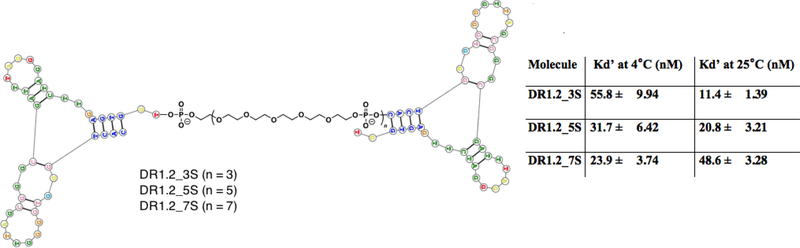
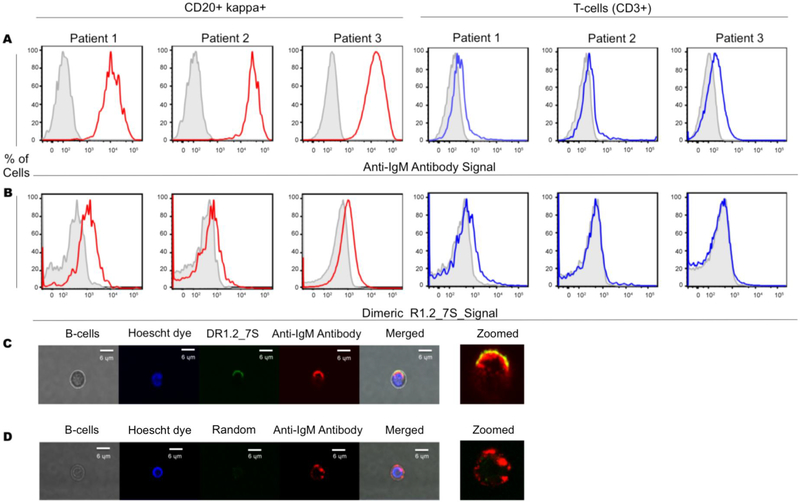
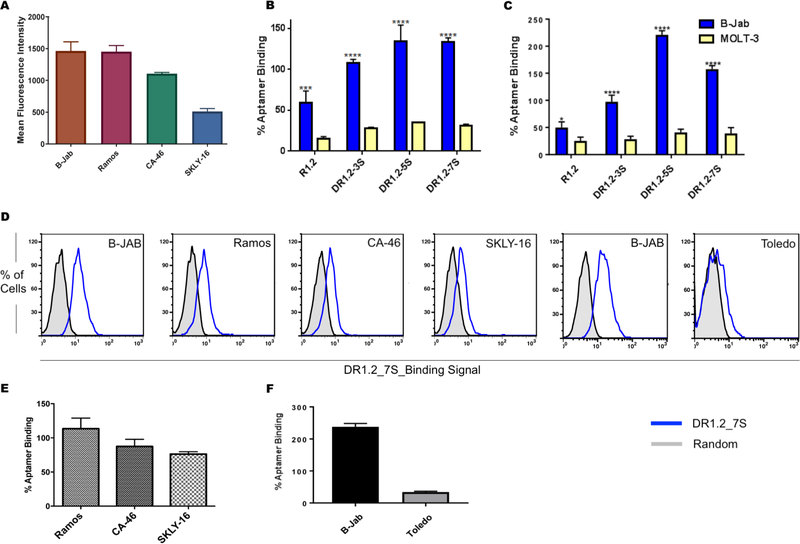
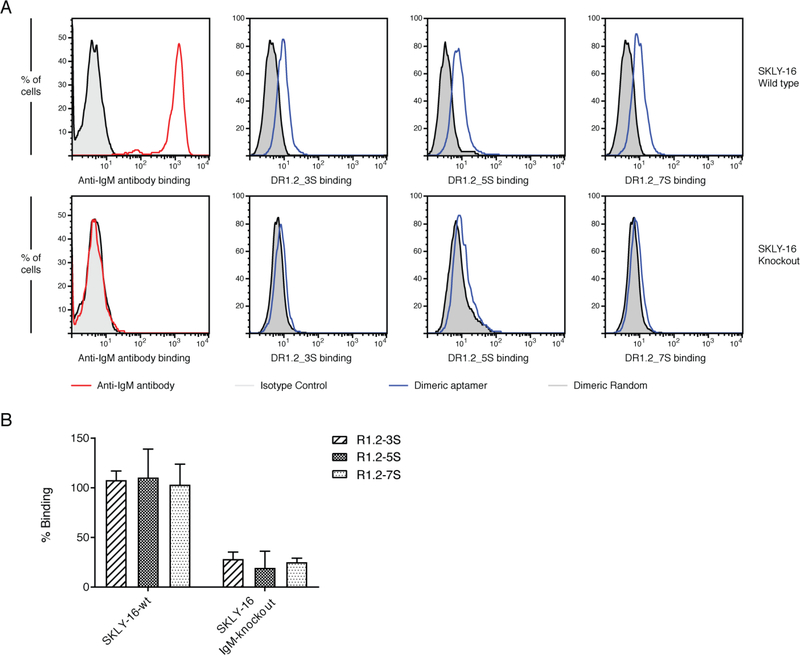
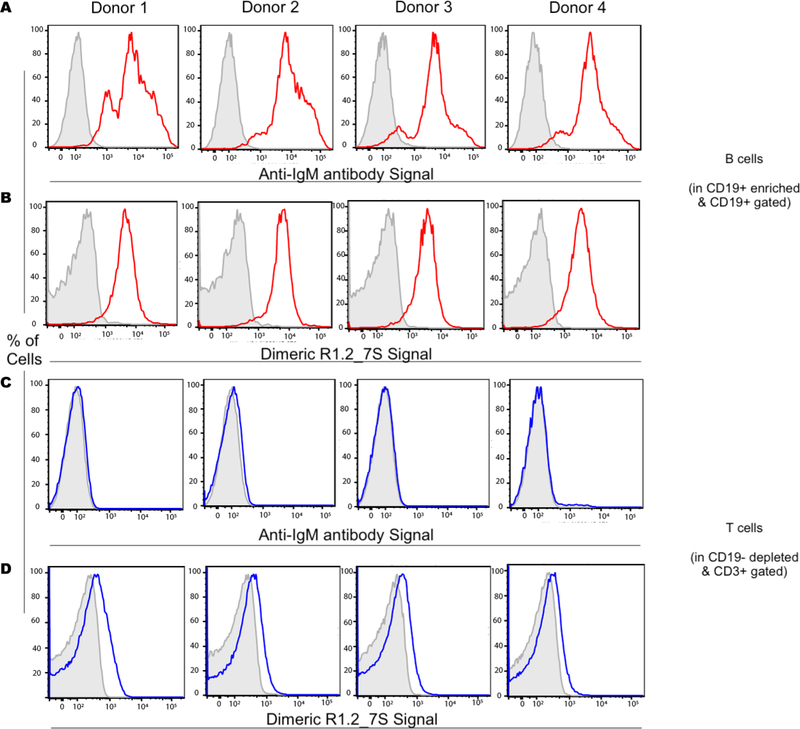
Nucleic Acid Aptamers (NAAs) are a class of synthetic DNA or RNA molecules that bind specifically to their target. We recently introduced an aptamer termed R1.2 against membrane Immunoglobulin M (mIgM) expressing B-cell neoplasms using Ligand Guided Selection (LIGS). While LIGS-generated aptamers are highly specific, their lower affinity prevents aptamers from being used for translational applications. Highly specific aptamers with higher affinity can increase targetability, boosting the application of aptamers as diagnostic and therapeutic molecules. Herein, we report that dimerization of R1.2, an aptamer generated from LIGS, leads to high affinity variants without compromising the specificity. Three dimeric aptamer analogues with variable linker lengths were designed to evaluate the effect of linker length in affinity. The optimized dimeric R1.2 against cultured B-cell neoplasms, four donor B-cell samples and mIgM-positive Waldenström's Macroglobulinemia (WM) showed specificity. Furthermore, confocal imaging of dimeric aptamer and anti-IgM antibody in purified B-cells suggests co-localization. Binding assays against IgM knockout Burkitt's Lymphoma cells utilizing CRISPR/Cas9 further validated specificity of dimeric R1.2. Collectively, our findings show that LIGS-generated aptamers can be re-engineered into dimeric aptamers with high specificity and affinity, demonstrating wide-range of applicability of LIGS in developing clinically practical diagnostic and therapeutic aptamers.
核酸适体(NAAs)是一类合成的 DNA 或 RNA 分子,能够特异性地与靶标结合。我们最近使用配体引导选择(LIGS)技术引入了一种针对表达膜免疫球蛋白 M(mIgM)的 B 细胞肿瘤的适体 R1.2。虽然 LIGS 产生的适体具有高度特异性,但它们的亲和力较低,限制了其在转化应用中的使用。具有更高亲和力的高度特异性适体可以提高靶向性,从而增强适体作为诊断和治疗分子的应用。在此,我们报告称,通过 LIGS 生成的适体 R1.2 的二聚化可导致高亲和力变体,而不会影响特异性。设计了三种具有可变连接子长度的二聚体适体类似物,以评估连接子长度对亲和力的影响。优化的针对培养的 B 细胞肿瘤、四个供体 B 细胞样本和 mIgM 阳性华氏巨球蛋白血症(WM)的二聚体 R1.2 具有特异性。此外,在纯化的 B 细胞中对二聚体适体和抗 IgM 抗体进行共聚焦成像表明存在共定位。利用 CRISPR/Cas9 针对 IgM 敲除 Burkitt 淋巴瘤细胞进行的结合测定进一步验证了二聚体 R1.2 的特异性。总之,我们的研究结果表明,LIGS 生成的适体可以被重新设计成具有高特异性和亲和力的二聚体适体,这表明 LIGS 在开发临床实用的诊断和治疗性适体方面具有广泛的适用性。