Zumrut Hasan E, Ara Mst N, Maio George E, Van Nabeela A, Batool Sana, Mallikaratchy Prabodhika R
Department of Chemistry, Lehman College, City University of New York, 250 Bedford Park Blvd. West, Bronx, NY 10468, USA; Ph.D. Program in Biochemistry, The Graduate Center of the City University of New York, New York, NY 10016, USA.
Department of Chemistry, Lehman College, City University of New York, 250 Bedford Park Blvd. West, Bronx, NY 10468, USA.
Anal Biochem. 2016 Nov 1;512:1-7. doi: 10.1016/j.ab.2016.08.007. Epub 2016 Aug 9.
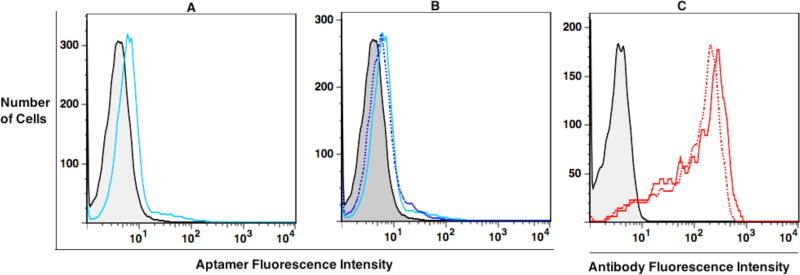
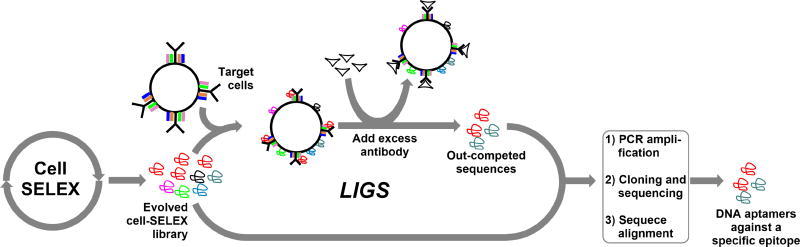
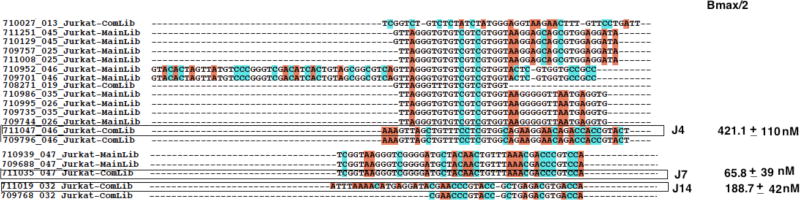
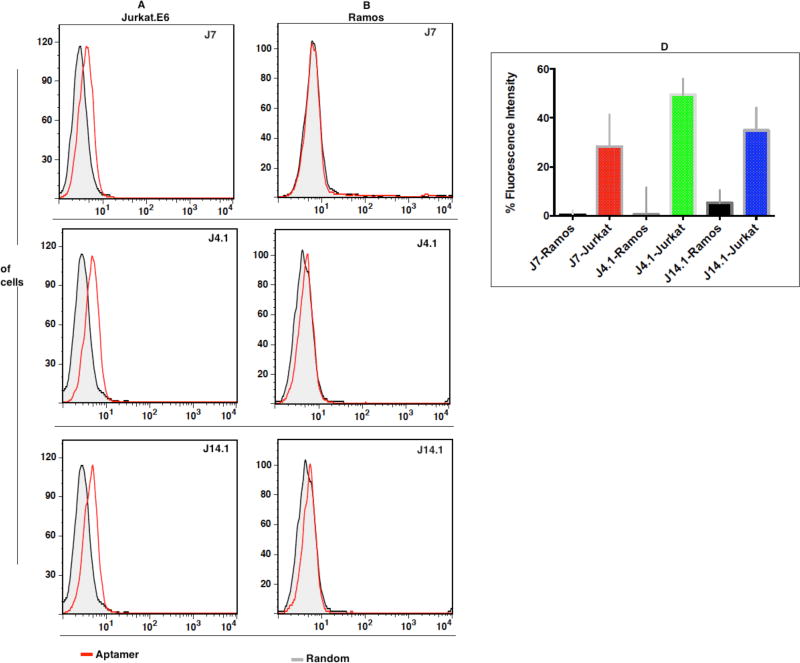
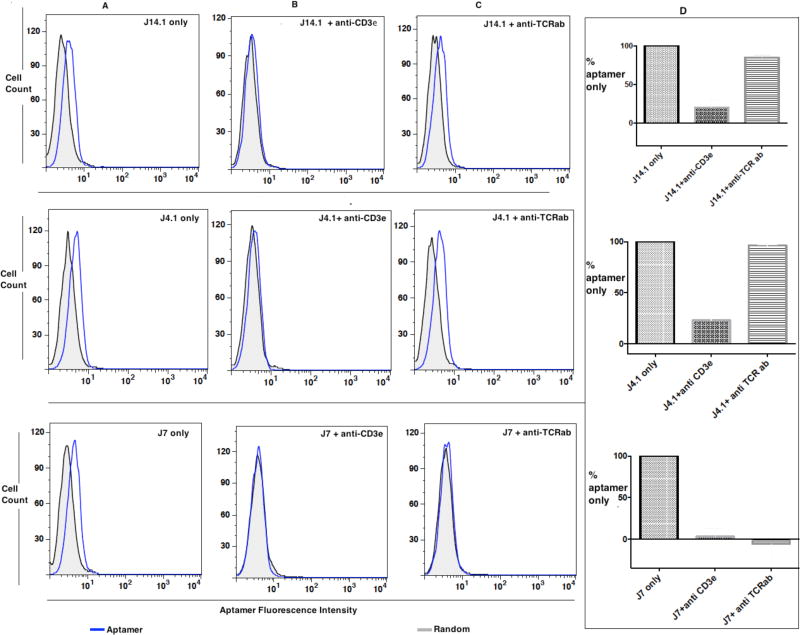
We recently introduced a screening technology termed ligand-guided selection, (LIGS), to selectively identify target-specific aptamers from an evolved cell-SELEX library. Cell-SELEX utilizes a large combinatorial single-stranded oligonucleotide library and progressively selects DNA ligands against whole cells with variable DNA-binding affinities and specificities by repeated rounds of partition and amplification. LIGS exploits the partition step and introduces a secondary, pre-existing high-affinity monoclonal antibody (mAb) ligand to outcompete and elute specific aptamers towards the binding target of the antibody, not the cell. Here, using anti-CD3ε mAb against the cluster of differentiation 3 (CD3ε), as the guiding ligand against one of the domains of the T-cell Receptor (TCR) complex expressed on Jurkat.E6 cells, we discovered three specific aptamers against TCR complex expressed on an immortalized line of human T lymphocyte cells. In sum, we demonstrate that specific aptamers can be identified utilizing an antibody against a single domain of a multidomain protein complex in their endogenous state with neither post- nor pre-SELEX protein manipulation.
我们最近引入了一种名为配体引导筛选(LIGS)的筛选技术,以从进化的细胞SELEX文库中选择性地鉴定靶标特异性适配体。细胞SELEX利用一个大型组合单链寡核苷酸文库,并通过重复的分区和扩增轮次,针对具有可变DNA结合亲和力和特异性的全细胞逐步选择DNA配体。LIGS利用分区步骤,并引入一种二级的、预先存在的高亲和力单克隆抗体(mAb)配体,以竞争并洗脱针对抗体结合靶标而非细胞的特异性适配体。在此,我们使用针对分化簇3(CD3ε)的抗CD3ε单克隆抗体作为针对在Jurkat.E6细胞上表达的T细胞受体(TCR)复合物的一个结构域的引导配体,发现了三种针对在永生化人T淋巴细胞系上表达的TCR复合物的特异性适配体。总之,我们证明,利用针对多结构域蛋白复合物单个结构域的抗体,在其内源性状态下,无需SELEX前后的蛋白操作,即可鉴定出特异性适配体。