Behaviour-Brain-Body Research Centre School of Psychology, Social Work and Social Policy, University of South Australia, Australia.
Ind Health. 2019 Aug 3;57(4):547-553. doi: 10.2486/indhealth.2018-0070. Epub 2018 Oct 19.
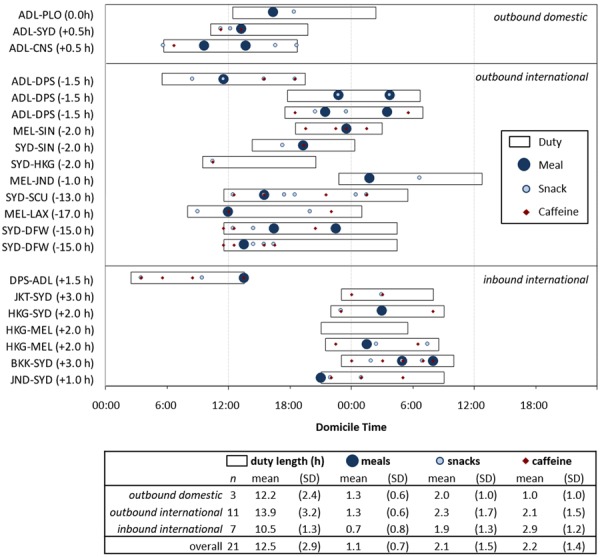
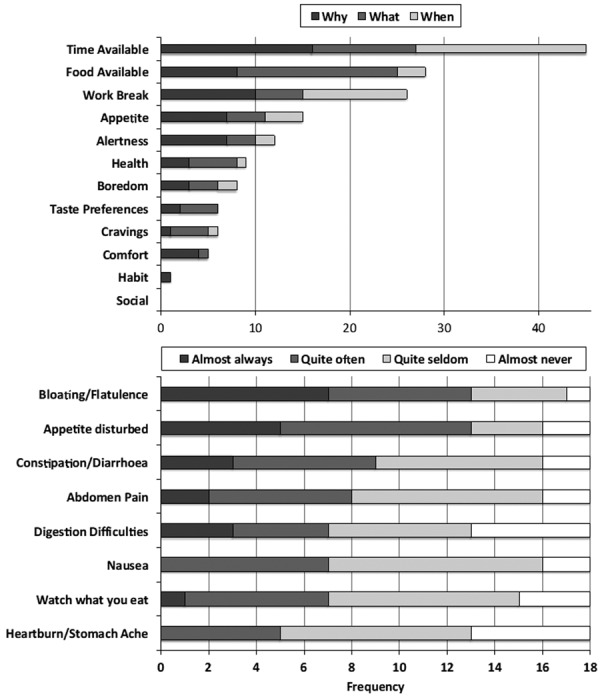
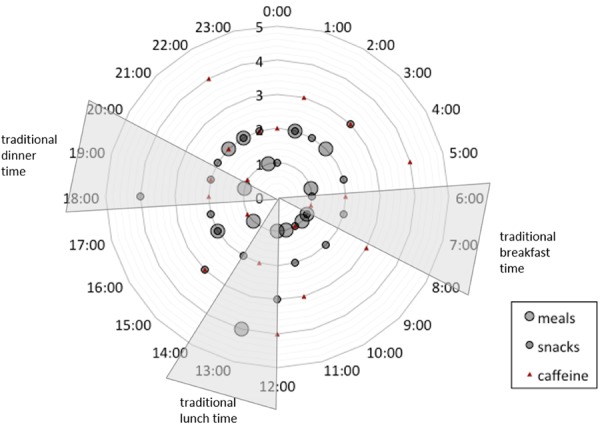
Flight attendants experience circadian misalignment and disrupted sleep and eating patterns. This survey study examined working time, sleep, and eating frequency in a sample (n=21, 4 males, 17 females) of Australian flight attendants (mean age=41.8 yr, SD=12.0 yr, mean BMI=23.8 kg/m, SD=4.1 kg/m). Respondents indicated frequencies of snack, meal, and caffeine consumption during their last shift. Reported sleep duration on workdays (mean=4.6 h, SD=1.9 h) was significantly lower than on days off (M=7.2 h, SD=1.2 h, p<0.001), and significantly lower than perceived sleep need (M=8.1 h, SD=0.8 h, p<0.001). Food intake was distributed throughout shifts and across the 24 h period, with eating patterns incongruent with biological eating periods. Time available, food available, and work breaks were the most endorsed reasons for food consumption. Caffeine use and reports of gastrointestinal disturbance were common. Working time disrupts sleep and temporal eating patterns in flight attendants and further research into nutritional and dietary-related countermeasures may be beneficial to improving worker health and reducing circadian disruption.
空服员经历昼夜节律失调和睡眠及进食模式打乱。本研究调查了澳大利亚空服员(n=21,4 男,17 女,平均年龄=41.8 岁,标准差=12.0 岁,平均 BMI=23.8 kg/m,标准差=4.1 kg/m)样本的工作时间、睡眠和进食频率。受访者报告了上一次轮班期间零食、餐点和咖啡因的摄入频率。工作日的报告睡眠时间(平均=4.6 小时,标准差=1.9 小时)明显低于休息日(M=7.2 小时,标准差=1.2 小时,p<0.001),明显低于感知的睡眠需求(M=8.1 小时,标准差=0.8 小时,p<0.001)。食物摄入分布在轮班期间和 24 小时周期内,进食模式与生理进食周期不一致。时间、食物供应和工作休息是食物摄入的最主要原因。咖啡因使用和胃肠道不适的报告很常见。工作时间打乱了空服员的睡眠和时间性进食模式,进一步研究营养和饮食相关的对策可能有助于改善工人健康和减少昼夜节律紊乱。