Longton Eleonore, Schmit Kathleen, Fransolet Maude, Clement François, Michiels Carine
Unit of Biochemistry and cellular Biology, Namur Research Institut for LIfe Sciences, University of Namur, Namur, Belgium.
Front Oncol. 2018 Oct 5;8:432. doi: 10.3389/fonc.2018.00432. eCollection 2018.
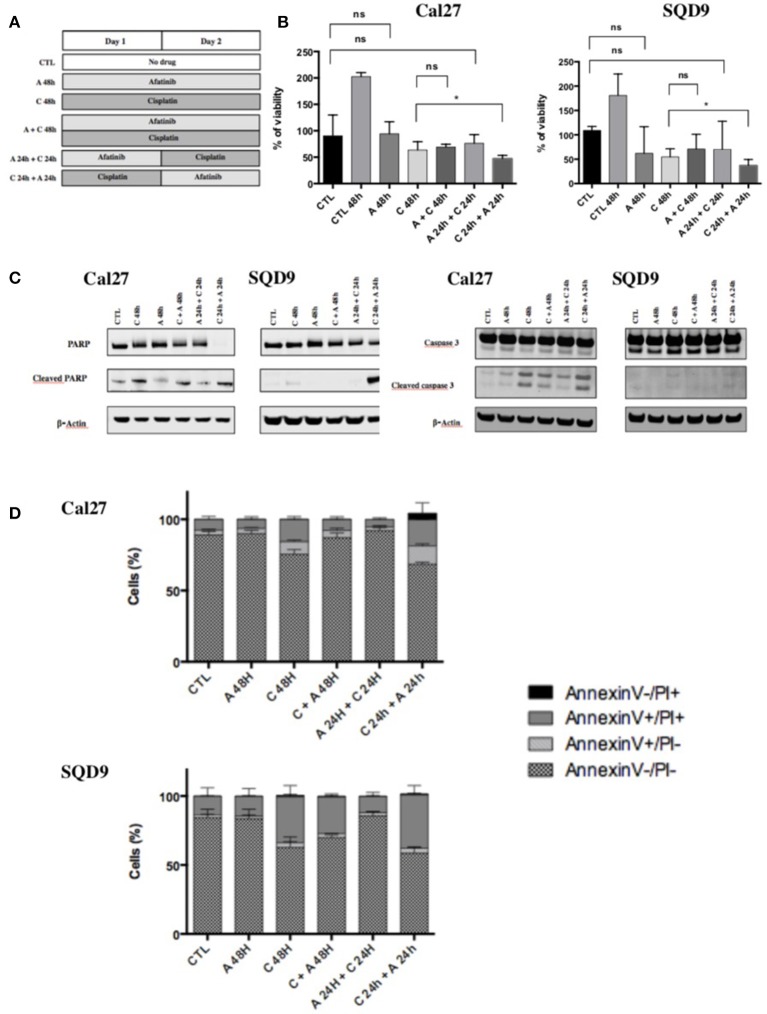
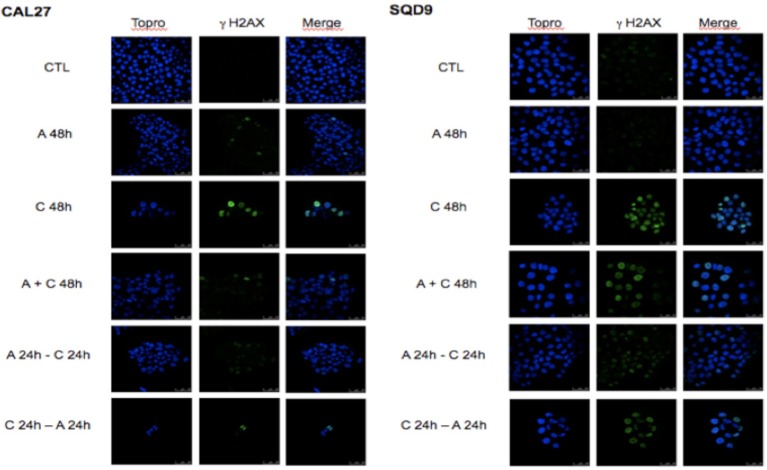
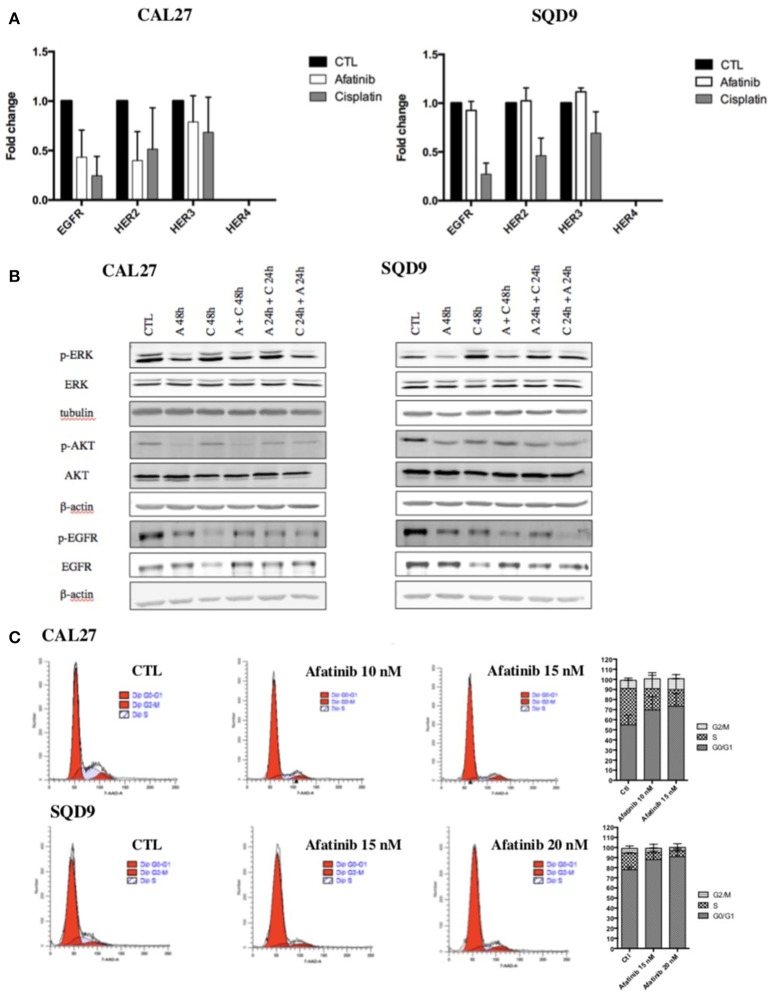
Despite a better understanding in head and neck tumors pathogenesis as well as improvements in radiotherapy and surgery, locally advanced head and neck squamous cell carcinoma (HNSCC) remains of poor prognosis. One promising target is the epidermal growth factor receptor (EGFR), which is overexpressed in the majority of HNSCC and is associated to tumor progression and resistance to treatment. However, in several clinical trials, the combination of EGFR inhibitors with chemotherapy and/or radiotherapy generates moderate results. In this study, we investigated the anti-tumor activity of afatinib, an irreversible pan-EGFR inhibitor, combined to cisplatin in different schedules of exposure. For that, we used two human EGFR wild-type HNSCC cell lines and we evaluated the cytotoxicity of the two drugs combined in different sequences. The efficiency of each strategy was assessed by evaluating the effects on cell cycle distribution, DNA damage, cell death and downstream pathways of ErbB family receptors. We demonstrated that cisplatin treatment followed by afatinib exposure displayed more cytotoxic effects than the opposite timing or than simultaneous association. This higher anticancer activity is probably due to afatinib-induced cell cycle arrest, which prevents the repair of cisplatin-induced DNA damage and promotes cell death by various mechanisms including apoptosis. These data suggest the importance of an appropriate timing administration between an EGFR inhibitor and a conventional chemotherapy in order to obtain the best clinical benefit for patients with a head and neck cancer.
尽管对头颈部肿瘤的发病机制有了更深入的了解,并且放疗和手术也有所改进,但局部晚期头颈部鳞状细胞癌(HNSCC)的预后仍然很差。一个有前景的靶点是表皮生长因子受体(EGFR),它在大多数HNSCC中过度表达,并且与肿瘤进展和治疗耐药性相关。然而,在几项临床试验中,EGFR抑制剂与化疗和/或放疗联合使用的效果一般。在本研究中,我们研究了不可逆的泛EGFR抑制剂阿法替尼与顺铂在不同暴露方案下联合使用的抗肿瘤活性。为此,我们使用了两个人EGFR野生型HNSCC细胞系,并评估了两种药物以不同顺序联合使用时的细胞毒性。通过评估对细胞周期分布、DNA损伤、细胞死亡和ErbB家族受体下游通路的影响来评估每种策略的有效性。我们证明,先使用顺铂治疗再使用阿法替尼比相反的顺序或同时联合使用显示出更强的细胞毒性作用。这种更高的抗癌活性可能是由于阿法替尼诱导的细胞周期停滞,它阻止了顺铂诱导的DNA损伤的修复,并通过包括凋亡在内的各种机制促进细胞死亡。这些数据表明,对于头颈癌患者,为了获得最佳临床益处,在EGFR抑制剂和传统化疗之间进行适当的给药时间安排非常重要。