You Xin, Yang Sheng, Sui Jing, Wu Wenjuan, Liu Tong, Xu Siyi, Cheng Yanping, Kong Xiaoling, Liang Geyu, Yao Yongzhong
Department of General Surgery, Nanjing Drum Tower Hospital, The Affiliated Hospital of Nanjing University Medical School, Nanjing, Jiangsu, People's Republic of China,
Department of General Surgery, School of Medicine, Southeast University, Nanjing, Jiangsu, People's Republic of China,
Cancer Manag Res. 2018 Oct 8;10:4297-4310. doi: 10.2147/CMAR.S174874. eCollection 2018.
Papillary thyroid carcinoma (PTC), the most frequent type of malignant thyroid tumor, lacks novel and reliable biomarkers of patients' prognosis. In the current study, we mined The Cancer Genome Atlas (TCGA) to develop lncRNA signature of PTC.
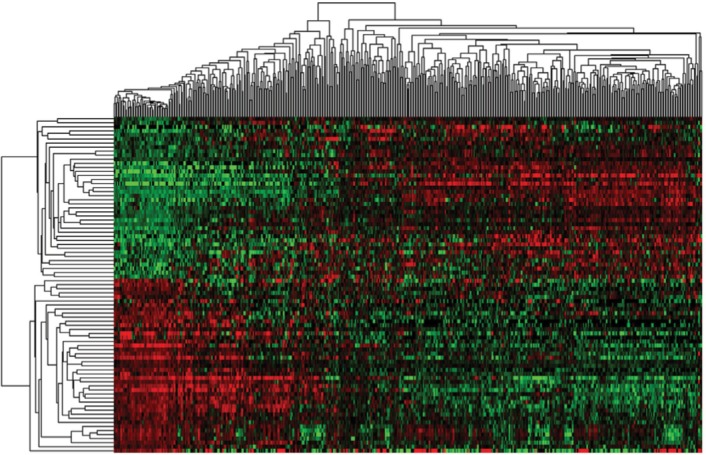
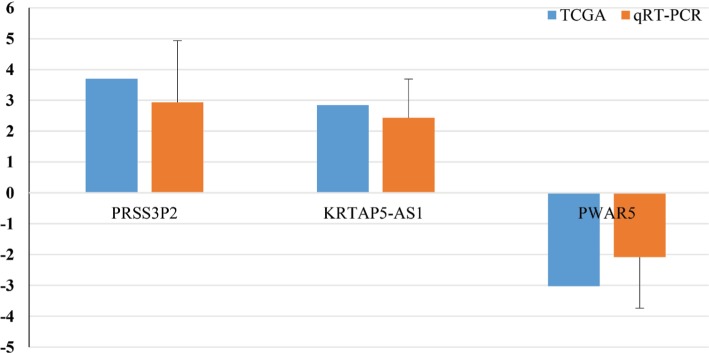
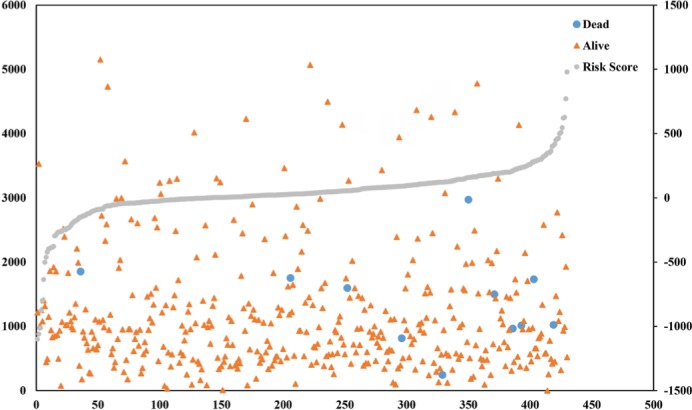
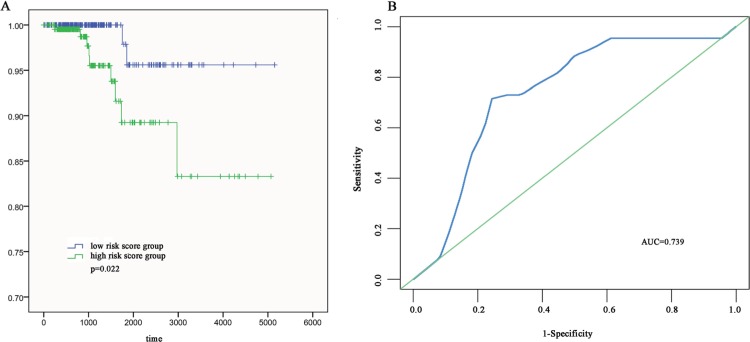
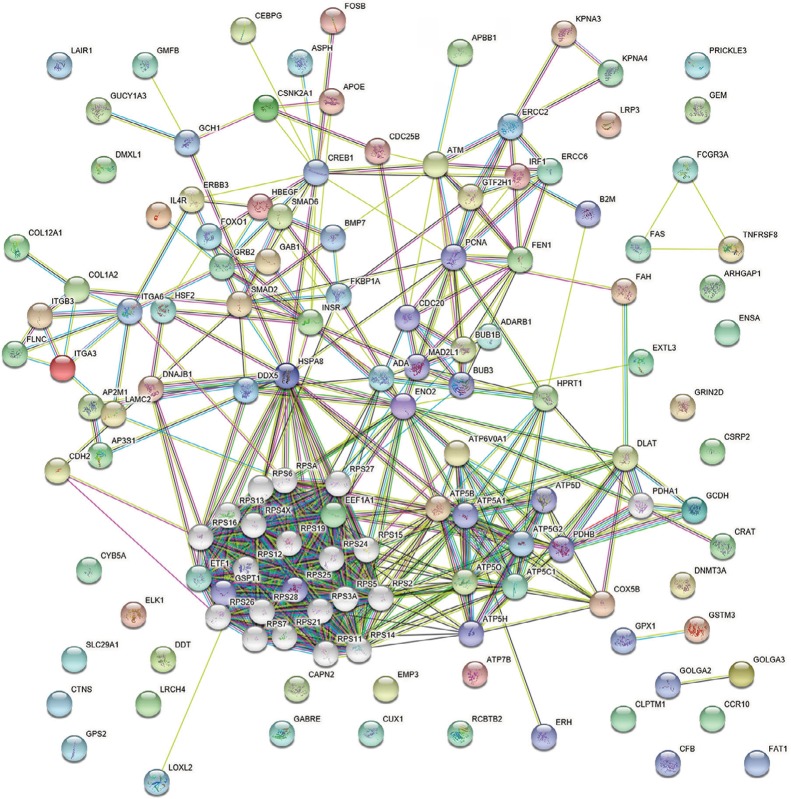
The intersection of PTC lncRNAs was obtained from the TCGA database using integrative computational method. By the univariate and multivariate Cox analysis, key lncRNAs were identified to construct the prognostic model. Then, all patients were divided into the high-risk group and low-risk group to perform the Kaplan-Meier (K-M) survival curves and time-dependent receiver operating characteristic (ROC) curve, estimating the prognostic power of the prognostic model. Functional enrichment analysis was also performed. Finally, we verified the results of the TCGA analysis by the Gene Expression Omnibus (GEO) databases and quantitative real-time PCR (qRT-PCR).
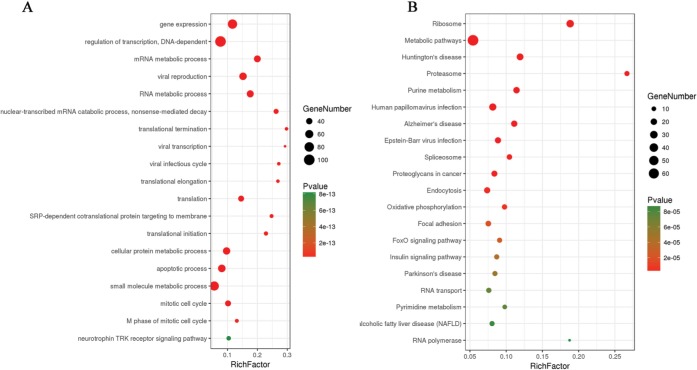
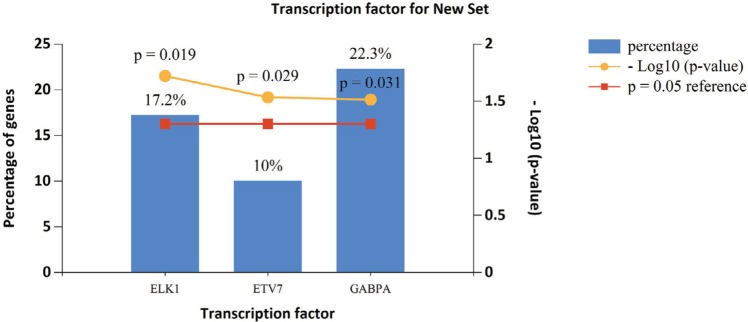
After the comprehensive analysis, a three-lncRNA signature (PRSS3P2, KRTAP5-AS1 and PWAR5) was obtained. Interestingly, patients with low-risk scores tended to gain obviously longer survival time, and the area under the time-dependent ROC curve was 0.739. Furthermore, gene ontology (GO) and pathway analysis revealed the tumorigenic and prognostic function of the three lncRNAs. We also found three potential transcription factors to help understand the mechanisms of the PTC-specific lncRNAs. Finally, the GEO databases and qRT-PCR validation were consistent with our TCGA bioinformatics results.
We built a three-lncRNA signature by mining the TCGA database, which could effectively predict the prognosis of PTC.
甲状腺乳头状癌(PTC)是最常见的甲状腺恶性肿瘤类型,缺乏用于评估患者预后的新型可靠生物标志物。在本研究中,我们挖掘了癌症基因组图谱(TCGA)以开发PTC的lncRNA特征。
采用综合计算方法从TCGA数据库中获取PTC的lncRNAs交集。通过单因素和多因素Cox分析,鉴定关键lncRNAs以构建预后模型。然后,将所有患者分为高风险组和低风险组,绘制Kaplan-Meier(K-M)生存曲线和时间依赖性受试者工作特征(ROC)曲线,评估预后模型的预后预测能力。还进行了功能富集分析。最后,我们通过基因表达综合数据库(GEO)和定量实时PCR(qRT-PCR)验证了TCGA分析的结果。
经过综合分析,获得了一个由三个lncRNA组成的特征(PRSS3P2、KRTAP5-AS1和PWAR5)。有趣的是,低风险评分的患者往往具有明显更长的生存时间,时间依赖性ROC曲线下面积为0.739。此外,基因本体(GO)和通路分析揭示了这三个lncRNAs的致瘤和预后功能。我们还发现了三个潜在的转录因子,有助于理解PTC特异性lncRNAs的机制。最后,GEO数据库和qRT-PCR验证结果与我们的TCGA生物信息学结果一致。
我们通过挖掘TCGA数据库构建了一个由三个lncRNA组成的特征,可有效预测PTC的预后。