Zhang Ying, Liu Yue-Xin, Xiao Qiu-Xia, Liu Qing, Deng Rui, Bian Jiang, Deng Isaac Bul, Al-Hawwas Mohammed, Yu Feng-Xu
Department of Anesthesiology, Affiliated Traditional Chinese Medicine Hospital, Southwest Medical University, Luzhou, China.
School of Pharmacy and Medical Sciences, Sansom Institute, Division of Health Sciences, University of South Australia, Adelaide, SA, Australia.
Front Neurosci. 2018 Oct 8;12:694. doi: 10.3389/fnins.2018.00694. eCollection 2018.
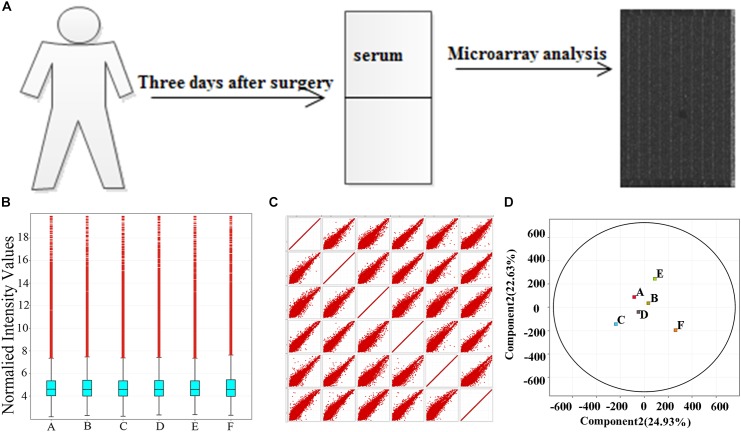
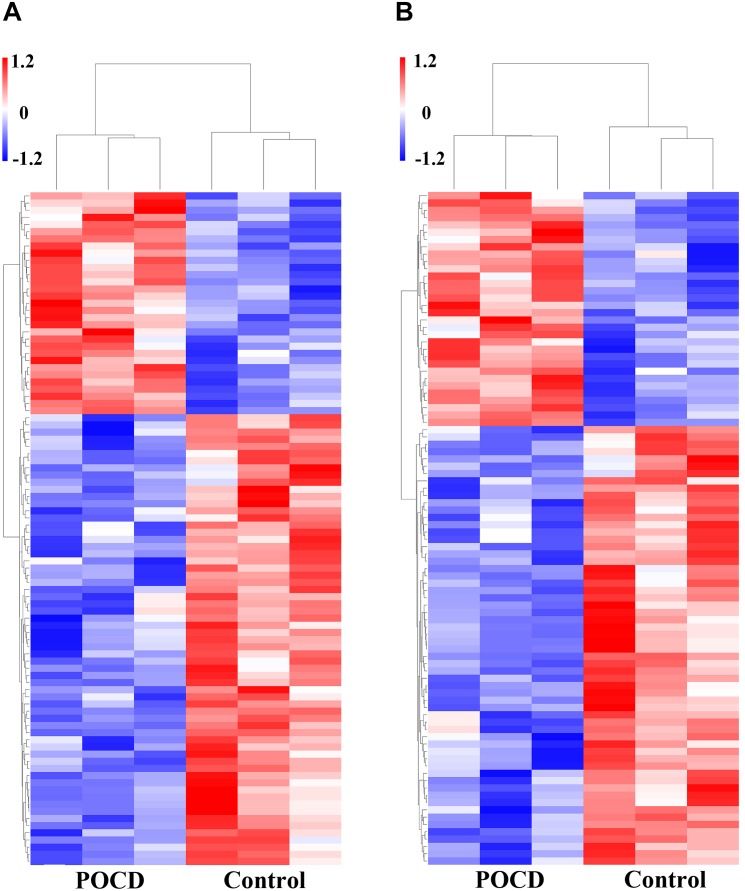
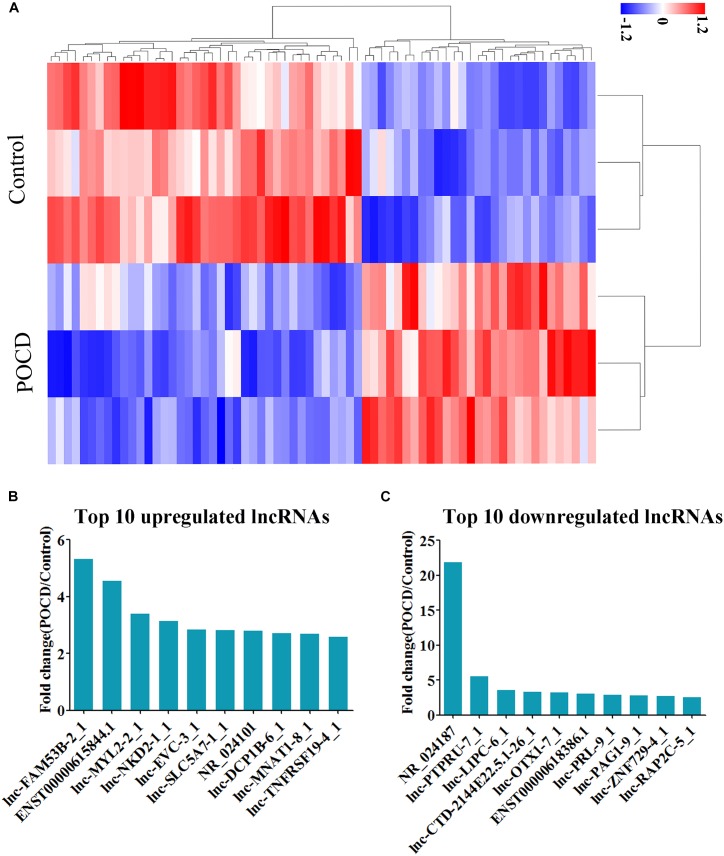
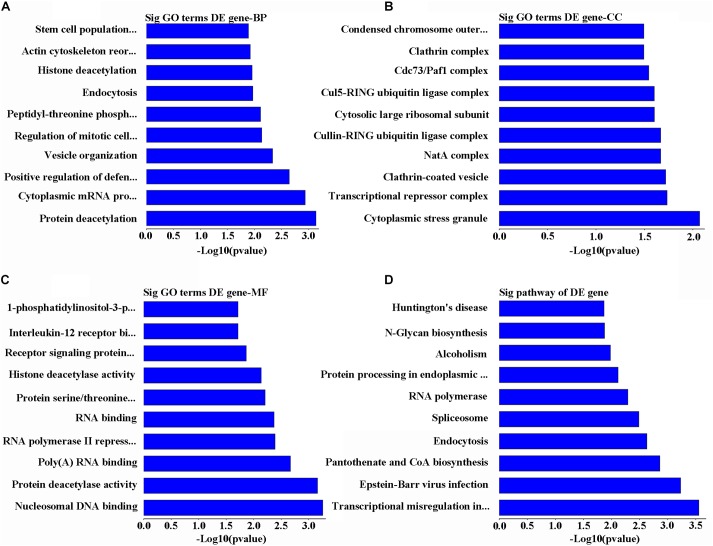
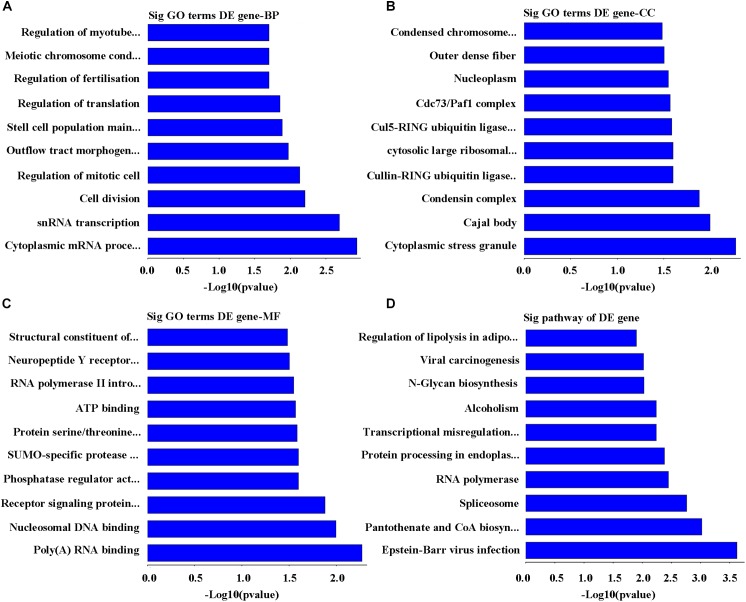
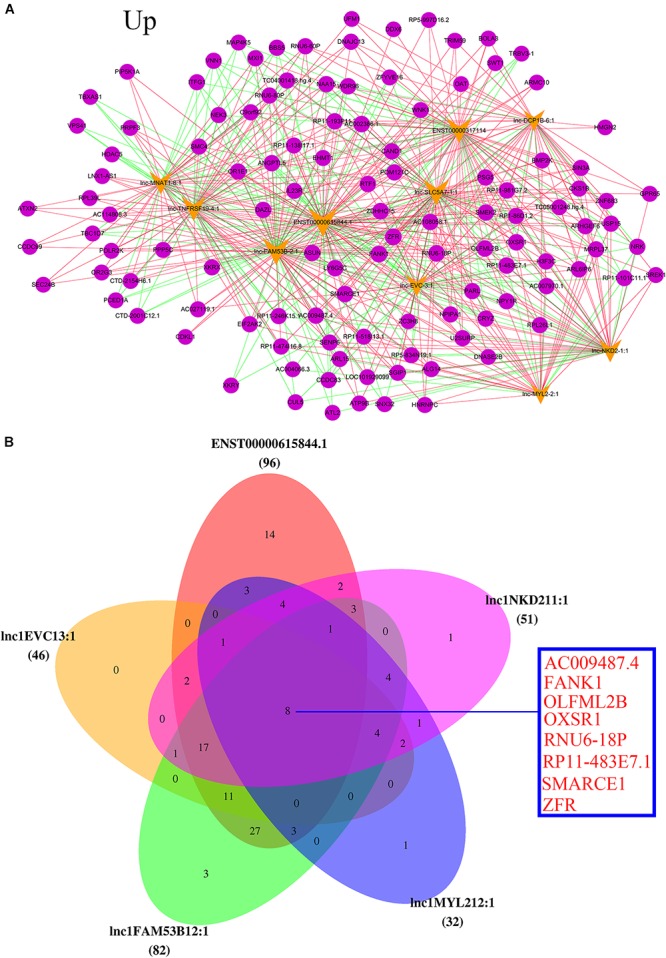
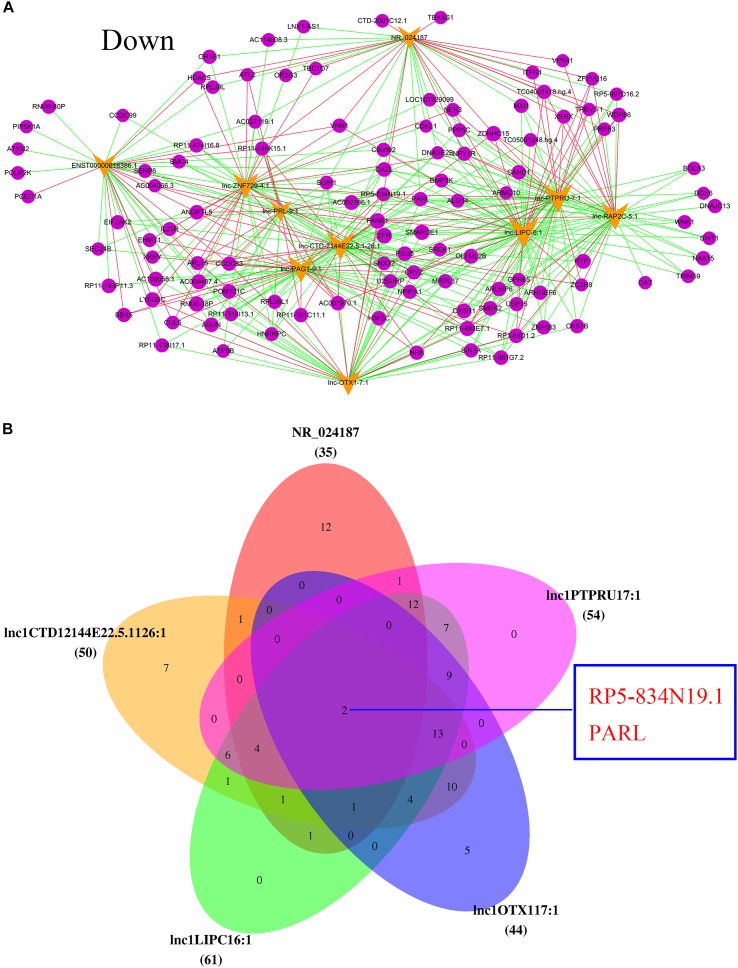
Postoperative cognitive dysfunction (POCD) is serious disorder in the central nervous system common in aged patients after anesthesia. Although its clinical symptoms are well recognized, however, the molecular etiology of the POCD remains unrevealed. Similarly, neither gold standard molecular diagnosis nor effective treatment is available for POCD until the present. Therefore, we aimed to explore the molecular mechanism of this disorder through investigating lncRNAs and mRNAs associated with POCD human patients and investigate their underlying regulatory pathways. In this study, we recruited 200 patients requiring hip or knee replacement surgery. Their neurological functions were assessed at two time points, 1 day before the surgery and 30 days post-surgery. In parallel, serum samples were collected from the participants to analyze lncRNAs and mRNAs differential expression profile between POCD and non-POCD patients using microarray analysis. To further investigate the role differentially expressed mRNA and lncRNAs, Gene Ontology (GO), pathway analyses on mRNAs and lncRNA-mRNA interaction network were performed. As a result, 68 lncRNAs and 115 mRNAs were dysregulated in the POCD group compared to non-POCD group. Among them, the top 10 upregulated lncRNAs and 10 downregulated lncRNAs were listed for enrichment analysis. Interestingly, we found that these lncRNA and mRNA are involved in biological process, molecular function, and cellular component in addition to various signaling pathways, suggesting that the pathogenesis of POCD involves lncRNAs and mRNAs differential expression. Consequently, the genetic dysregulation between the non-POCD and POCD patients participates in the occurrence and development of POCD, and could be served as diagnostic biomarkers and drug targets for POCD treatment.
术后认知功能障碍(POCD)是老年患者麻醉后常见的中枢神经系统严重疾病。尽管其临床症状已广为人知,然而,POCD的分子病因仍未明确。同样,迄今为止,POCD既没有金标准分子诊断方法,也没有有效的治疗方法。因此,我们旨在通过研究与POCD患者相关的长链非编码RNA(lncRNA)和信使核糖核酸(mRNA)来探索这种疾病的分子机制,并研究其潜在的调控途径。在本研究中,我们招募了200例需要进行髋关节或膝关节置换手术的患者。在两个时间点对他们的神经功能进行评估,即手术前1天和手术后30天。同时,从参与者中收集血清样本,使用微阵列分析来分析POCD患者和非POCD患者之间lncRNA和mRNA的差异表达谱。为了进一步研究差异表达的mRNA和lncRNA的作用,我们进行了基因本体论(GO)、mRNA的通路分析以及lncRNA-mRNA相互作用网络分析。结果显示,与非POCD组相比,POCD组中有68种lncRNA和115种mRNA表达失调。其中,列出了上调程度最高的前10种lncRNA和下调程度最高的前10种lncRNA进行富集分析。有趣的是,我们发现这些lncRNA和mRNA除了参与各种信号通路外,还涉及生物过程、分子功能和细胞成分,这表明POCD的发病机制涉及lncRNA和mRNA的差异表达。因此,非POCD患者和POCD患者之间的基因失调参与了POCD的发生和发展,并且可以作为POCD诊断的生物标志物和治疗的药物靶点。