From the Cardiovascular Research Center, Massachusetts General Hospital, Boston (D.H., A.L., A.Y., L.X., D.J.M., I.J.D.).
Department of Biomedical Engineering, Boston University, MA (D.H.).
Circ Res. 2018 Oct 12;123(9):1066-1079. doi: 10.1161/CIRCRESAHA.118.313249.
Human pluripotent stem cell-derived cardiomyocytes (hPSC-CMs) are a readily available, robustly reproducible, and physiologically appropriate human cell source for cardiac disease modeling, drug discovery, and toxicity screenings in vitro. However, unlike adult myocardial cells in vivo, hPSC-CMs cultured in vitro maintain an immature metabolic phenotype, where majority of ATP is produced through aerobic glycolysis instead of oxidative phosphorylation in the mitochondria. Little is known about the underlying signaling pathways controlling hPSC-CMs' metabolic and functional maturation.
To define the molecular pathways controlling cardiomyocytes' metabolic pathway selections and improve cardiomyocyte metabolic and functional maturation.
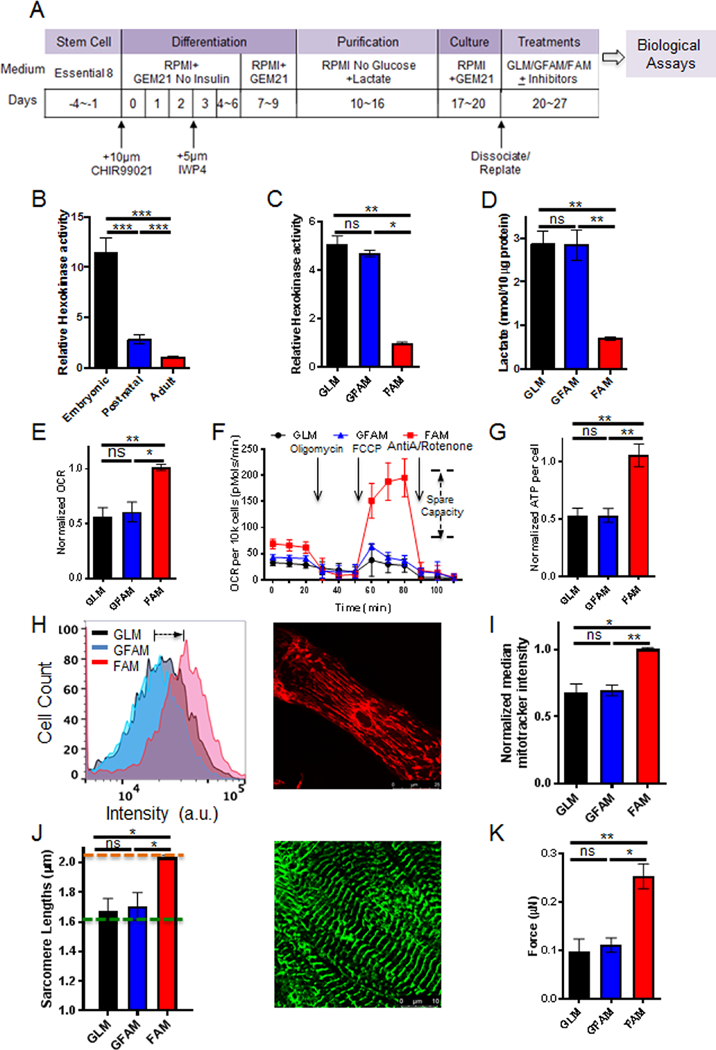
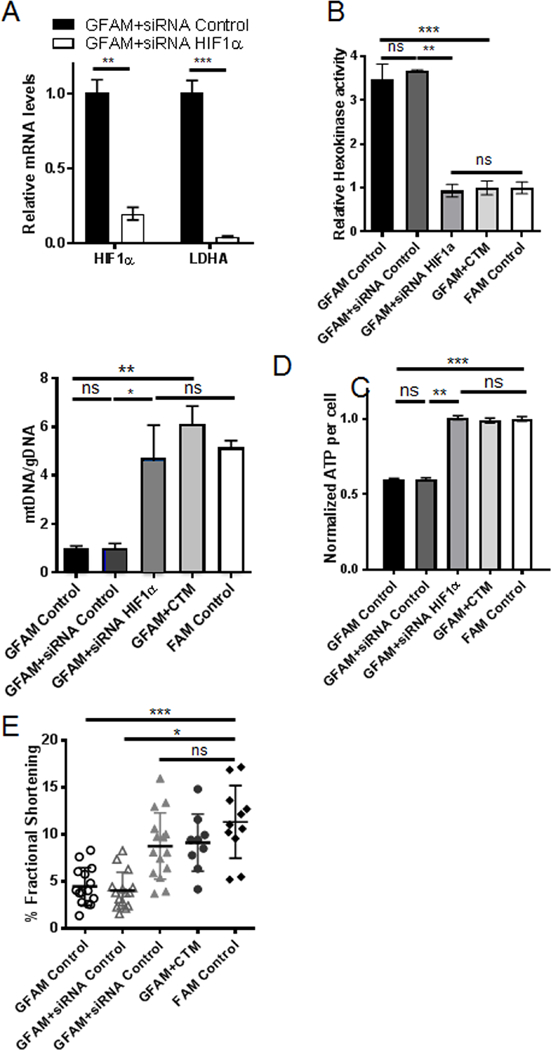
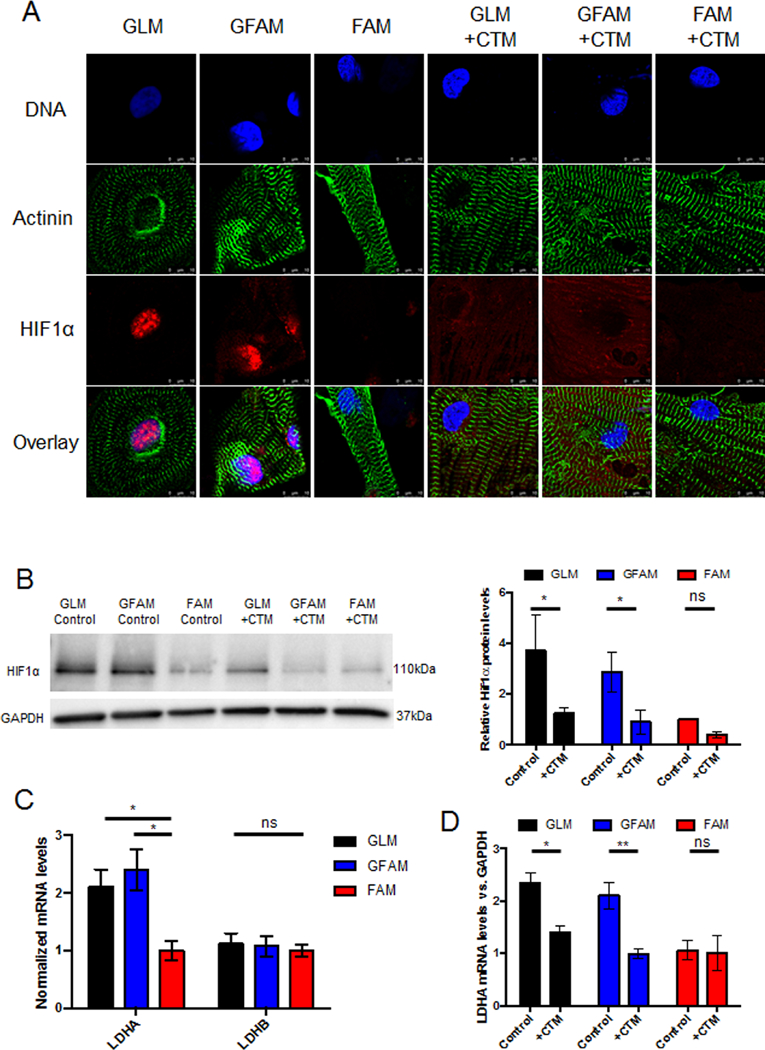
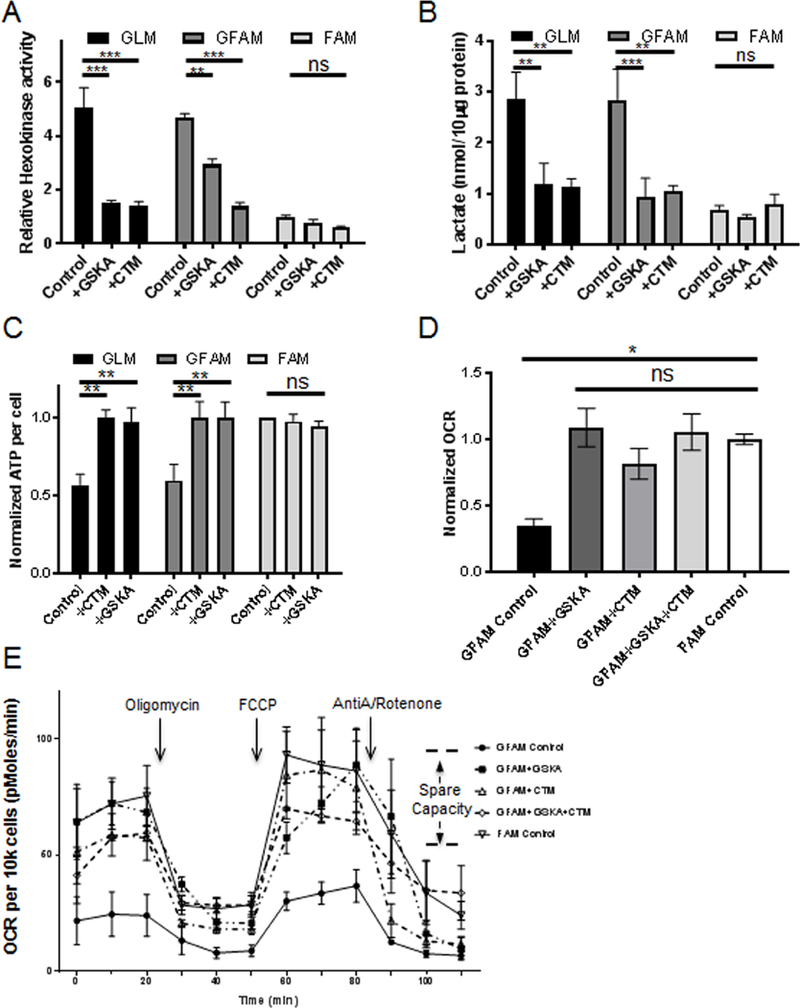
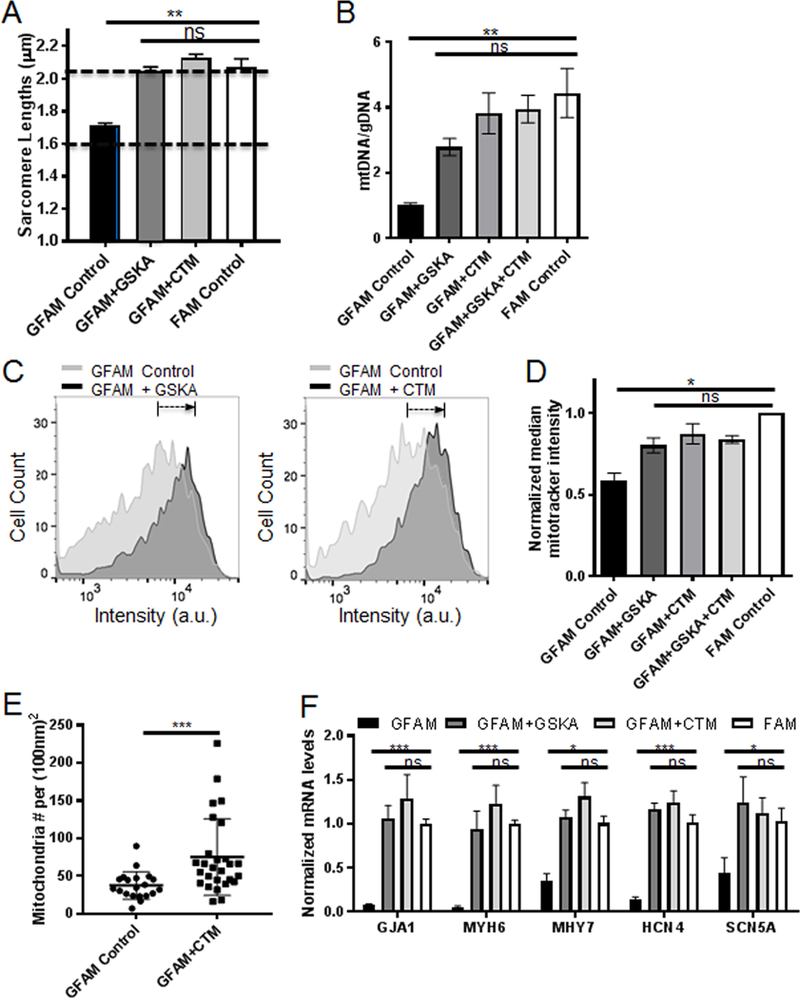
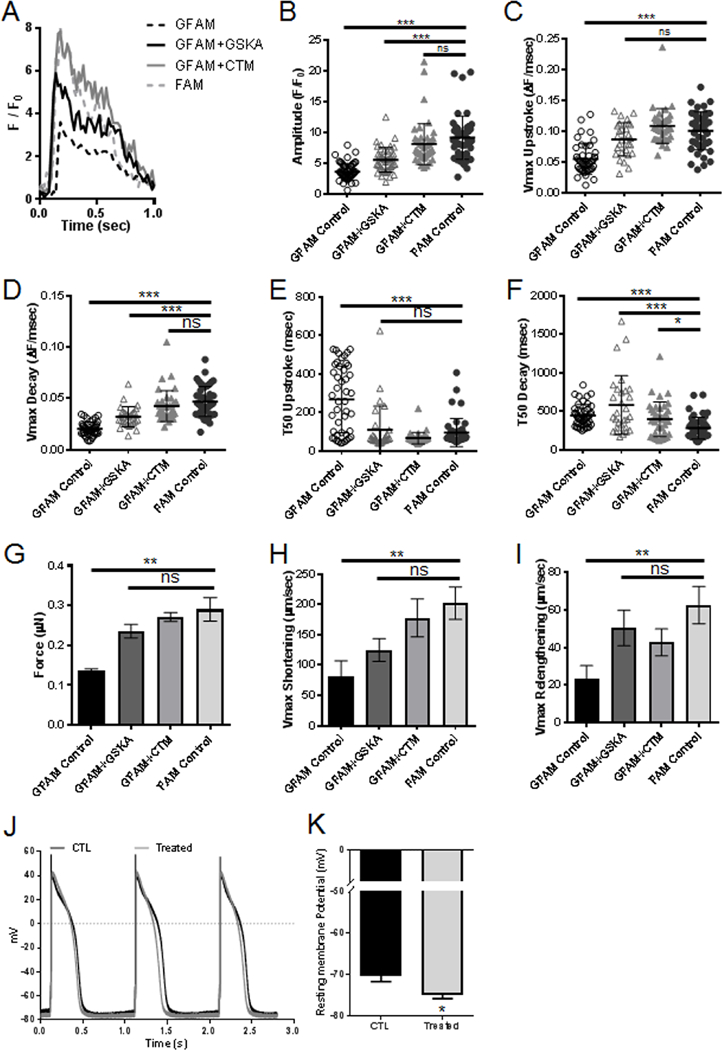
We cultured hPSC-CMs in different media compositions including glucose-containing media, glucose-containing media supplemented with fatty acids, and glucose-free media with fatty acids as the primary carbon source. We found that cardiomyocytes cultured in the presence of glucose used primarily aerobic glycolysis and aberrantly upregulated HIF1α (hypoxia-inducible factor 1α) and its downstream target lactate dehydrogenase A. Conversely, glucose deprivation promoted oxidative phosphorylation and repressed HIF1α. Small molecule inhibition of HIF1α or lactate dehydrogenase A resulted in a switch from aerobic glycolysis to oxidative phosphorylation. Likewise, siRNA inhibition of HIF1α stimulated oxidative phosphorylation while inhibiting aerobic glycolysis. This metabolic shift was accompanied by an increase in mitochondrial content and cellular ATP levels. Furthermore, functional gene expressions, sarcomere length, and contractility were improved by HIF1α/lactate dehydrogenase A inhibition.
We show that under standard culture conditions, the HIF1α-lactate dehydrogenase A axis is aberrantly upregulated in hPSC-CMs, preventing their metabolic maturation. Chemical or siRNA inhibition of this pathway results in an appropriate metabolic shift from aerobic glycolysis to oxidative phosphorylation. This in turn improves metabolic and functional maturation of hPSC-CMs. These findings provide key insight into molecular control of hPSC-CMs' metabolism and may be used to generate more physiologically mature cardiomyocytes for drug screening, disease modeling, and therapeutic purposes.
人类多能干细胞衍生的心肌细胞(hPSC-CMs)是一种易于获得、可高度重现且生理适宜的人类细胞来源,可用于体外心脏疾病建模、药物发现和毒性筛选。然而,与体内的成人心肌细胞不同,体外培养的 hPSC-CMs 保持不成熟的代谢表型,其中大部分 ATP 通过有氧糖酵解产生,而不是通过线粒体中的氧化磷酸化产生。目前尚不清楚控制 hPSC-CMs 代谢和功能成熟的潜在信号通路。
确定控制心肌细胞代谢途径选择的分子途径,并改善心肌细胞的代谢和功能成熟。
我们在不同的培养基组成中培养 hPSC-CMs,包括含葡萄糖的培养基、含葡萄糖和脂肪酸的培养基以及以脂肪酸为主要碳源的无葡萄糖培养基。我们发现,在葡萄糖存在的情况下培养的心肌细胞主要利用有氧糖酵解,并异常地上调 HIF1α(缺氧诱导因子 1α)及其下游靶标乳酸脱氢酶 A。相反,葡萄糖剥夺促进氧化磷酸化并抑制 HIF1α。HIF1α 或乳酸脱氢酶 A 的小分子抑制导致从有氧糖酵解到氧化磷酸化的转变。同样,HIF1α 的 siRNA 抑制刺激氧化磷酸化,同时抑制有氧糖酵解。这种代谢转变伴随着线粒体含量和细胞内 ATP 水平的增加。此外,HIF1α/乳酸脱氢酶 A 的抑制增强了功能基因表达、肌节长度和收缩性。
我们表明,在标准培养条件下,hPSC-CMs 中 HIF1α-乳酸脱氢酶 A 轴异常上调,阻止其代谢成熟。该途径的化学或 siRNA 抑制导致从有氧糖酵解到氧化磷酸化的适当代谢转变。这反过来又改善了 hPSC-CMs 的代谢和功能成熟。这些发现为 hPSC-CMs 代谢的分子控制提供了重要见解,并可用于生成更具生理成熟度的心肌细胞,用于药物筛选、疾病建模和治疗目的。