Department of Molecular Oncology, Moffitt Cancer Center, Tampa, Florida.
Department of Proteomics, Moffitt Cancer Center, Tampa, Florida.
Mol Cancer Res. 2019 Feb;17(2):583-593. doi: 10.1158/1541-7786.MCR-18-0777. Epub 2018 Oct 24.
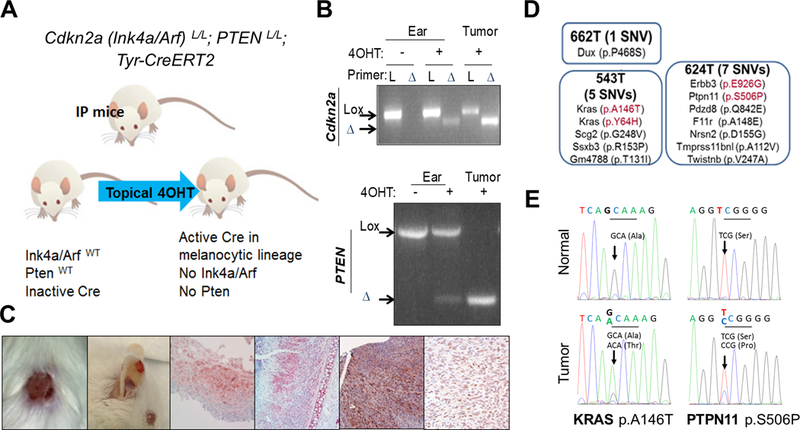
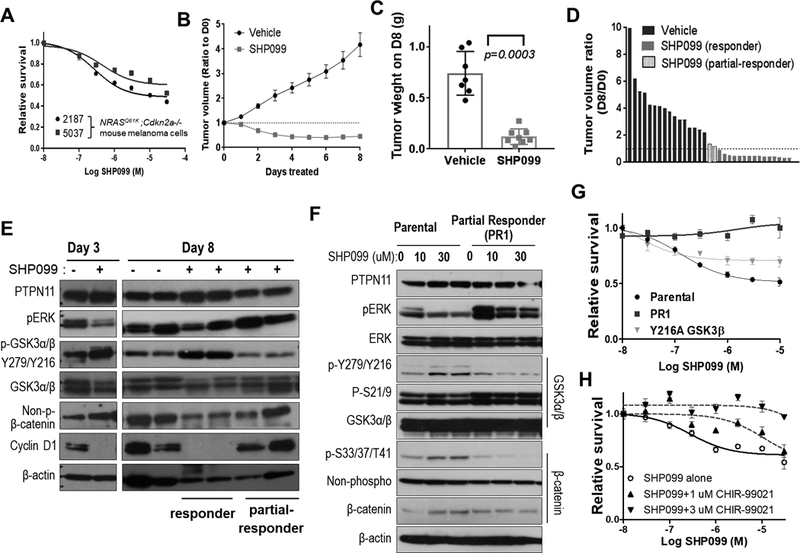
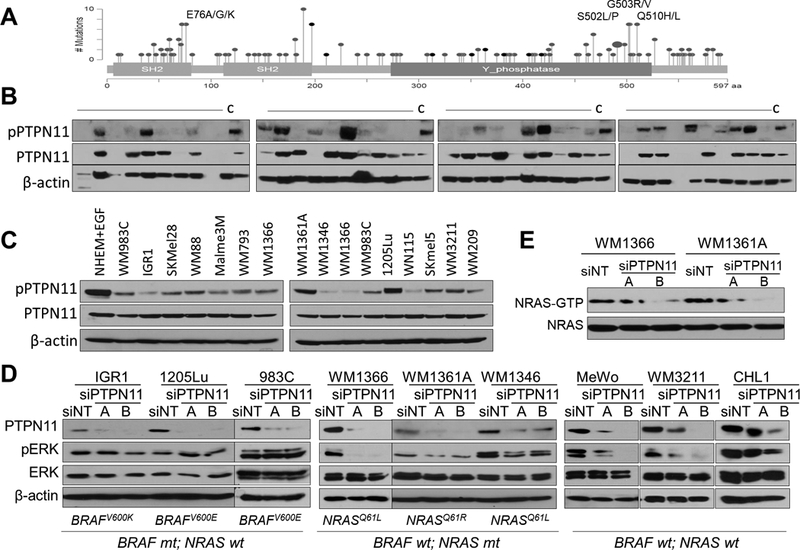
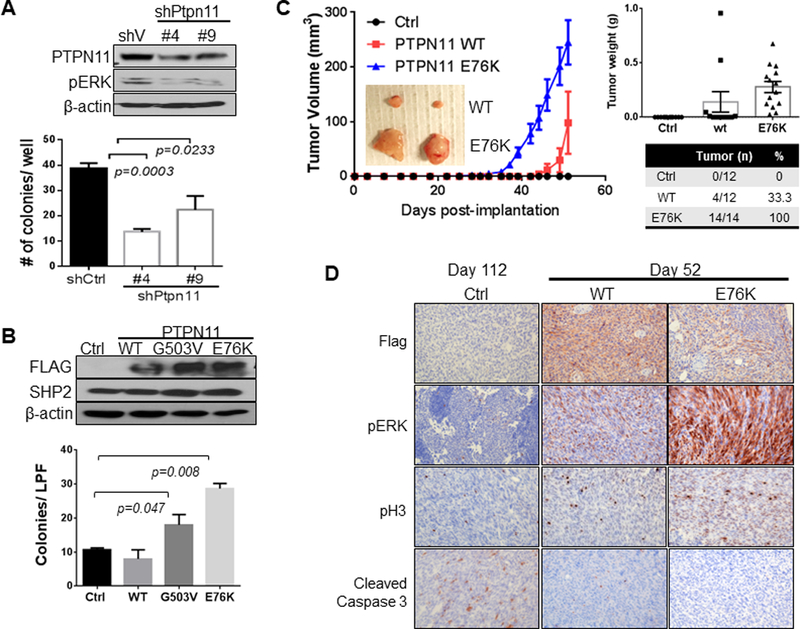
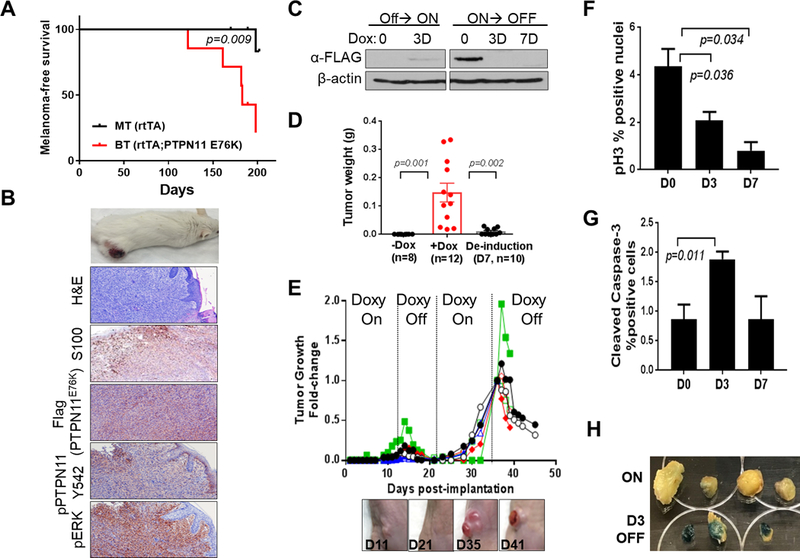
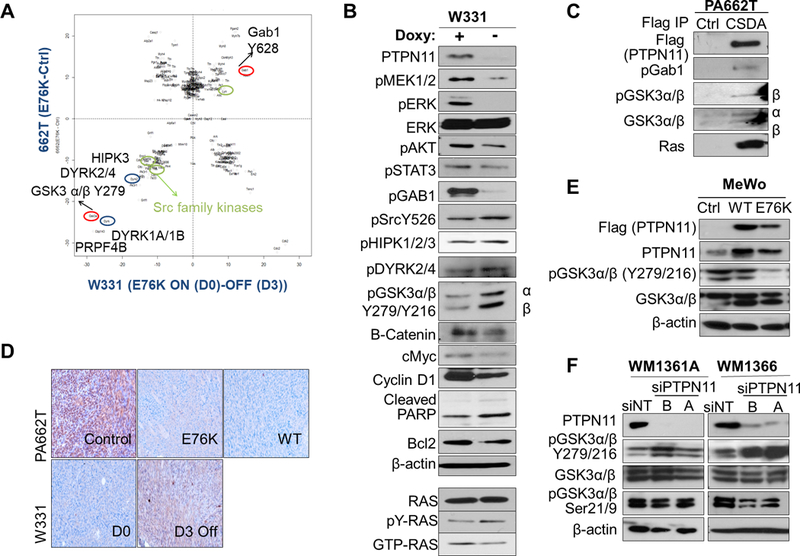
Melanoma is one of the most highly mutated cancer types. To identify functional drivers of melanoma, we searched for cross-species conserved mutations utilizing a mouse melanoma model driven by loss of PTEN and CDKN2A, and identified mutations in , and . encodes the SHP2 protein tyrosine phosphatase that activates the RAS/RAF/MAPK pathway. Although is an oncogene in leukemia, lung, and breast cancers, its roles in melanoma are not clear. In this study, we found that PTPN11 is frequently activated in human melanoma specimens and cell lines and is required for full RAS/RAF/MAPK signaling activation in wild-type (either mutant or wild-type) melanoma cells. played oncogenic roles in melanoma by driving anchorage-independent colony formation and tumor growth. In and -null mice, -inducible and melanocyte-specific PTPN11 expression significantly enhanced melanoma tumorigenesis. Melanoma cells derived from this mouse model showed doxycycline-dependent tumor growth in nude mice. Silencing PTPN11 expression by doxycycline withdrawal caused regression of established tumors by induction of apoptosis and senescence, and suppression of proliferation. Moreover, the PTPN11 inhibitor (SHP099) also caused regression of -mutant melanoma. Using a quantitative tyrosine phosphoproteomics approach, we identified GSK3α/β as one of the key substrates that were differentially tyrosine-phosphorylated in these experiments modulating PTPN11. This study demonstrates that PTPN11 plays oncogenic roles in melanoma and regulates RAS and GSK3β signaling pathways. IMPLICATIONS: This study identifies PTPN11 as an oncogenic driver and a novel and actionable therapeutic target for wild-type melanoma.
黑色素瘤是突变程度最高的癌症类型之一。为了鉴定黑色素瘤的功能驱动基因,我们利用由 PTEN 和 CDKN2A 缺失驱动的小鼠黑色素瘤模型,在跨物种中寻找保守突变,并鉴定出 和 中的突变。 编码 SHP2 蛋白酪氨酸磷酸酶,该酶激活 RAS/RAF/MAPK 通路。虽然 是白血病、肺癌和乳腺癌中的致癌基因,但它在黑色素瘤中的作用尚不清楚。在这项研究中,我们发现 PTPN11 在人类黑色素瘤标本和细胞系中经常被激活,并且在 野生型( 突变或野生型)黑色素瘤细胞中完全激活 RAS/RAF/MAPK 信号通路是必需的。 在黑色素瘤中发挥致癌作用,通过驱动锚定非依赖性集落形成和肿瘤生长。在 和 -/-小鼠中, -诱导和黑素细胞特异性 PTPN11 表达显著增强了黑色素瘤肿瘤发生。从这种小鼠模型衍生的黑色素瘤细胞在裸鼠中表现出依赖于多西环素的肿瘤生长。通过多西环素撤去诱导细胞凋亡和衰老,以及抑制增殖,沉默 PTPN11 表达导致已建立的肿瘤消退。此外,PTPN11 抑制剂(SHP099)也导致 突变型黑色素瘤的消退。使用定量酪氨酸磷酸化蛋白质组学方法,我们鉴定出 GSK3α/β 是在这些实验中调节 PTPN11 时差异酪氨酸磷酸化的关键底物之一。这项研究表明 PTPN11 在黑色素瘤中发挥致癌作用,并调节 RAS 和 GSK3β 信号通路。 意义:这项研究确定 PTPN11 是一种致癌驱动基因,也是 野生型黑色素瘤的一个新的和可靶向的治疗靶点。