Roh Hee-Tae, Cho Su-Youn, So Wi-Young, Paik Il-Young, Suh Sang-Hoon
Department of Physical Education, Dong-A University, Busan 604-714, Republic of Korea.
Exercise Physiology Laboratory, Department of Physical Education, Yonsei University, Seoul 120-749, Republic of Korea.
J Sport Health Sci. 2016 Dec;5(4):448-455. doi: 10.1016/j.jshs.2015.09.007. Epub 2015 Sep 25.
The aim of this study was to investigate the effects of fluid replacement by water or sports drinks on serum heat shock protein 70 (HSP70) levels and DNA damage during exercise at a high ambient temperature.
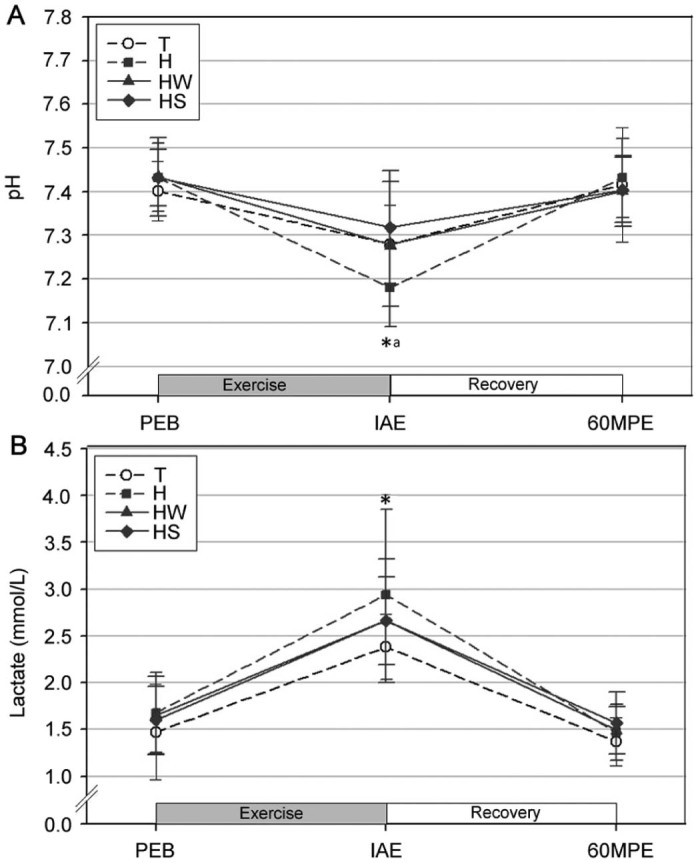
Ten male college athletes with an athletic career ranging from 6 to 11 years were recruited from Yonsei University. The subjects ran on a treadmill at 75% of heart rate reserve during 4 different trials: thermoneutral temperature at 18°C (T), high ambient temperature at 32°C without fluid replacement (H), high ambient temperature at 32°C with water replacement (HW), and high ambient temperature at 32°C with sports drink replacement (HS). During each condition, blood samples were collected at the pre-exercise baseline (PEB), immediately after exercise (IAE), and 60 min post-exercise.
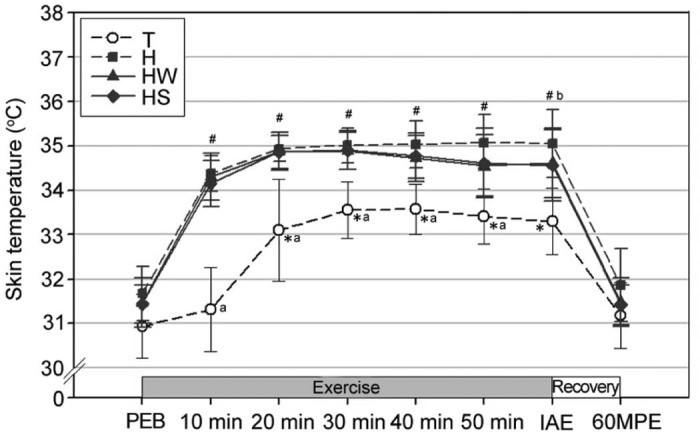
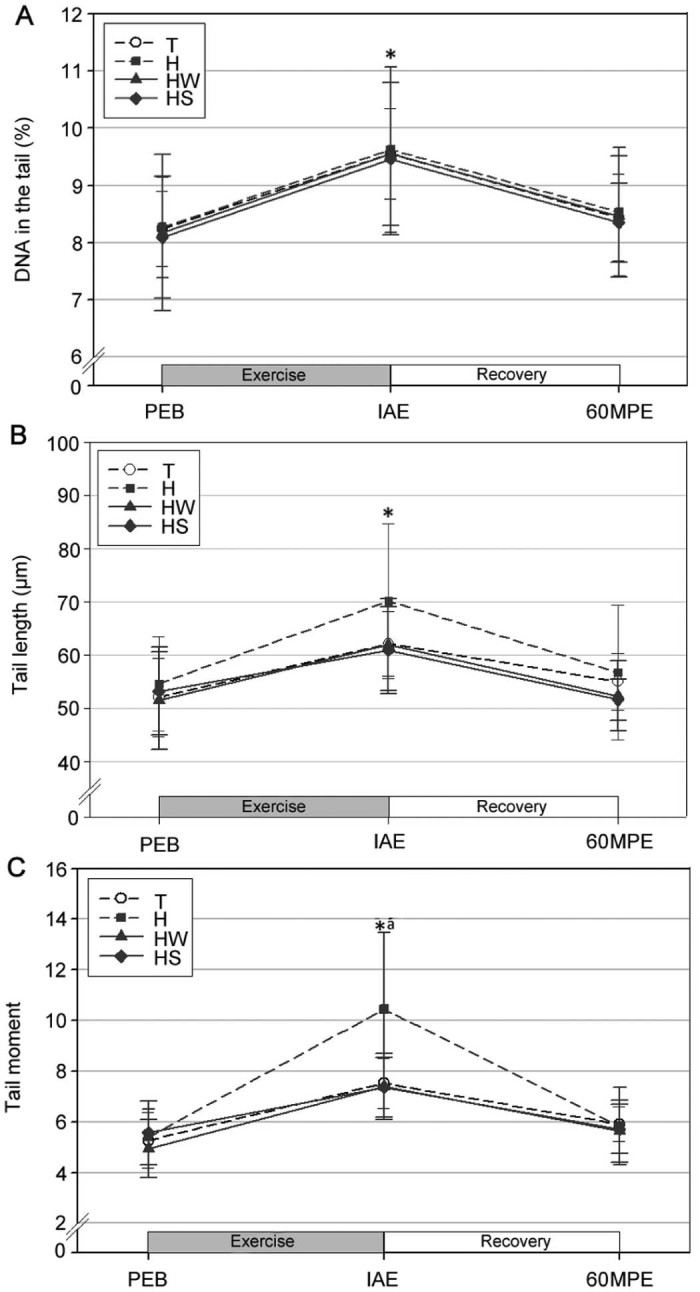
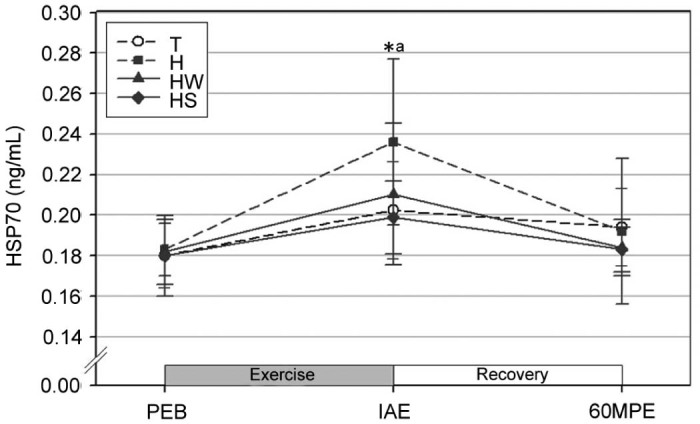
Skin temperature significantly increased during exercise and was significantly higher in H compared to T and HS at IAE. Meanwhile, serum HSP70 was significantly increased in all conditions at IAE compared to PEB and was higher in H compared to T at the former time point. Significantly increased lymphocyte DNA damage (DNA in the tail, tail length, tail moment) was observed in all trials at IAE compared to PEB, and attenuated DNA damage (tail moment) was observed in HS compared to H at IAE.
Acute exercise elevates serum HSP70 and induces lymphocyte DNA damage. Fluid replacement by sports drink during exercise at high ambient temperature can attenuate HSP response and DNA damage by preventing dehydration and reducing thermal stress.
本研究旨在调查在高环境温度下运动期间,饮用清水或运动饮料进行液体补充对血清热休克蛋白70(HSP70)水平及DNA损伤的影响。
从延世大学招募了10名运动生涯为6至11年的男性大学生运动员。受试者在4种不同试验中以心率储备的75%在跑步机上跑步:18°C的热中性温度(T)、32°C无液体补充的高环境温度(H)、32°C饮用清水补充的高环境温度(HW)以及32°C饮用运动饮料补充的高环境温度(HS)。在每种情况下,于运动前基线(PEB)、运动后即刻(IAE)和运动后60分钟采集血样。
运动期间皮肤温度显著升高,在IAE时,H组的皮肤温度显著高于T组和HS组。同时,与PEB相比,所有情况下IAE时血清HSP70均显著升高,且在前一时间点H组高于T组。与PEB相比,所有试验在IAE时均观察到淋巴细胞DNA损伤显著增加(尾内DNA、尾长、尾矩),与H组相比,HS组在IAE时观察到DNA损伤(尾矩)减轻。
急性运动可升高血清HSP70并诱导淋巴细胞DNA损伤。在高环境温度下运动期间饮用运动饮料进行液体补充可通过防止脱水和减轻热应激来减弱HSP反应和DNA损伤。