Department of Integrative Medicine, West China Hospital, Sichuan University, Chengdu 610041, Sichuan Province, China.
World J Gastroenterol. 2018 Oct 21;24(39):4448-4461. doi: 10.3748/wjg.v24.i39.4448.
To investigate the mechanisms by which Sheng-jiang powder (SJP) ameliorates obesity-induced pancreatic inflammatory injury.
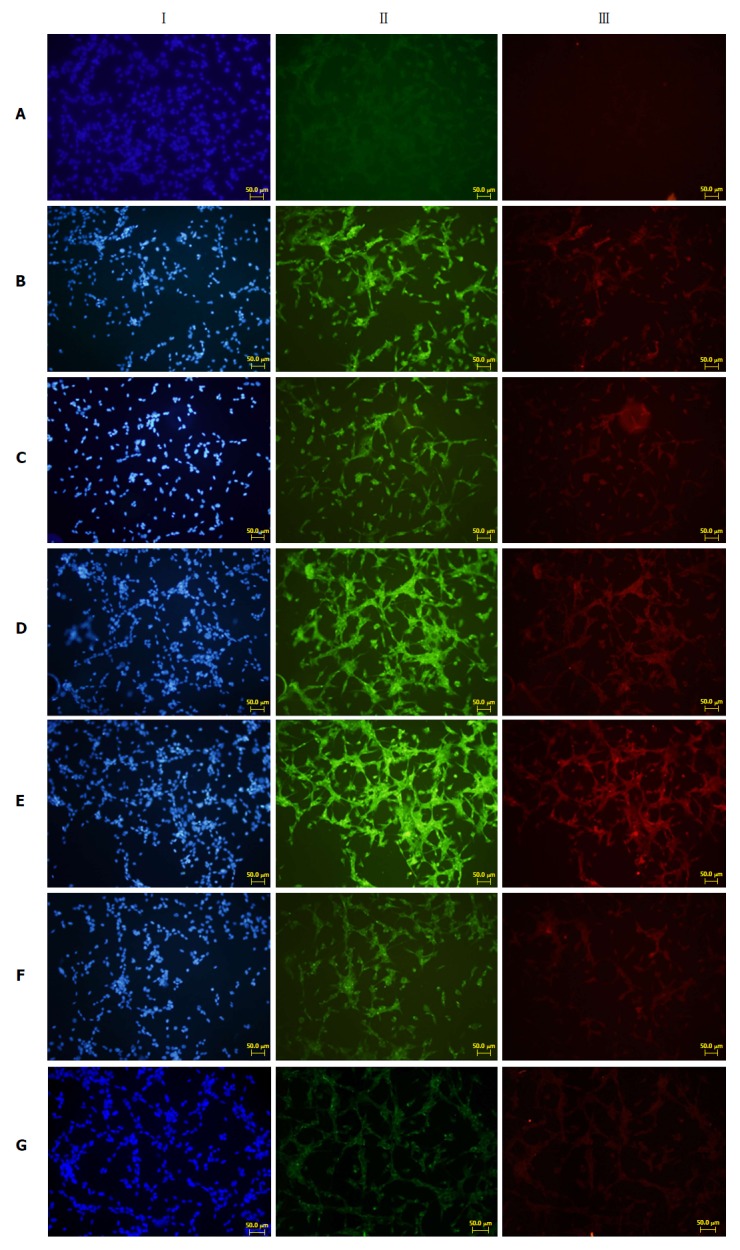
Sprague-Dawley rats were randomized into three groups: normal group (NG), obese group (HLG), or SJP treatment group (HSG). Obesity was induced by feeding a high-fat diet in the HLG and HSG, while the NG received standard chow. Rats were euthanized after 12 wk, and blood and pancreatic tissues were collected for histopathological analyses. Nuclear factor kappa-light-chain-enhancer of activated B cells (NF-κB) and transforming growth factor beta (TGF-β) expression, serum triglyceride and adiponectin levels, and apoptosis in pancreatic acinar cells were assessed. A high-fat AR42J acinar cell injury model was established using very low-density lipoprotein (VLDL). AR42J acinar cell culture supernatant, treated with different interventions, was applied to seven groups of pancreatic stellate cells (PSCs). The proliferation of PSCs and the expression of fibronectin and type I collagenase were assessed.
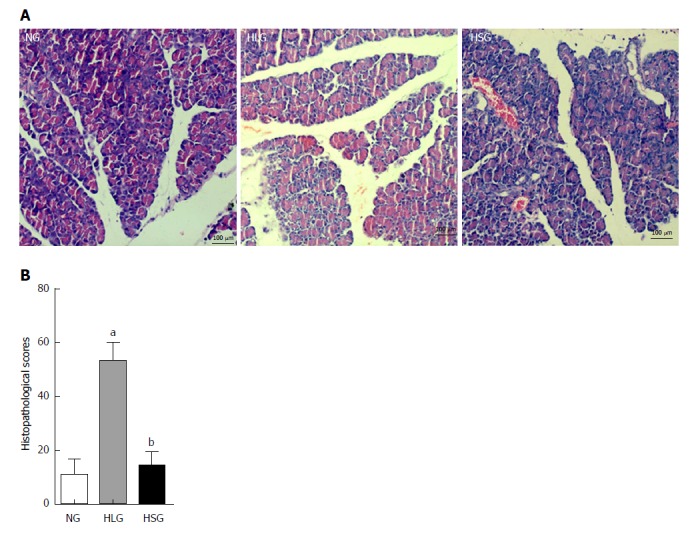
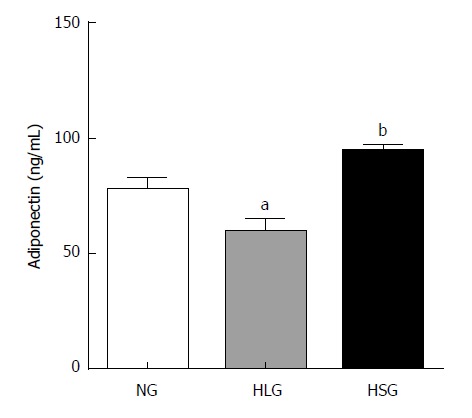
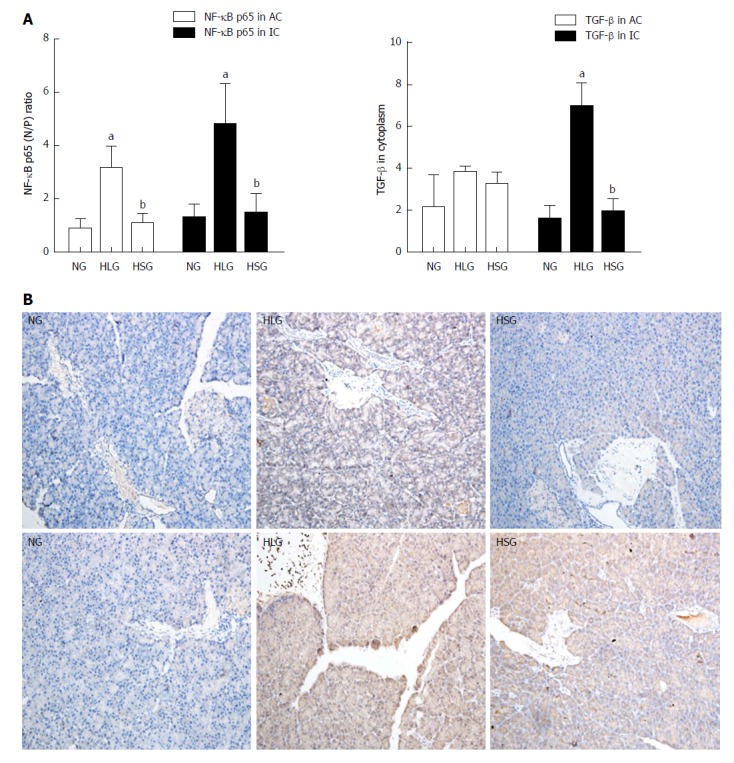
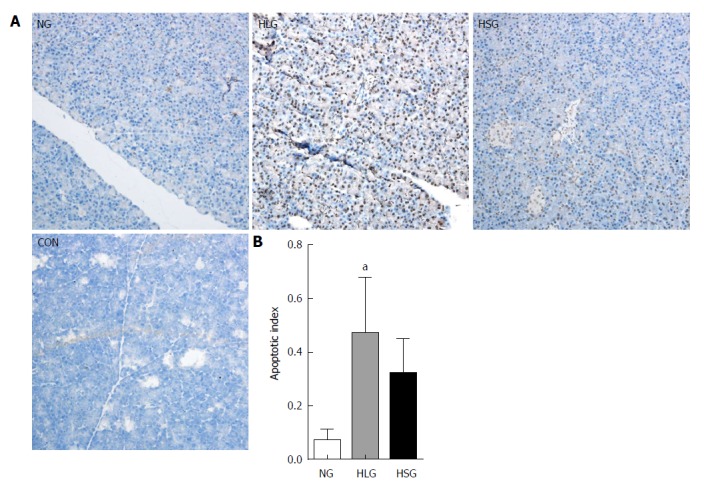
Compared with the NG, we found higher pathological scores for pancreatic tissues, lower serum adiponectin levels, higher expression levels of NF-κB in pancreatic tissues and TGF-β in pancreatic inflammatory cells, and increased apoptosis among pancreatic acinar cells for the HLG ( < 0.05). Compared with the HLG, we found reduced body weight, Lee's index scores, serum triglyceride levels, and pathological scores for pancreatic tissues; higher serum adiponectin levels; and lower expression levels of NF-κB, in pancreatic tissue and TGF-β in pancreatic inflammatory cells for the HSG ( < 0.05). The studies showed enhanced PSC activation and increased expression levels of fibronectin and type I collagenase after SJP treatment. An adenosine 5'-monophosphate-activated protein kinase (AMPK) inhibitor inhibited PSC activation.
SJP may ameliorate obesity-induced pancreatic inflammatory injury in rats by regulating key molecules of the adiponectin-AMPK signalling pathway.
探讨生肌散改善肥胖诱导的胰腺炎症损伤的机制。
将 Sprague-Dawley 大鼠随机分为三组:正常组(NG)、肥胖组(HLG)或生肌散治疗组(HSG)。HLG 和 HSG 给予高脂肪饮食诱导肥胖,而 NG 给予标准饲料。12 周后处死大鼠,采集血液和胰腺组织进行组织病理学分析。检测核因子κB(NF-κB)和转化生长因子β(TGF-β)的表达、血清甘油三酯和脂联素水平以及胰腺腺泡细胞的凋亡。采用极低密度脂蛋白(VLDL)建立 AR42J 胰腺腺泡细胞损伤模型。用不同干预措施处理 AR42J 胰腺腺泡细胞培养上清液,应用于 7 组胰腺星状细胞(PSC)。评估 PSC 的增殖以及纤连蛋白和 I 型胶原酶的表达。
与 NG 相比,HLG 大鼠胰腺组织的病理评分更高,血清脂联素水平更低,胰腺组织中 NF-κB 和胰腺炎症细胞中 TGF-β的表达水平更高,胰腺腺泡细胞的凋亡率也更高(均<0.05)。与 HLG 相比,HSG 大鼠的体重、Lee 指数评分、血清甘油三酯水平和胰腺组织的病理评分均较低,血清脂联素水平较高,胰腺组织中 NF-κB 和胰腺炎症细胞中 TGF-β的表达水平也较低(均<0.05)。研究表明,生肌散治疗后 PSC 的激活增强,纤连蛋白和 I 型胶原酶的表达水平升高。腺苷酸活化蛋白激酶(AMPK)抑制剂抑制 PSC 的激活。
生肌散可能通过调节脂联素-AMPK 信号通路的关键分子来改善肥胖大鼠的胰腺炎症损伤。