Department of Pharmacology and Pharmaceutical Sciences, School of Pharmacy, University of Southern California, Los Angeles, CA, United States.
Department of Ophthalmology, Roski Eye Institute, Keck School of Medicine, University of Southern California, Los Angeles, CA, United States.
J Control Release. 2018 Dec 28;292:183-195. doi: 10.1016/j.jconrel.2018.10.026. Epub 2018 Oct 23.
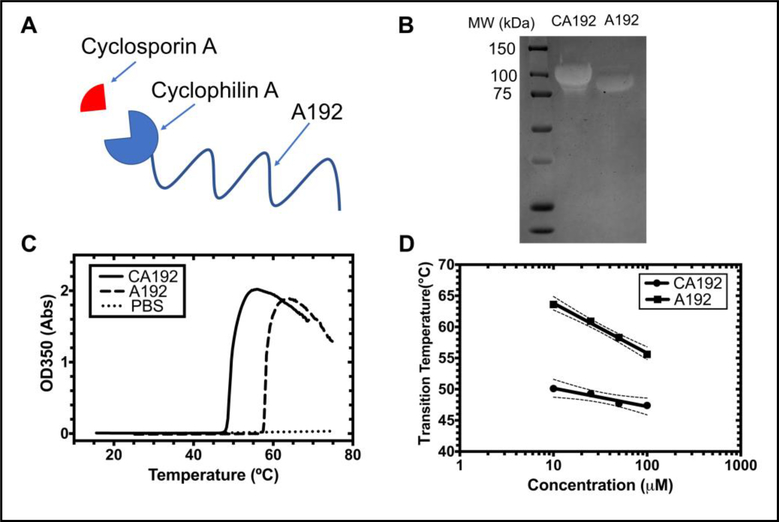
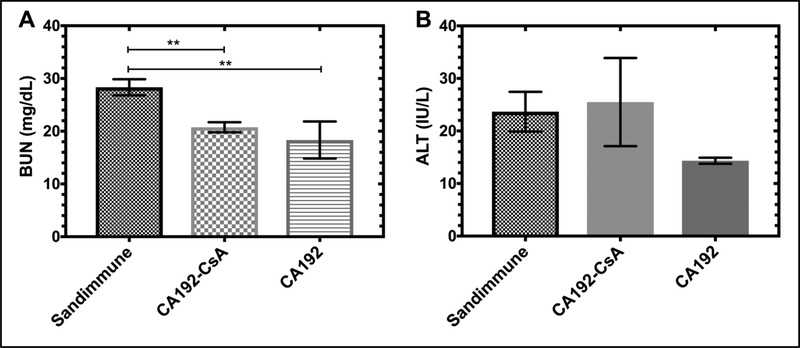
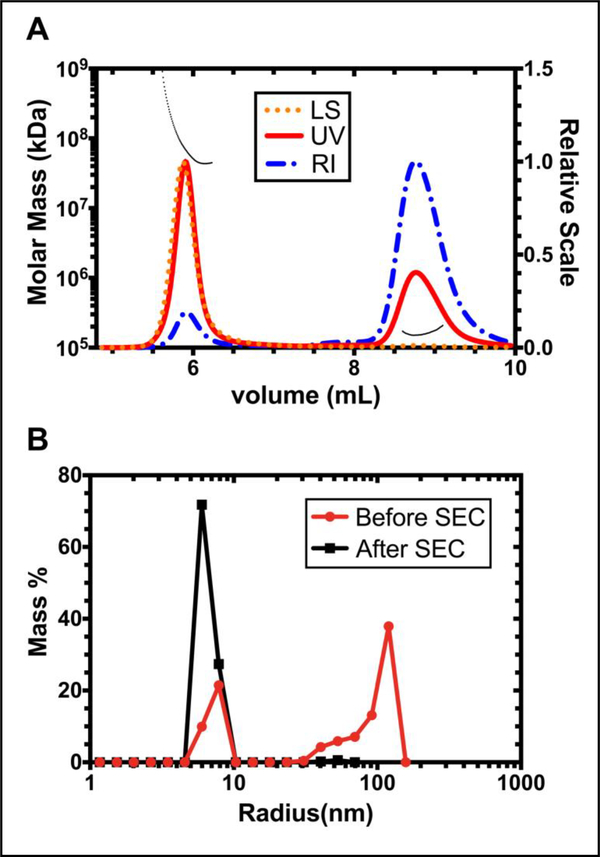
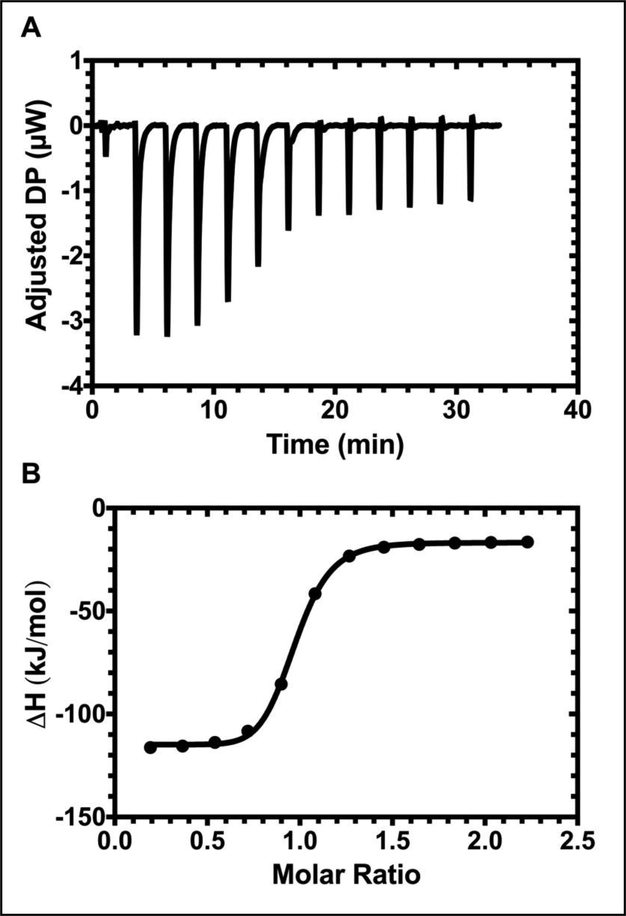
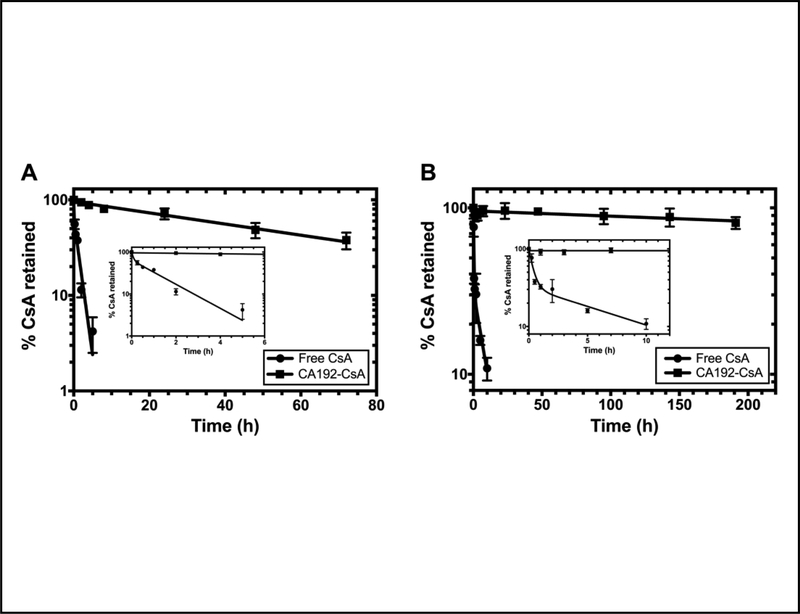
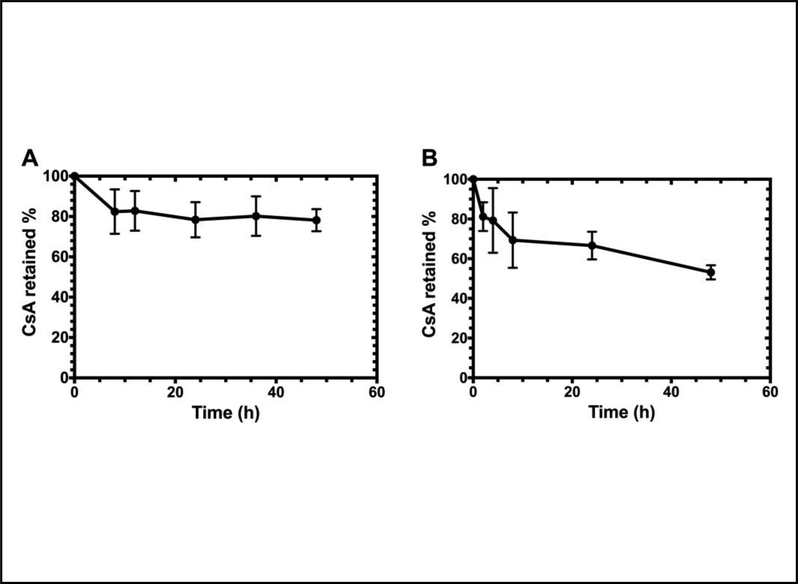
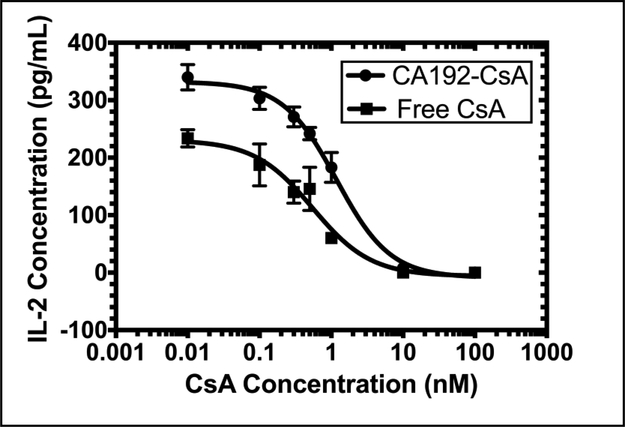
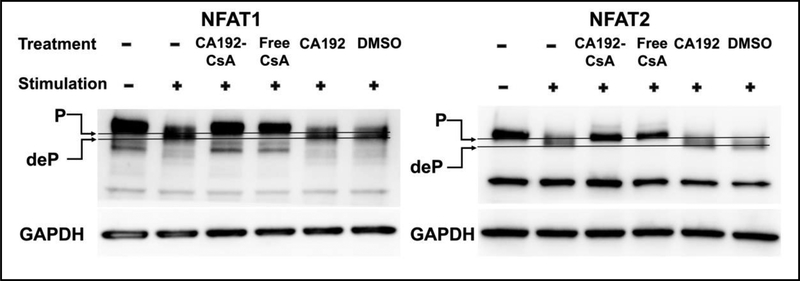
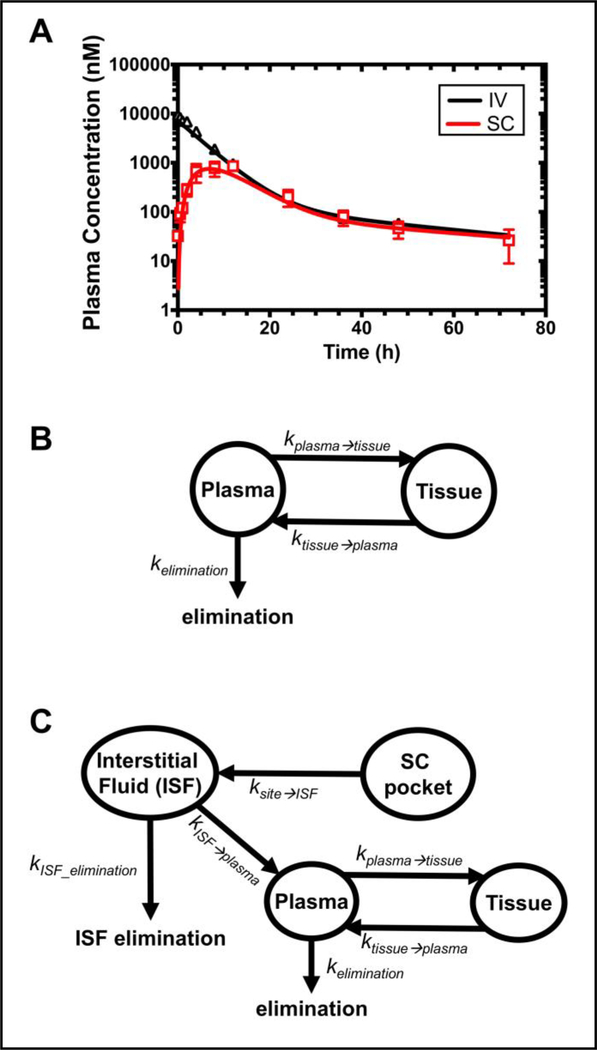
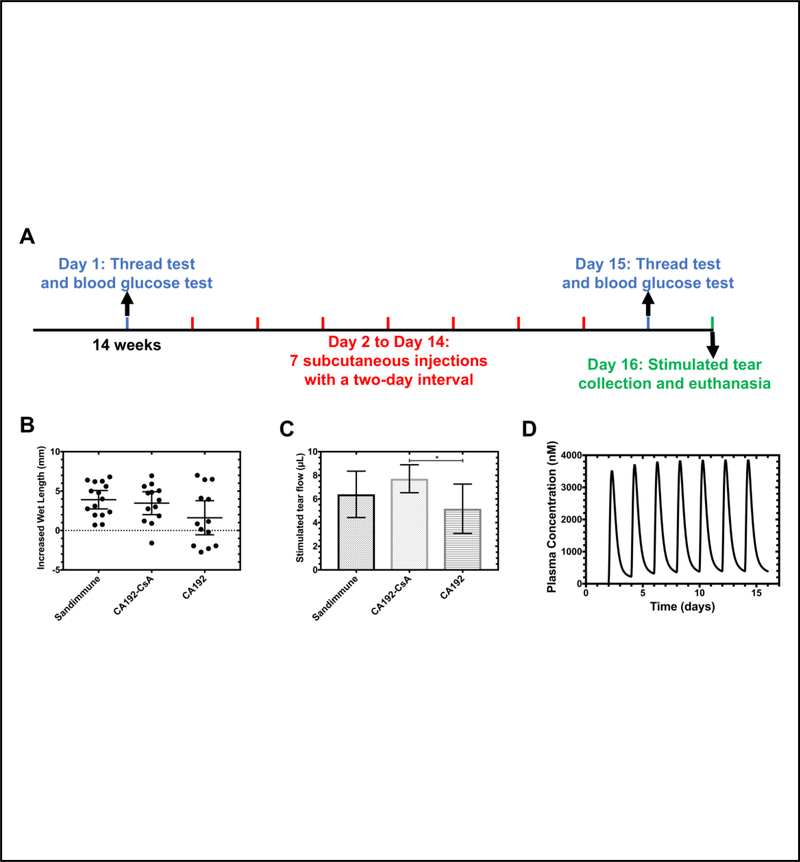
As a potent macrolide immunosuppressant, cyclosporine A (CsA) is used to treat multiple autoimmune diseases, including non-autoimmune and autoimmune-mediated dry eye disease, rheumatoid arthritis and psoriasis. Despite its potency, CsA has poor solubility, poor bioavailability, and can cause serious adverse reactions such as nephrotoxicity and neurotoxicity. To overcome these limitations, we invented a new strategy to carry CsA by fusing its cognate human receptor, cyclophilin A (CypA), to a 73 kDa elastin-like polypeptide (ELP) termed A192 using recombinant protein expression. Derived from human tropoelastin, ELPs are characterized by the ability to phase separate above a temperature that is a function of variables including concentration, molecular weight, and hydrophobicity. The resultant fusion protein, termed CA192, which assembles into a dimeric species in solution, effectively binds and solubilizes CsA with a K of 189 nM, comparable to that of endogenous CypA with a K of 35.5 nM. The release profile of CsA from CA192 follows a one phase decay model with a half-life of 957.3 h without a burst release stage. Moreover, CA192-CsA inhibited IL-2 expression induced in Jurkat cells through the calcineurin-NFAT signaling pathway with an IC of 1.2 nM, comparable to that of free CsA with an IC of 0.5 nM. The intravenous pharmacokinetics of CA192 followed a two-compartment model with a mean residence time of 7.3 h. Subcutaneous administration revealed a bioavailability of 30% and a mean residence time of 15.9 h. When given subcutaneously for 2 weeks starting at 14 weeks in male non-obese diabetic (NOD) mice, a model of autoimmune dacryoadenitis used to study Sjögren's syndrome (SS), CA192-CsA (2.5 mg/kg, every other day) significantly (p = 0.014) increased tear production relative to CA192 alone. Moreover, CA192 delivery reduced indications of CsA nephrotoxicity relative to free CsA. CA192 represents a viable new approach to deliver this effective but nephrotoxic agent in a modality that preserves therapeutic efficacy but suppresses drug toxicity.
环孢素 A(CsA)是一种强效的大环内酯类免疫抑制剂,用于治疗多种自身免疫性疾病,包括非自身免疫性和自身免疫性介导的干眼症、类风湿关节炎和银屑病。尽管 CsA 具有很强的效力,但它的溶解度差,生物利用度低,并且会引起严重的不良反应,如肾毒性和神经毒性。为了克服这些限制,我们发明了一种新策略,通过将其同源人受体亲环蛋白 A(CypA)与一种 73 kDa 的弹性蛋白样多肽(ELP)融合,来携带 CsA,这种 ELP 被称为 A192,使用重组蛋白表达。ELP 来源于人原弹性蛋白,其特征是在温度下相分离的能力,该温度是包括浓度、分子量和疏水性在内的变量的函数。所得融合蛋白,称为 CA192,在溶液中组装成双聚体,有效结合并溶解 CsA,其 K 为 189 nM,与 K 为 35.5 nM 的内源性 CypA 相当。CsA 从 CA192 的释放曲线遵循单相衰减模型,半衰期为 957.3 h,没有爆发释放阶段。此外,CA192-CsA 通过钙调神经磷酸酶-NFAT 信号通路抑制 Jurkat 细胞中 IL-2 的表达,其 IC 为 1.2 nM,与游离 CsA 的 IC 为 0.5 nM 相当。CA192 的静脉药代动力学遵循双室模型,平均停留时间为 7.3 h。皮下给药显示生物利用度为 30%,平均停留时间为 15.9 h。在雄性非肥胖型糖尿病(NOD)小鼠中,从 14 周开始,每周 2 次皮下给予 CA192-CsA(2.5 mg/kg,每隔一天)2 周,用于研究干燥综合征(SS)的自身免疫性泪腺炎模型,与单独给予 CA192 相比,CA192-CsA 显著(p=0.014)增加了泪液生成。此外,与游离 CsA 相比,CA192 输送降低了 CsA 肾毒性的迹象。CA192 代表了一种可行的新方法,以一种保留治疗效果但抑制药物毒性的方式输送这种有效但肾毒性的药物。