Kawai Makoto, Taniguchi Keigo, Suzuki Tomoyuki, Katayose Masaki
Department of Rehabilitation, Sapporo Medical University Hospital, Sapporo, Japan.
Department of Physical Therapy, School of Health Sciences, Sapporo Medical University, Sapporo, Japan.
BMJ Open Sport Exerc Med. 2018 Oct 18;4(1):e000381. doi: 10.1136/bmjsem-2018-000381. eCollection 2018.
Orthopaedic surgery of the knee joint results in functional deterioration of the quadriceps femoris muscle. However, little is known about quadriceps femoris muscle dysfunction in the early postsurgical period. Therefore, we examined the stiffness of the quadriceps femoris muscle in the early postsurgical period.
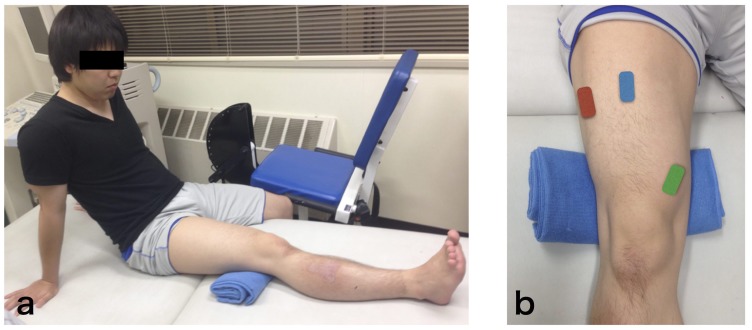
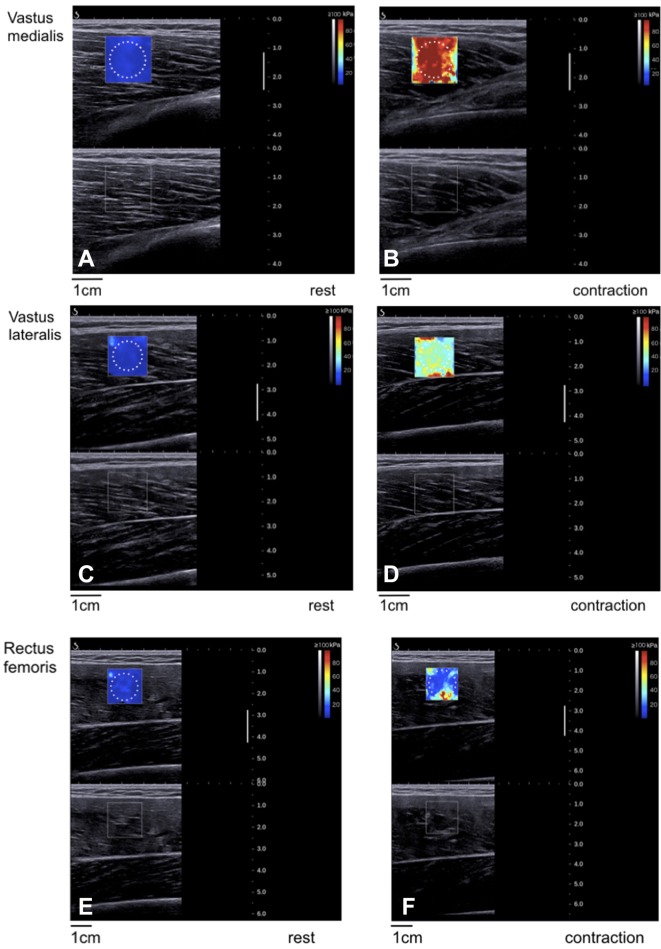
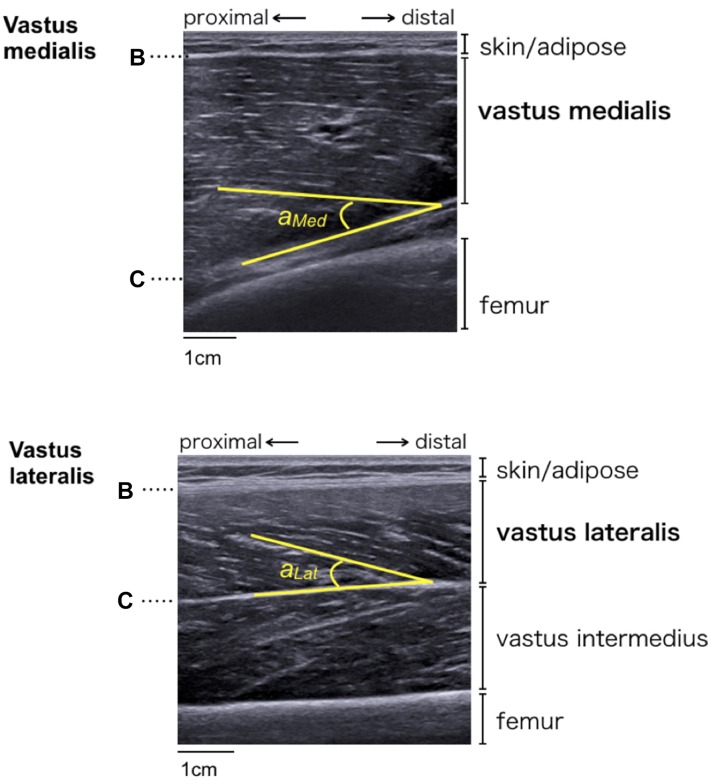
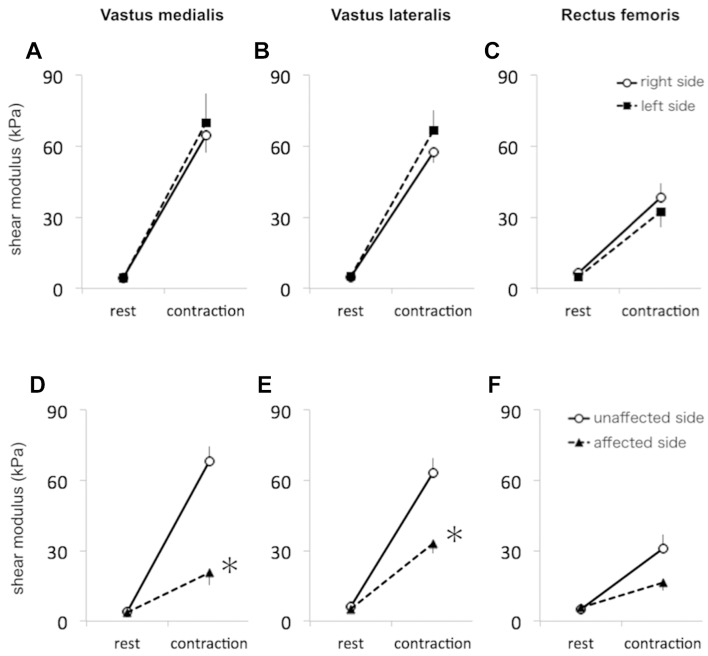
Seven patients and seven healthy controls performed quadriceps contraction exercises. In resting and contraction conditions, the shear modulus, muscle thickness and pennation angle were measured for the vastus medialis (VM), vastus lateralis (VL) and the rectus femoris (RF) using ultrasound elastography.
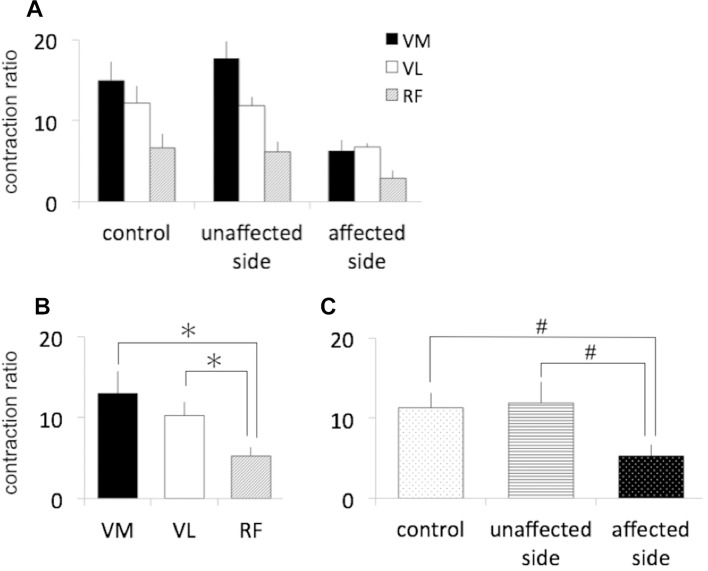
The shear moduli of the VM, VL and RF in the control group did not significantly interact, while the shear moduli in the patient group did show a significant interaction. In the resting condition, there was no difference between the unaffected and affected sides in the patient group, but the shear moduli of the VM and VL in the contraction condition was significantly lower on the affected side than the unaffected side.The contraction ratios between muscles by limbs did not significantly interact. However, there were main effects due to muscle and limb factors. The VM and VL had a significantly higher contraction ratio than the RF, and the control and unaffected limbs had a higher contraction ratio than the affected limb.
The results demonstrated a decrease in muscle stiffness during contraction in patients with quadriceps femoris dysfunction. Measurement of the shear modulus has potential as a new evaluation index and with high sensitivity to decreases in muscle contraction.
膝关节骨科手术会导致股四头肌功能退化。然而,对于术后早期股四头肌功能障碍了解甚少。因此,我们研究了术后早期股四头肌的僵硬度。
7名患者和7名健康对照者进行股四头肌收缩练习。在静息和收缩状态下,使用超声弹性成像测量股内侧肌(VM)、股外侧肌(VL)和股直肌(RF)的剪切模量、肌肉厚度和羽状角。
对照组中VM、VL和RF的剪切模量无显著交互作用,而患者组的剪切模量有显著交互作用。在静息状态下,患者组患侧和健侧之间无差异,但在收缩状态下,患侧VM和VL的剪切模量显著低于健侧。肢体间肌肉的收缩率无显著交互作用。然而,存在肌肉和肢体因素的主效应。VM和VL的收缩率显著高于RF,且对照组和健侧肢体的收缩率高于患侧肢体。
结果表明股四头肌功能障碍患者在收缩时肌肉僵硬度降低。剪切模量的测量有潜力作为一种新的评估指标,并且对肌肉收缩降低具有高敏感性。