Ethiopian Public Health Institute, Addis Ababa, Ethiopia.
Addis Ababa University, Addis Ababa, Ethiopia.
Malar J. 2018 Oct 26;17(1):388. doi: 10.1186/s12936-018-2538-4.
Building on the declining trend of malaria in Ethiopia, the Federal Ministry of Health aims to eliminate malaria by 2030. As Plasmodium falciparum and Plasmodium vivax are co-endemic in Ethiopia, the use of primaquine is indicated for both transmission interruption and radical cure, respectively. However, the limited knowledge of the local prevalence of glucose-6-phosphate dehydrogenase (G6PD) deficiency and its associated variants has hindered the use of primaquine.
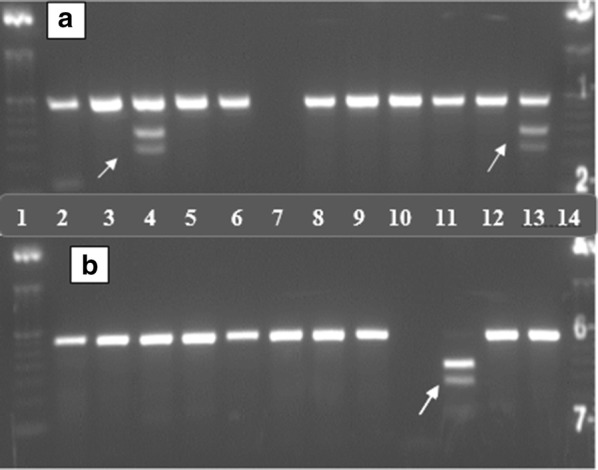
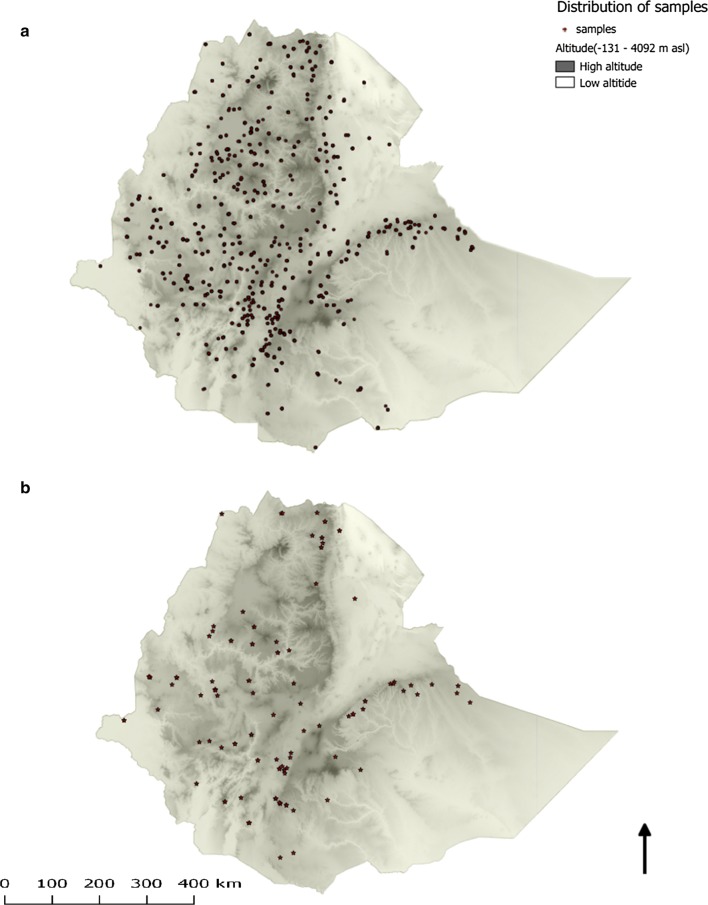
Some 11,138 dried blood spot (DBS) samples were collected in 2011 as part of a national, household Malaria Indicator Survey, a multi-stage nationally representative survey of all malaria-endemic areas of Ethiopia. A randomly selected sub-set of 1414 DBS samples was successfully genotyped by polymerase chain reaction-restriction fragment length polymorphism (PCR-RFLP) technique. Considering the geographical position and ethnic mix of the country, three common variants: G6PDA (A376G), G6PDA- (G202A) and Mediterranean (C563T) were investigated.
Of the 1998 randomly selected individuals, 1429 (71.5%) DBS samples were genotyped and merged to the database, of which 53.5% were from females. G6PDA (A376G) was the only genotype detected. No sample was positive for either G6PDA- (G202A) or Mediterranean (C563T) variants. The prevalence of G6PD*A (A376G) was 8.9% [95% confidence interval (CI) 6.7-11.2] ranging from 12.2% in the Southern Nations, Nationalities and Peoples' (95% CI 5.7-18.7) to none in Dire Dawa/Harari Region.
The common G6PDA- (G202A) or Mediterranean (C563T) variants were not observed in this nationwide study. The observed G6PDA (A376G) mutation has little or no clinical significance. These findings supported the adoption of primaquine for P. falciparum transmission interruption and radical cure of P. vivax in Ethiopia. As the presence of other clinically important, less common variants cannot be ruled out, the implementation of radical cure will be accompanied by active haematological and adverse events monitoring in Ethiopia.
在埃塞俄比亚疟疾发病率下降的趋势基础上,联邦卫生部旨在到 2030 年消除疟疾。由于恶性疟原虫和间日疟原虫在埃塞俄比亚共同流行,因此分别使用伯氨喹来进行传播中断和根治。然而,由于当地葡萄糖-6-磷酸脱氢酶(G6PD)缺乏症及其相关变异的流行情况知之甚少,因此限制了伯氨喹的使用。
2011 年,作为国家家庭疟疾指标调查的一部分,收集了 11138 份干血斑(DBS)样本,该调查是对埃塞俄比亚所有疟疾流行地区进行的多阶段全国代表性调查。通过聚合酶链反应-限制性片段长度多态性(PCR-RFLP)技术,对 1414 份 DBS 样本的随机子样本进行了成功的基因分型。考虑到该国的地理位置和民族构成,研究了三种常见的变异体:G6PDA(A376G)、G6PDA-(G202A)和地中海(C563T)。
在随机选择的 1998 个人中,有 1429 名(71.5%)个体的 DBS 样本进行了基因分型并合并到数据库中,其中 53.5%来自女性。仅检测到 G6PDA(A376G)基因型。没有样本对 G6PDA-(G202A)或地中海(C563T)变异体呈阳性。G6PD*A(A376G)的流行率为 8.9%(95%置信区间 6.7-11.2),范围从南部民族、国家和人民地区的 12.2%(95%置信区间 5.7-18.7)到无到迪雷达瓦/哈拉里地区。
在这项全国性研究中未观察到常见的 G6PDA-(G202A)或地中海(C563T)变异体。观察到的 G6PDA(A376G)突变几乎没有或没有临床意义。这些发现支持在埃塞俄比亚使用伯氨喹进行恶性疟原虫传播中断和间日疟原虫根治。由于不能排除其他临床上重要的、不太常见的变异体的存在,因此在埃塞俄比亚实施根治措施时将伴随着积极的血液学和不良事件监测。