Bioengineering Department, Volgenau School of Engineering, George Mason University, 4400 University Drive, Fairfax, VA, 22030, USA.
Institute of Applied Simulation, ZHAW University of Applied Sciences, Waedenswil, Switzerland.
Acta Neurochir (Wien). 2018 Dec;160(12):2425-2434. doi: 10.1007/s00701-018-3712-8. Epub 2018 Oct 30.
For a treatment decision of unruptured cerebral aneurysms, physicians and patients need to weigh the risk of treatment against the risk of hemorrhagic stroke caused by aneurysm rupture. The aim of this study was to externally evaluate a recently developed statistical aneurysm rupture probability model, which could potentially support such treatment decisions.
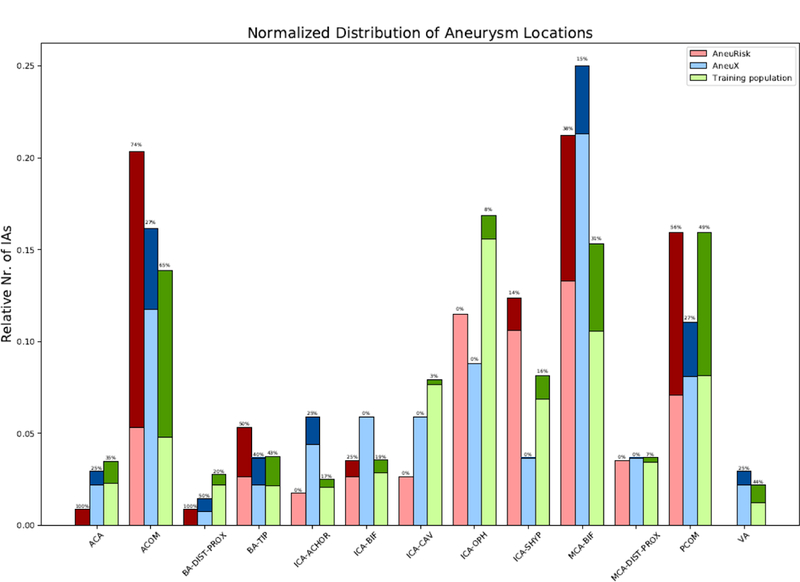
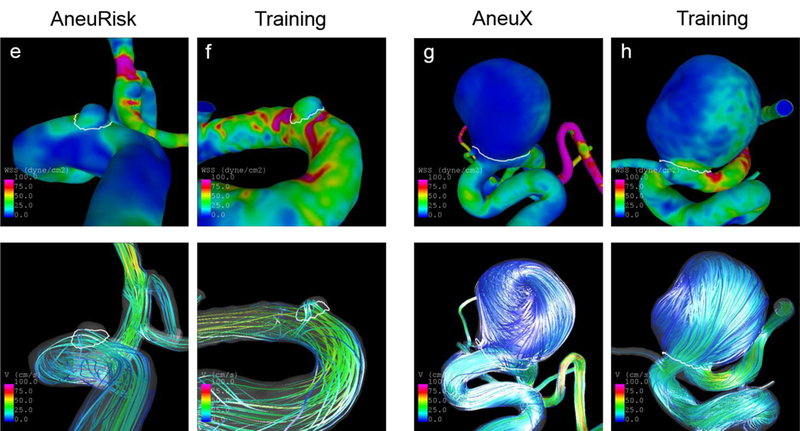
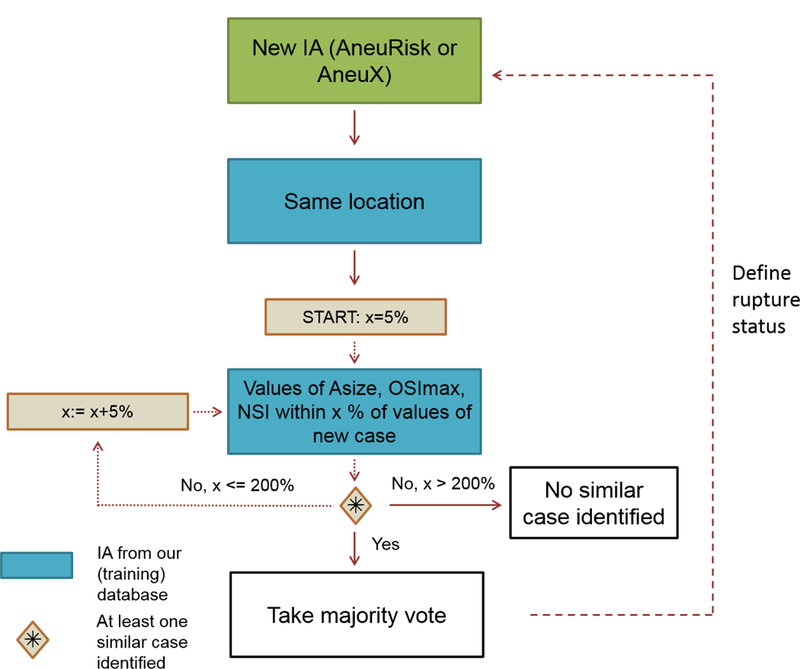
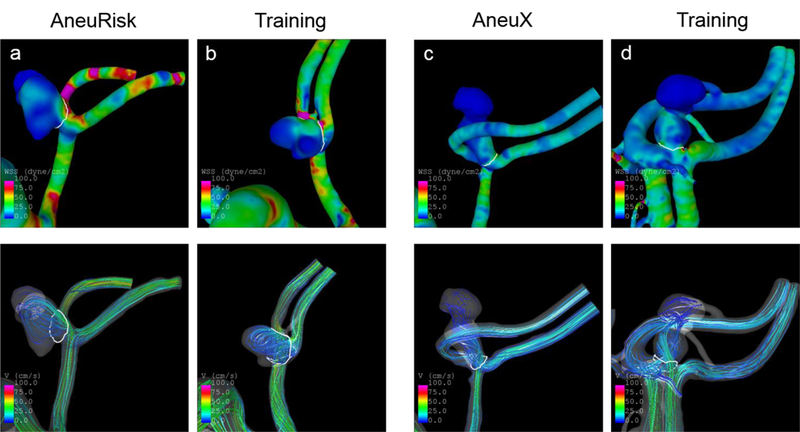
Segmented image data and patient information obtained from two patient cohorts including 203 patients with 249 aneurysms were used for patient-specific computational fluid dynamics simulations and subsequent evaluation of the statistical model in terms of accuracy, discrimination, and goodness of fit. The model's performance was further compared to a similarity-based approach for rupture assessment by identifying aneurysms in the training cohort that were similar in terms of hemodynamics and shape compared to a given aneurysm from the external cohorts.
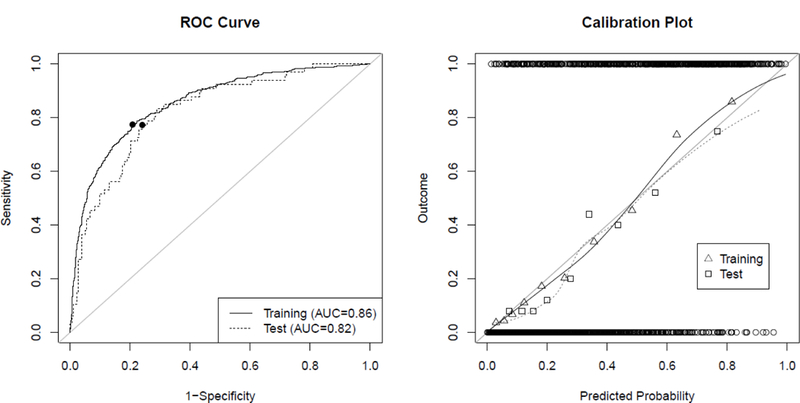
When applied to the external data, the model achieved a good discrimination and goodness of fit (area under the receiver operating characteristic curve AUC = 0.82), which was only slightly reduced compared to the optimism-corrected AUC in the training population (AUC = 0.84). The accuracy metrics indicated a small decrease in accuracy compared to the training data (misclassification error of 0.24 vs. 0.21). The model's prediction accuracy was improved when combined with the similarity approach (misclassification error of 0.14).
The model's performance measures indicated a good generalizability for data acquired at different clinical institutions. Combining the model-based and similarity-based approach could further improve the assessment and interpretation of new cases, demonstrating its potential use for clinical risk assessment.
对于未破裂脑动脉瘤的治疗决策,医生和患者需要权衡治疗风险与动脉瘤破裂引起的出血性中风风险。本研究的目的是对外科医生开发的一种新的统计动脉瘤破裂概率模型进行评估,该模型可能有助于此类治疗决策。
使用来自两个患者队列的分割图像数据和患者信息,对 203 名患者的 249 个动脉瘤进行了个体化计算流体动力学模拟,并根据准确性、区分度和拟合优度对统计模型进行了评估。进一步通过识别训练队列中与外部队列中给定动脉瘤在血流动力学和形状方面相似的动脉瘤,将该模型与基于相似性的破裂评估方法进行了比较。
将该模型应用于外部数据时,其区分度和拟合优度(接收者操作特征曲线下面积 AUC=0.82)较好,与训练队列中校正后的 AUC(AUC=0.84)相比仅略有降低。准确性指标表明,与训练数据相比,准确性略有下降(误分类错误率为 0.24 比 0.21)。当与相似性方法结合时,模型的预测准确性有所提高(误分类错误率为 0.14)。
该模型的性能指标表明,在不同临床机构获得的数据具有较好的泛化能力。结合基于模型和基于相似性的方法可以进一步提高对新病例的评估和解释,从而证明其在临床风险评估中的潜在用途。