University of Innsbruck, Austria.
Br J Soc Psychol. 2019 Jul;58(3):515-533. doi: 10.1111/bjso.12288. Epub 2018 Oct 30.
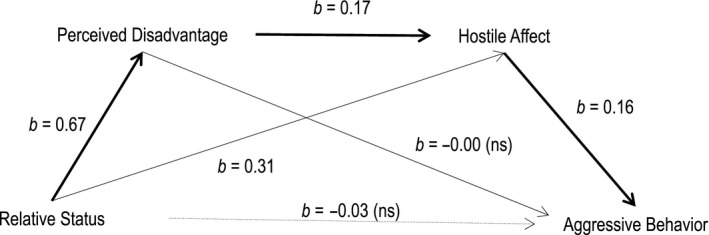
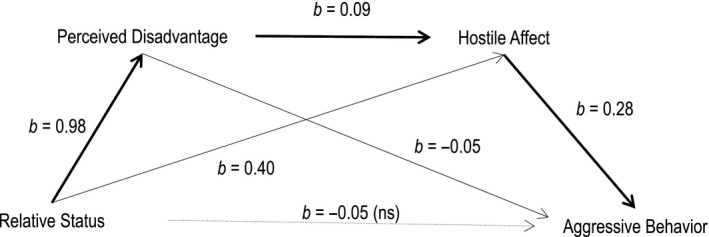
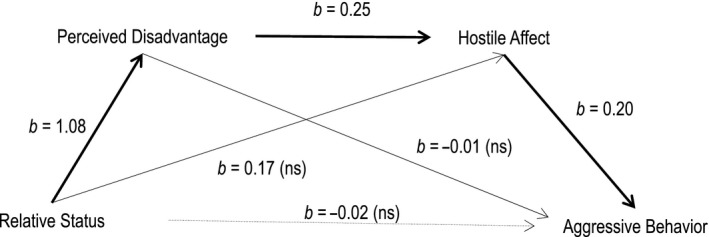
The present research examined the causal effects of absolute and relative status on experienced deprivation and hostility. On the basis of the theory of relative deprivation, we reasoned that the subjective experience of being worse off than others is a better predictor for hostility than is the absolute level of how well-off people are. Indeed, three experiments showed that relative more than absolute status has an impact on aggressive affect. That is, even when objective resources were high, people were more hostile when their resources compared negatively to others' resources. Although no consistent direct effects were found for a measure of aggressive behaviour, mediation analyses suggest that relative but not absolute deprivation ultimately impacts aggressive behaviour via increased feelings of disadvantage and aggressive affect. The results emphasize the drastic consequences of the rising income inequality, irrespective of a nation's absolute wealth.
本研究考察了绝对地位和相对地位对体验剥夺和敌意的因果影响。基于相对剥夺理论,我们推断,与人们的富裕程度相比,主观上感觉自己不如他人更能预测敌意。事实上,三项实验表明,相对地位而不是绝对地位对攻击情绪有影响。也就是说,即使客观资源很高,如果人们的资源与他人的资源相比处于劣势,他们就会更加敌对。虽然对于攻击行为的衡量标准没有发现一致的直接影响,但中介分析表明,相对剥夺而不是绝对剥夺最终通过增加劣势感和攻击情绪来影响攻击行为。研究结果强调了收入不平等加剧的严重后果,而不论一个国家的绝对财富如何。