Collaborative Innovation Center on Forecast and Evaluation of Meteorological Disasters, Jiangsu Key Laboratory of Agricultural Meteorology, School of Applied Meteorology, Nanjing University of Information Science and Technology, Nanjing, 210044, China.
School of Biological & Chemical Sciences, Queen Mary University of London, London, E1 4NS, UK.
ISME J. 2019 Mar;13(3):752-766. doi: 10.1038/s41396-018-0302-y. Epub 2018 Oct 30.
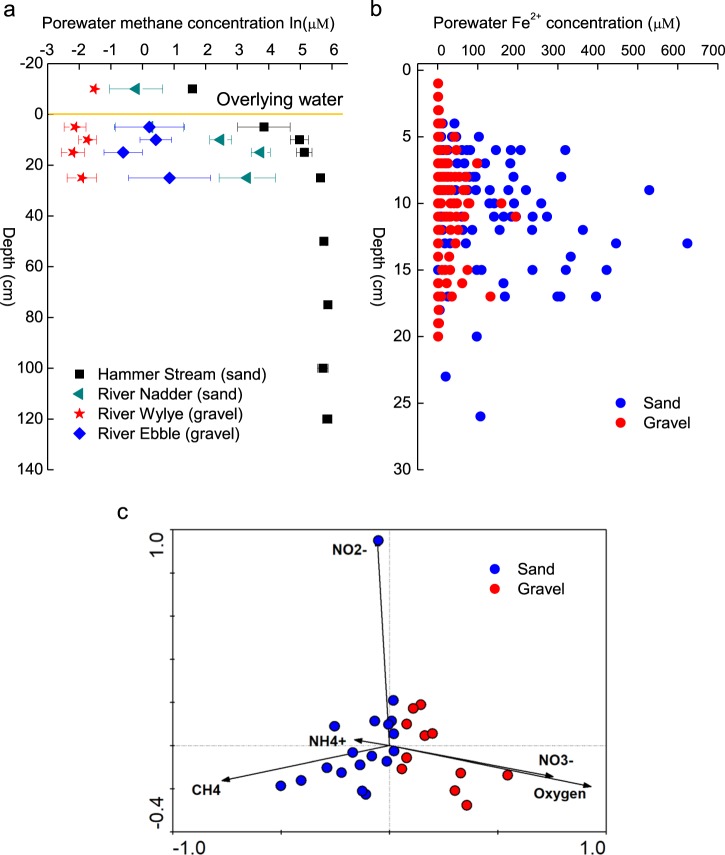
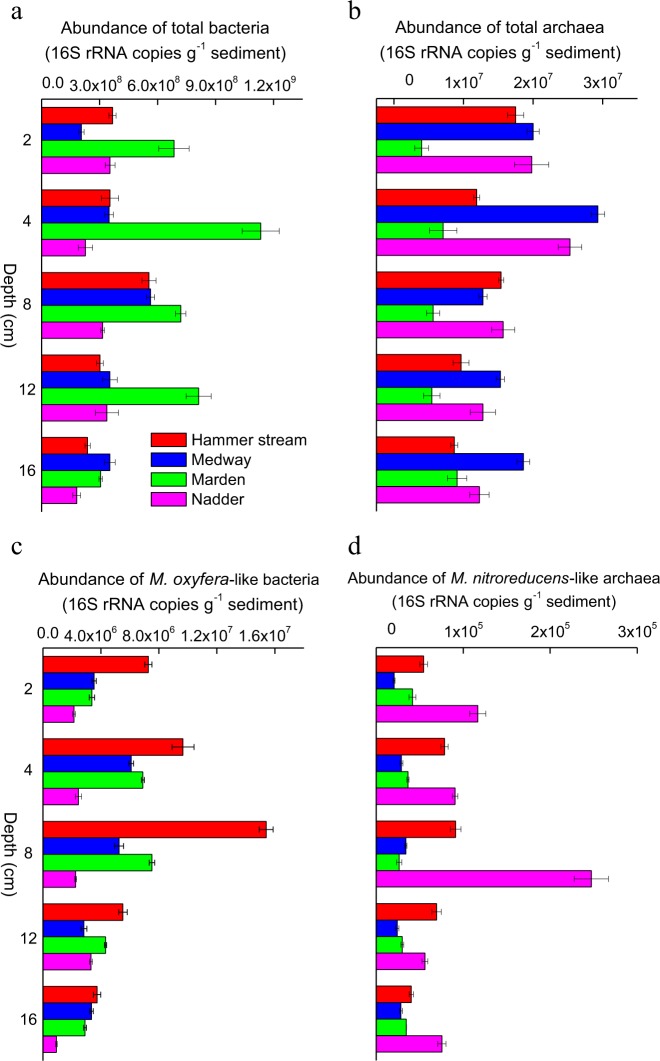
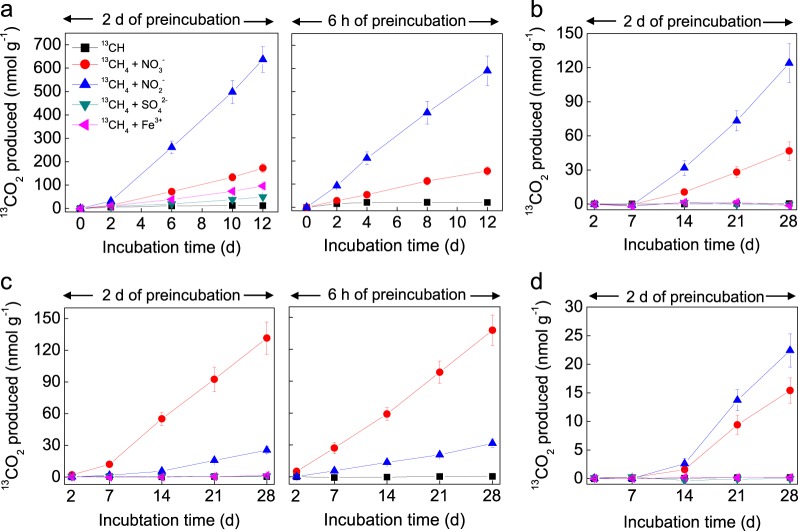
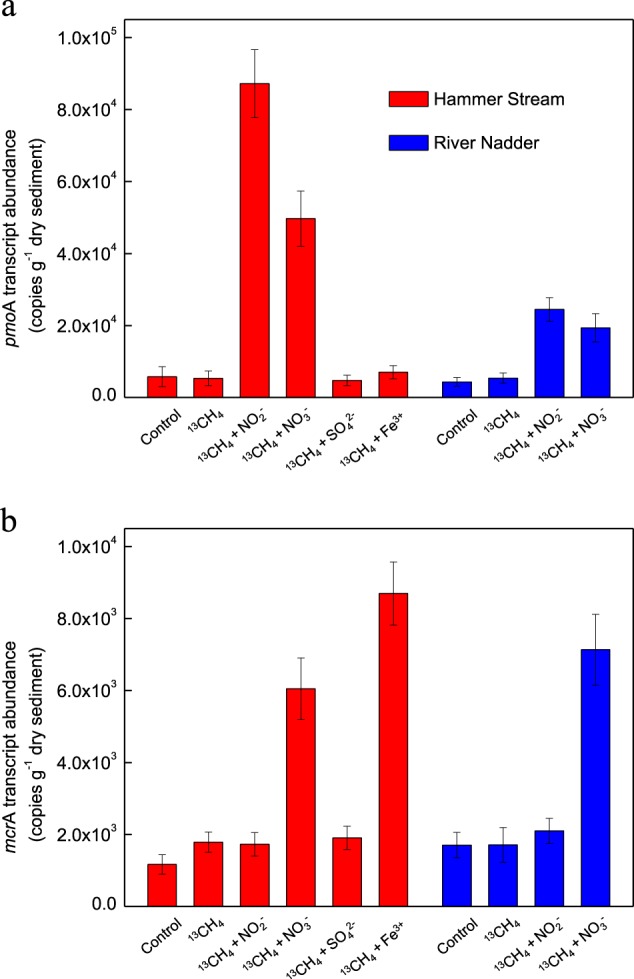
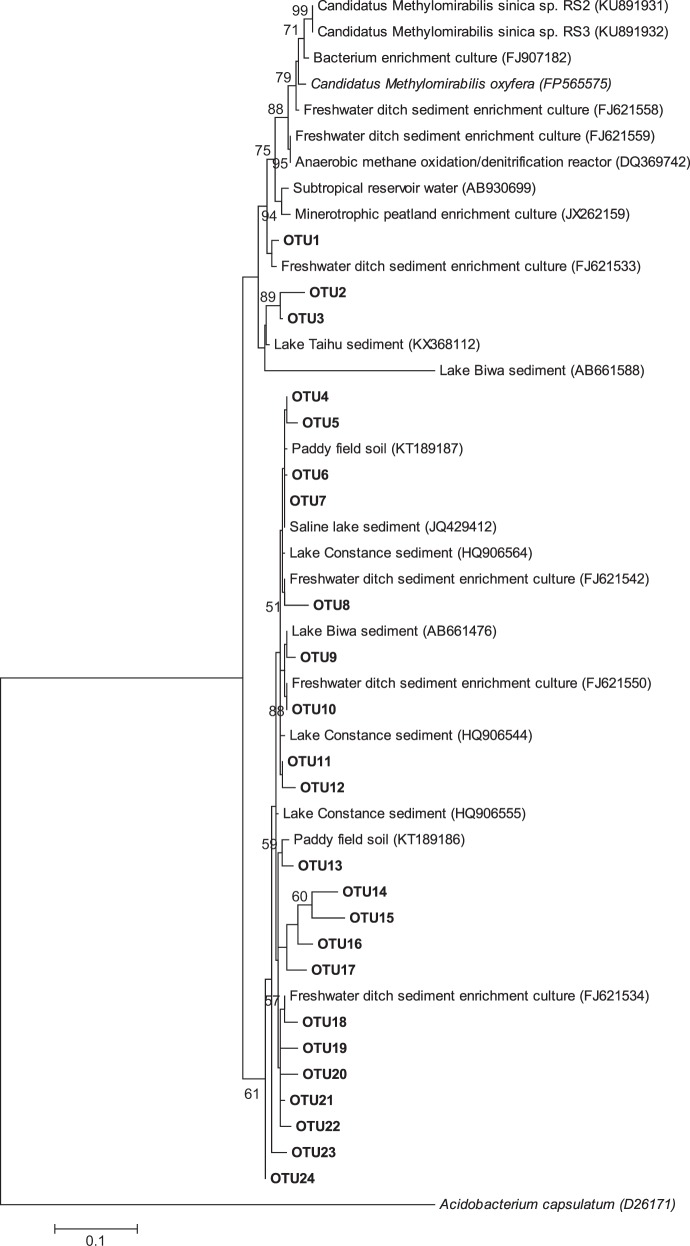
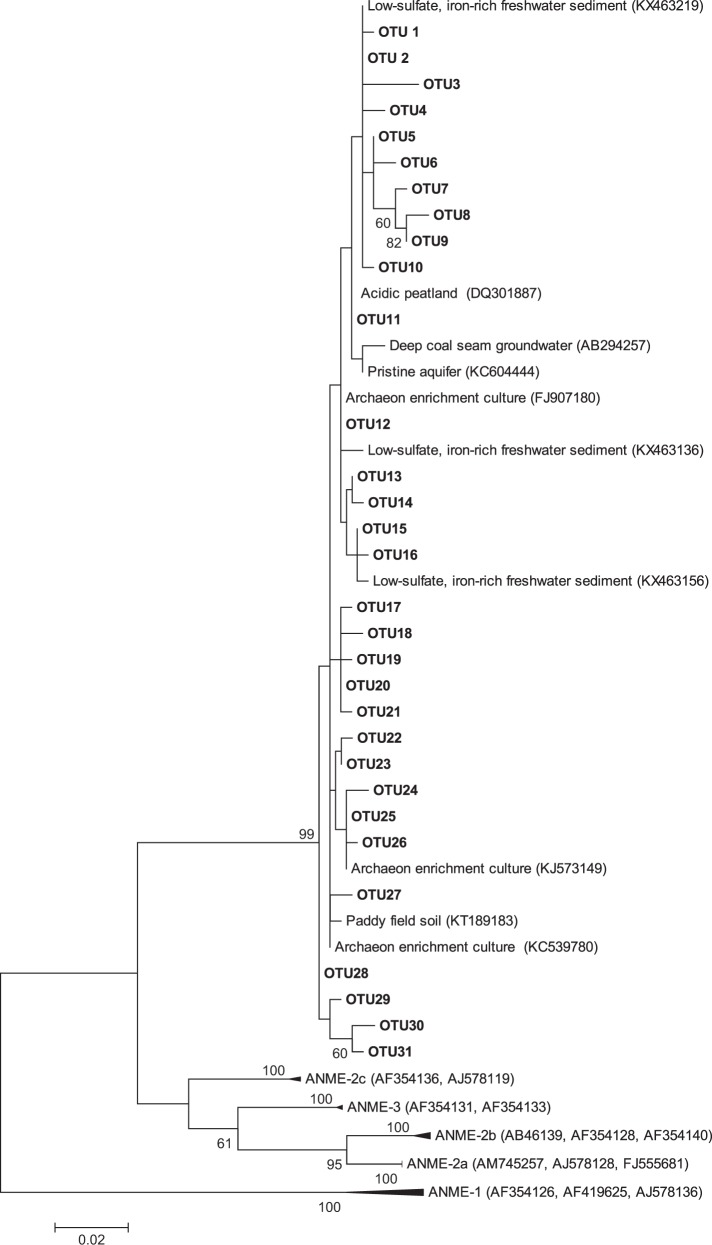
Anaerobic oxidation of methane (AOM) reduces methane emissions from marine ecosystems but we know little about AOM in rivers, whose role in the global carbon cycle is increasingly recognized. We measured AOM potentials driven by different electron acceptors, including nitrite, nitrate, sulfate, and ferric iron, and identified microorganisms involved across contrasting riverbeds. AOM activity was confined to the more reduced, sandy riverbeds, whereas no activity was measured in the less reduced, gravel riverbeds where there were few anaerobic methanotrophs. Nitrite-dependent and nitrate-dependent AOM occurred in all sandy riverbeds, with the maximum rates of 61.0 and 20.0 nmol CO g (dry sediment) d, respectively, while sulfate-dependent and ferric iron-dependent AOM occurred only where methane concentration was highest and the diversity of AOM pathways greatest. Diverse Candidatus Methylomirabilis oxyfera (M. oxyfera)-like bacteria and Candidatus Methanoperedens nitroreducens (M. nitroreducens)-like archaea were detected in the sandy riverbeds (16S rRNA gene abundance of 9.3 × 10 to 1.5 × 10 and 2.1 × 10 to 2.5 × 10 copies g dry sediment, respectively) but no other known anaerobic methanotrophs. Further, we found M. oxyfera-like bacteria and M. nitroreducens-like archaea to be actively involved in nitrite- and nitrate/ferric iron-dependent AOM, respectively. Hence, we demonstrate multiple pathways of AOM in relation to methane, though the activities of M. oxyfera-like bacteria and M. nitroreducens-like archaea are dominant.
甲烷的厌氧氧化(AOM)减少了海洋生态系统中的甲烷排放,但我们对河流中的 AOM 知之甚少,而河流在全球碳循环中的作用正日益受到人们的认可。我们测量了不同电子受体(包括亚硝酸盐、硝酸盐、硫酸盐和三价铁)驱动的 AOM 潜力,并确定了在具有对比性河床的微生物。AOM 活性仅限于更还原的沙质河床,而在还原程度较低的砾石河床中则没有测量到 AOM 活性,因为那里几乎没有厌氧甲烷氧化菌。所有沙质河床都存在亚硝酸盐依赖型和硝酸盐依赖型 AOM,最大速率分别为 61.0 和 20.0 nmol CO g(干沉积物)d,而硫酸盐依赖型和三价铁依赖型 AOM 仅在甲烷浓度最高且 AOM 途径多样性最大的地方发生。在沙质河床中检测到了多种 Candidatus Methylomirabilis oxyfera(M. oxyfera)样细菌和 Candidatus Methanoperedens nitroreducens(M. nitroreducens)样古菌(16S rRNA 基因丰度分别为 9.3×10 到 1.5×10 和 2.1×10 到 2.5×10 拷贝 g 干沉积物),但没有其他已知的厌氧甲烷氧化菌。此外,我们发现 M. oxyfera 样细菌和 M. nitroreducens 样古菌分别积极参与亚硝酸盐和硝酸盐/三价铁依赖型 AOM。因此,我们证明了与甲烷有关的多种 AOM 途径,尽管 M. oxyfera 样细菌和 M. nitroreducens 样古菌的活性占主导地位。