Sahoo Subhransu S, Zhang Xu Dong, Hondermarck Hubert, Tanwar Pradeep S
Gynecology Oncology Group, University of Newcastle, Callaghan, NSW 2308, Australia.
School of Biomedical Sciences and Pharmacy, University of Newcastle, Callaghan, NSW 2308, Australia.
Cancers (Basel). 2018 Oct 30;10(11):408. doi: 10.3390/cancers10110408.
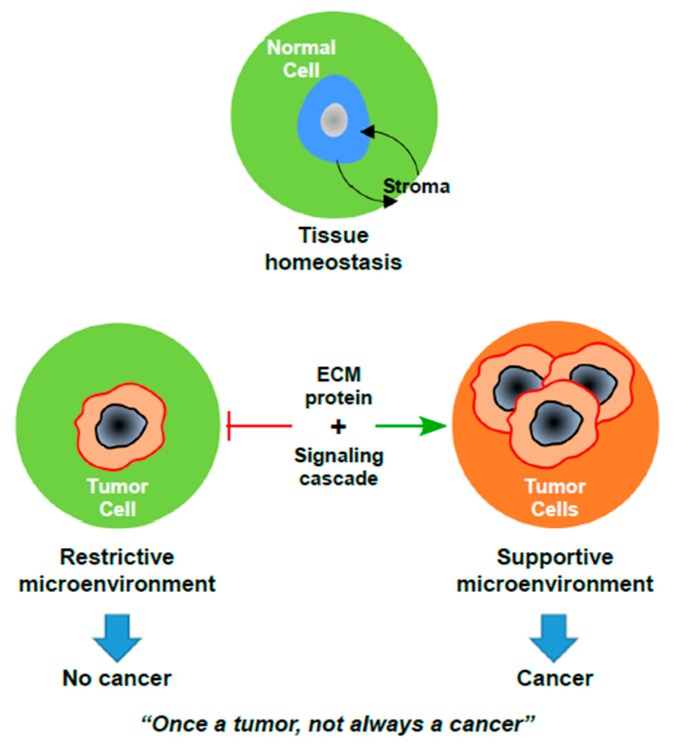
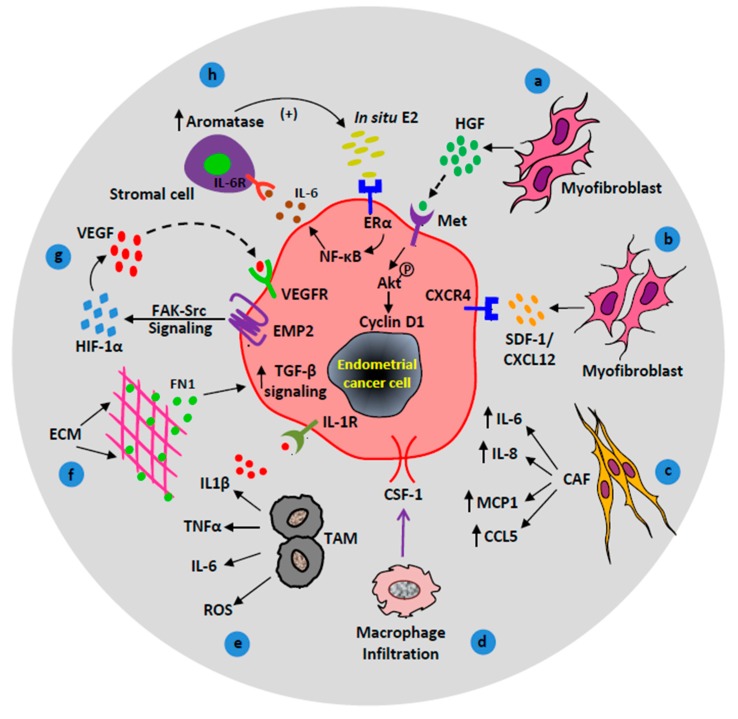
Endometrial cancer (EC) is one of the most frequently diagnosed cancers in women, and despite recent therapeutic advances, in many cases, treatment failure results in cancer recurrence, metastasis, and death. Current research demonstrates that the interactive crosstalk between two discrete cell types (tumor and stroma) promotes tumor growth and investigations have uncovered the dual role of the stromal cells in the normal and cancerous state. In contrast to tumor cells, stromal cells within the tumor microenvironment (TME) are genetically stable. However, tumor cells modify adjacent stromal cells in the TME. The alteration in signaling cascades of TME from anti-tumorigenic to pro-tumorigenic enhances metastatic potential and/or confers therapeutic resistance. Therefore, the TME is a fertile ground for the development of novel therapies. Furthermore, disrupting cancer-promoting signals from the TME or re-educating stromal cells may be an effective strategy to impair metastatic progression. Here, we review the paradoxical role of different non-neoplastic stromal cells during specific stages of EC progression. We also suggest that the inhibition of microenvironment-derived signals may suppress metastatic EC progression and offer novel potential therapeutic interventions.
子宫内膜癌(EC)是女性中最常被诊断出的癌症之一,尽管近年来治疗取得了进展,但在许多情况下,治疗失败会导致癌症复发、转移和死亡。目前的研究表明,两种不同细胞类型(肿瘤细胞和基质细胞)之间的相互作用促进了肿瘤生长,并且研究发现基质细胞在正常和癌变状态下具有双重作用。与肿瘤细胞不同,肿瘤微环境(TME)中的基质细胞基因稳定。然而,肿瘤细胞会改变TME中相邻的基质细胞。TME信号级联从抗肿瘤转变为促肿瘤,增强了转移潜能和/或赋予了治疗抗性。因此,TME是开发新型疗法的沃土。此外,破坏来自TME的促癌信号或重塑基质细胞可能是削弱转移进程的有效策略。在这里,我们回顾了不同非肿瘤性基质细胞在EC进展特定阶段的矛盾作用。我们还提出,抑制微环境衍生的信号可能会抑制转移性EC的进展,并提供新的潜在治疗干预措施。