UKSH Campus Kiel, Hematology Laboratory Kiel, Langer Segen 8-10, D-24105, Kiel, Germany.
Department of Plant Physiology and Photobiology, Faculty of Biology, Philipps-University of Marburg, Karl-von-Frisch-Str. 8, D-35032, Marburg, Germany.
Sci Rep. 2018 Oct 31;8(1):16120. doi: 10.1038/s41598-018-34328-4.
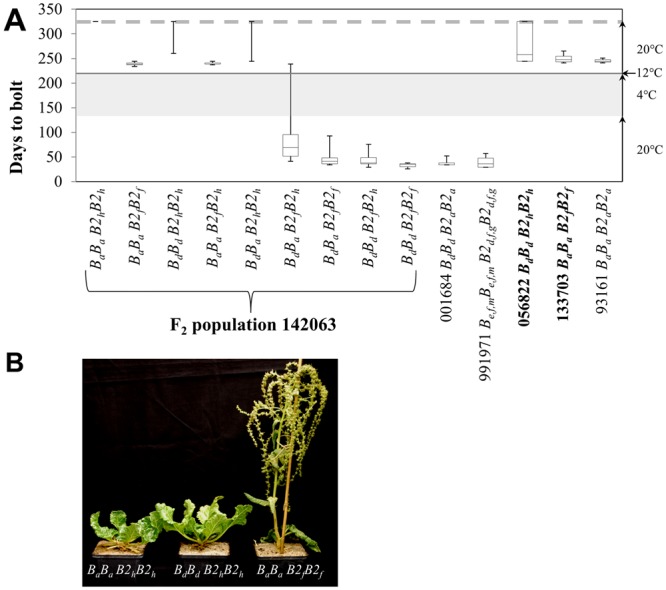
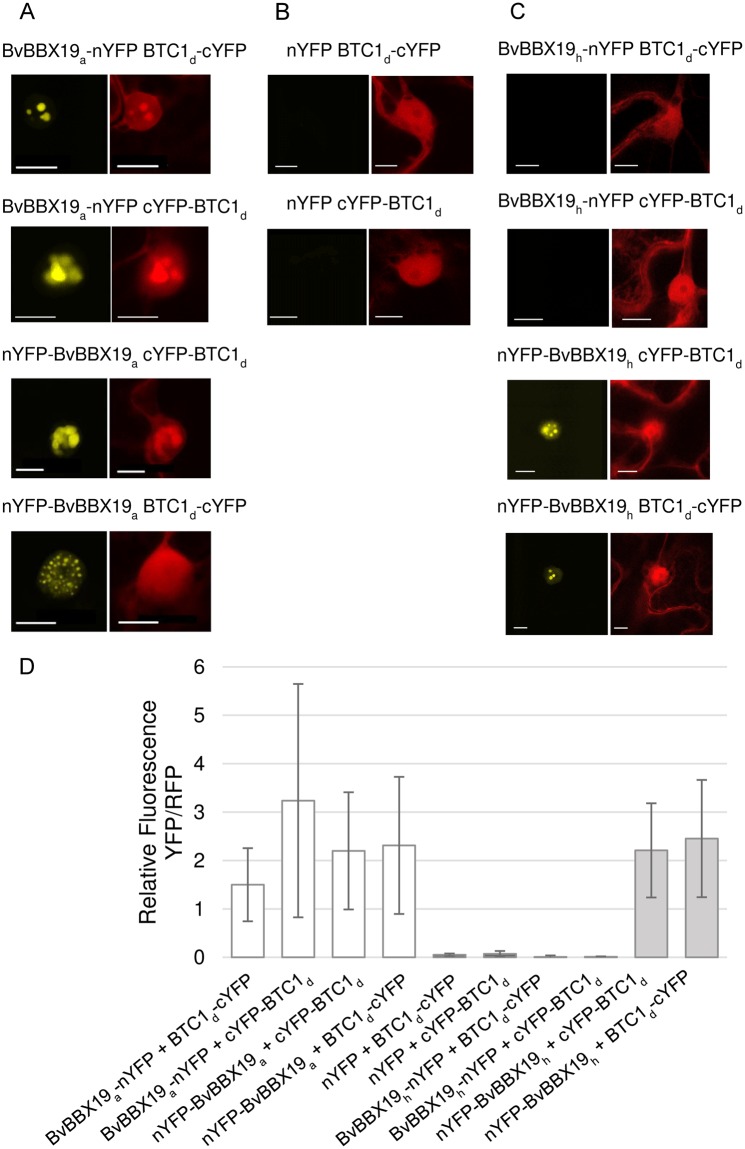
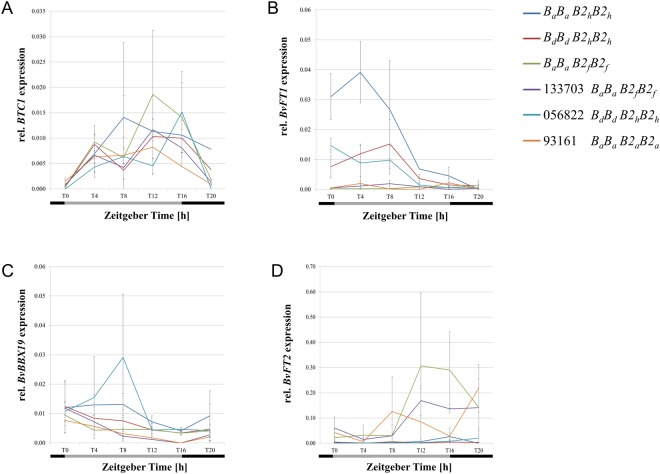
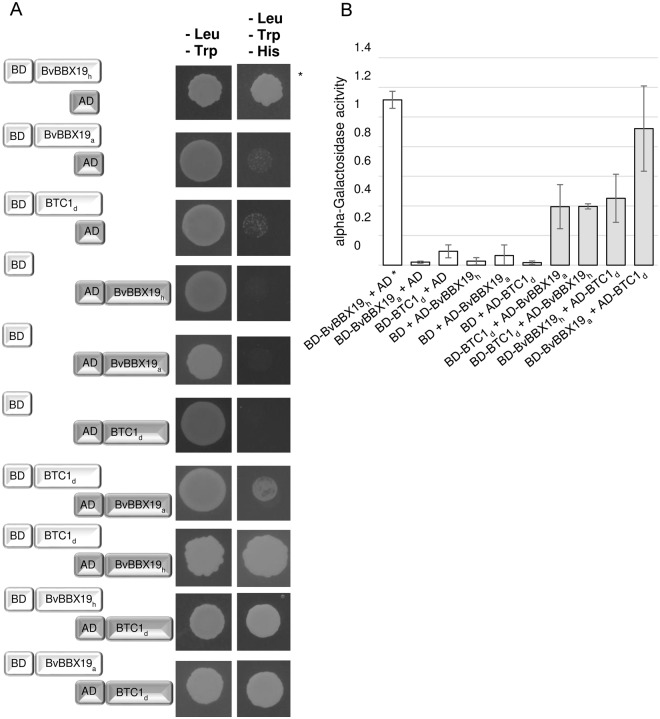
Breeding vegetative crops (e.g. beets, cabbage, forage grasses) is challenged by two conflicting aims. For field production, flowering must be avoided while flowering and seed set is necessary for breeding and seed production. The biennial species sugar beet makes shoot elongation ('bolting') followed by flowering after a long period of cold temperatures. Field production in northern geographical regions starts in spring. A thickened storage root is formed only during vegetative growth. It is expected that winter beets, which are sown before winter would have a much higher yield potential. However, field production was not possible so far due to bolting after winter. We propose a strategy to breed winter beets exploiting haplotype variation at two major bolting time loci, B and B2. Both genes encode transcription factors controlling the expression of two orthologs of the Arabidopsis gene FLOWERING LOCUS T (FT). We detected an epistatic interaction between both genes because F plants homozygous for two B/B2 mutant alleles did not bolt even after vernalization. Fluorescence complementation studies revealed that both proteins form a heterodimer in vivo. In non-bolting plants, the bolting activator BvFT2 was completely downregulated whereas the repressor BvFT1 was upregulated which suggests that both genes acquire a CONSTANS (CO) like function in beet. Like CO, B and B2 proteins house CCT and BBX domains which, in contrast to CO are split between the two beet genes. We propose an alternative regulation of FT orthologs in beet that can be exploited to breed winter beets.
培育营养繁殖作物(例如甜菜、甘蓝、饲料草)面临两个相互矛盾的目标。对于田间生产,必须避免开花,而开花和结实是育种和种子生产所必需的。二年生物种糖甜菜在经过长时间的低温后,会进行营养生长的伸长(“抽薹”),然后开花。在北方地理区域的田间生产始于春季。只有在营养生长期间才会形成加厚的贮藏根。预计冬季种植的冬季甜菜的产量潜力会更高。然而,由于冬季后抽薹,迄今为止田间生产还无法进行。我们提出了一种利用两个主要抽薹时间基因座 B 和 B2 的单倍型变异来培育冬季甜菜的策略。这两个基因都编码转录因子,控制拟南芥基因 FLOWERING LOCUS T(FT)的两个同源物的表达。我们检测到这两个基因之间存在上位性相互作用,因为 B/B2 突变纯合的 F 植物即使在春化后也不会抽薹。荧光互补研究表明,这两种蛋白质在体内形成异源二聚体。在不抽薹的植物中,抽薹激活因子 BvFT2 被完全下调,而抑制因子 BvFT1 被上调,这表明这两个基因在甜菜中获得了类似于 CONSTANS(CO)的功能。与 CO 一样,B 和 B2 蛋白具有 CCT 和 BBX 结构域,与 CO 不同的是,这些结构域在两个甜菜基因之间分裂。我们提出了一种在甜菜中可以利用的替代 FT 同源物调控方式,以培育冬季甜菜。