Plumb John M
Columbia River Research Laboratory Western Fisheries Research Center U.S. Geological Survey Cook Washington.
Ecol Evol. 2018 Sep 12;8(19):9633-9645. doi: 10.1002/ece3.4353. eCollection 2018 Oct.
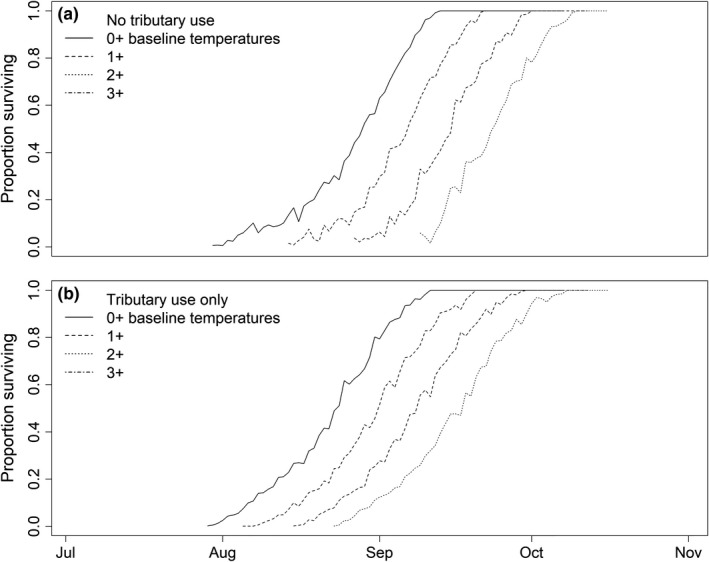
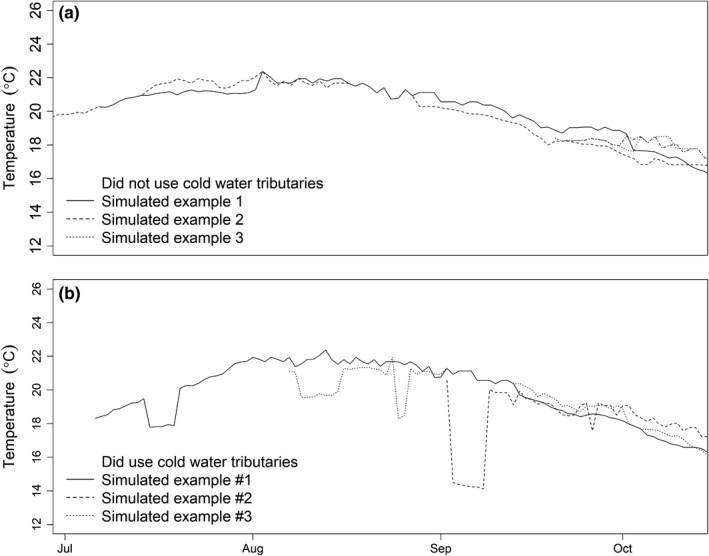
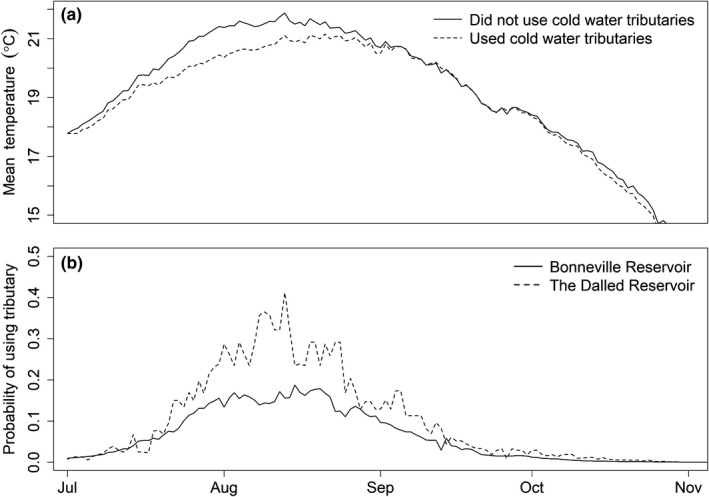
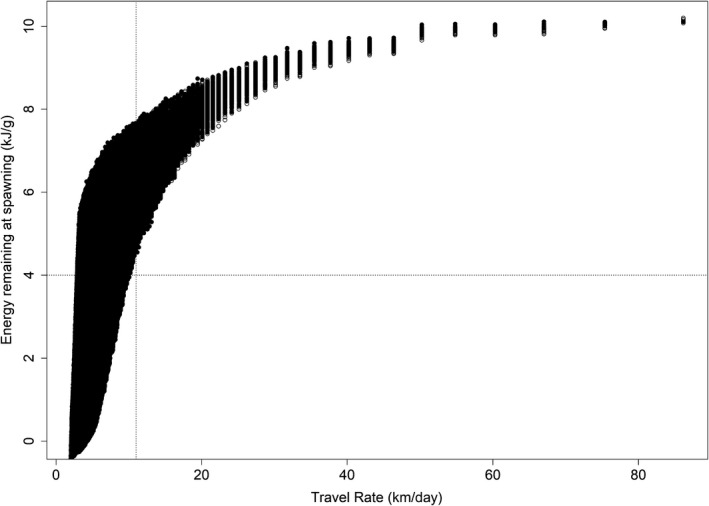
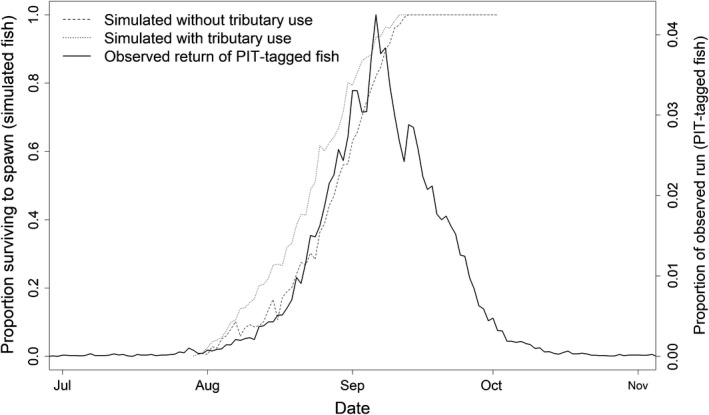
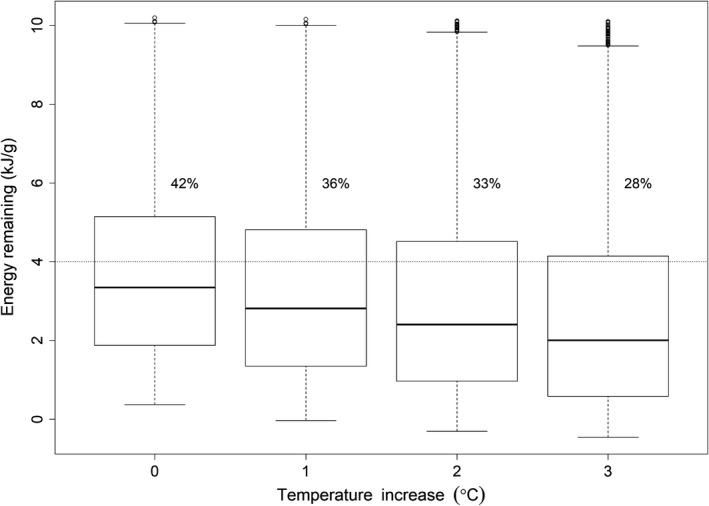
High water temperatures can increase the energetic cost for salmon to migrate and spawn, which can be important for Snake River fall-run Chinook salmon because they migrate great distances (>500 km) at a time when river temperatures (18-24°C) can be above their optimum temperatures (16.5°C). Average river temperatures and random combinations of migration and spawning dates were used to simulate fish travel times and determine the energetic consequences of different thermal experiences during migration. An energy threshold criterion (4 kJ/g) was also imposed on survival and spawning success, which was used to determine how prevailing temperatures might select against certain migration dates and thermal experiences, and in turn, explain the selection for the current spawning phenology of the population. Scenarios of tributary use for thermal refugia under increasing water temperatures (1, 2, and 3°C) were also run to determine which combinations of migration dates, travel rates, and resulting thermal experiences might be most affected by energy exhaustion. As expected, when compared to observations, the model under existing conditions and energy use could explain the onset, but not the end of the observed spawning migration. Simulations of early migrants had greater energy loss than late migrants regardless of the river temperature scenario, but higher temperatures disproportionately selected against a larger fraction of early-migrating fish, although using cold-water tributaries during migration provided a buffer against higher energy use at higher temperatures. The fraction of simulated fish that exceeded the threshold for migration success increased from 58% to 72% as average seasonal river temperatures over baseline temperatures increased. The model supports the conclusion that increases in average seasonal river temperatures as little as 1°C could impose greater thermal constraints on the fish, select against early migrants, and in turn, truncate the onset of the current spawning migration.
水温升高会增加鲑鱼洄游和产卵的能量消耗,这对斯内克河秋季洄游的奇努克鲑鱼来说可能至关重要,因为它们在河流温度(18 - 24°C)可能高于其最适温度(16.5°C)时进行长距离(>500公里)洄游。利用平均河流温度以及洄游和产卵日期的随机组合来模拟鱼类的洄游时间,并确定洄游期间不同热经历的能量后果。还对生存和产卵成功设定了一个能量阈值标准(4千焦/克),用于确定当前水温如何不利于某些洄游日期和热经历,进而解释种群当前产卵物候的选择。还运行了水温升高(1、2和3°C)情况下支流作为热避难所的使用情景,以确定哪些洄游日期、洄游速度和由此产生的热经历组合可能最容易受到能量耗尽的影响。正如预期的那样,与观测结果相比,现有条件和能量使用情况下的模型可以解释观察到的产卵洄游的开始,但无法解释其结束。无论河流温度情景如何,早期洄游者的能量损失都比晚期洄游者大,但较高温度对更大比例的早期洄游鱼类不利影响更大,不过在洄游期间利用冷水支流可缓冲较高温度下的高能量消耗。随着季节性平均河流温度相对于基线温度升高,模拟中超过洄游成功阈值的鱼类比例从58%增加到72%。该模型支持以下结论:季节性平均河流温度仅升高1°C就可能对鱼类施加更大的热限制,不利于早期洄游者,进而缩短当前产卵洄游的开始时间。