Department of Pathophysiology, Xiangya School of Medicine, Central South University, Changsha, Hunan 410078, P.R. China.
Int J Mol Med. 2019 Jan;43(1):199-208. doi: 10.3892/ijmm.2018.3962. Epub 2018 Oct 29.
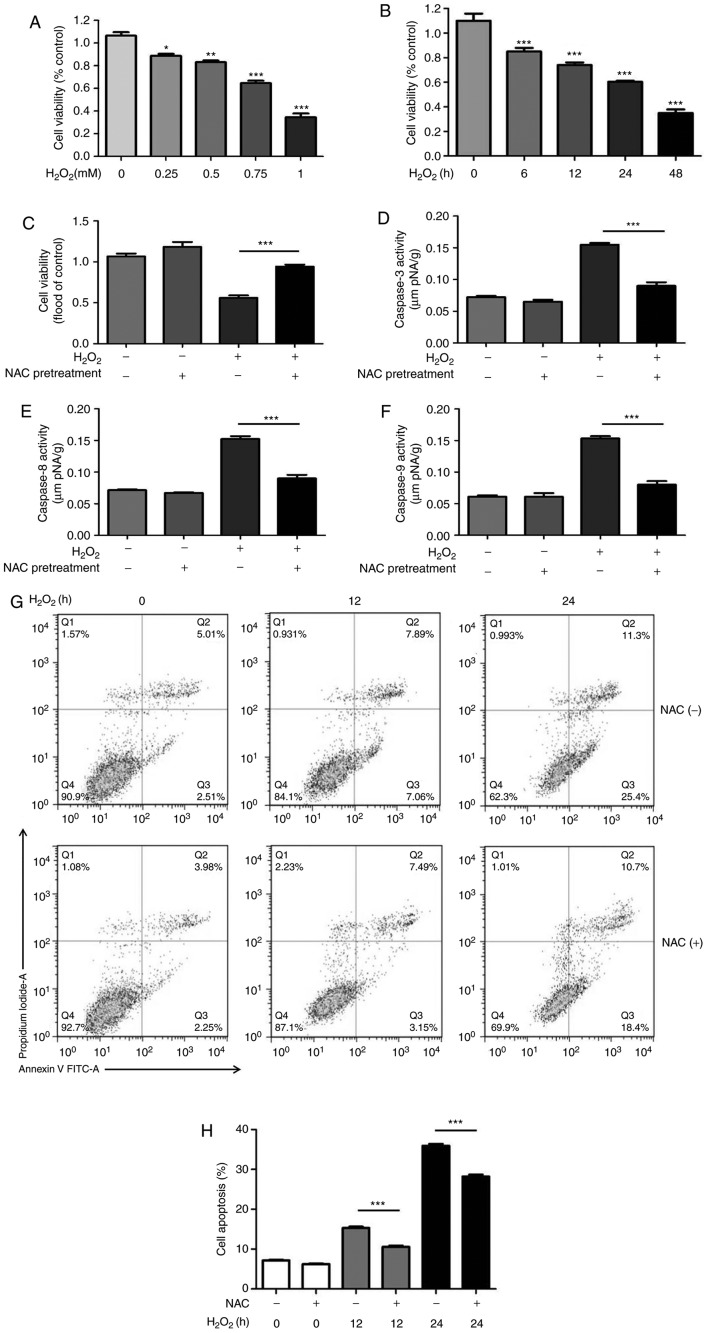
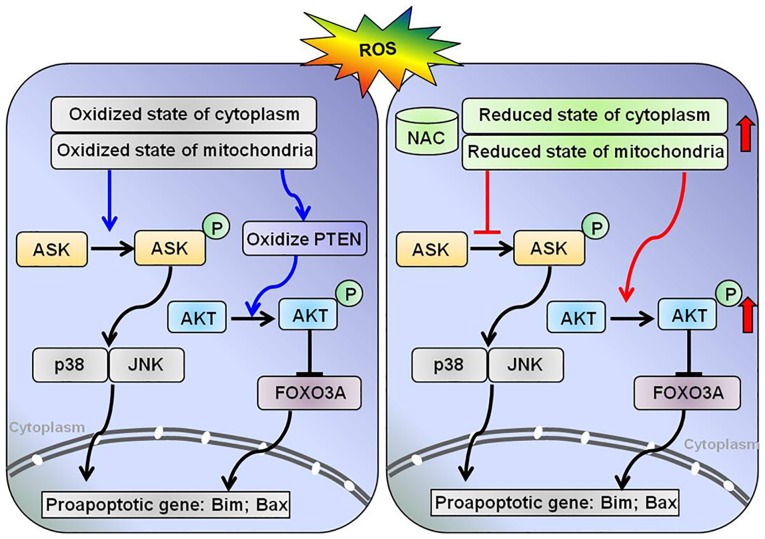
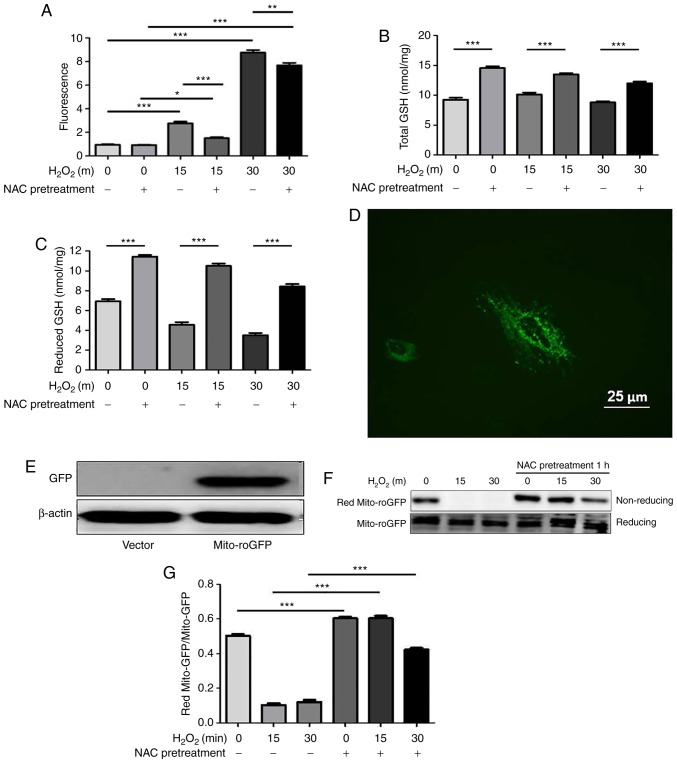
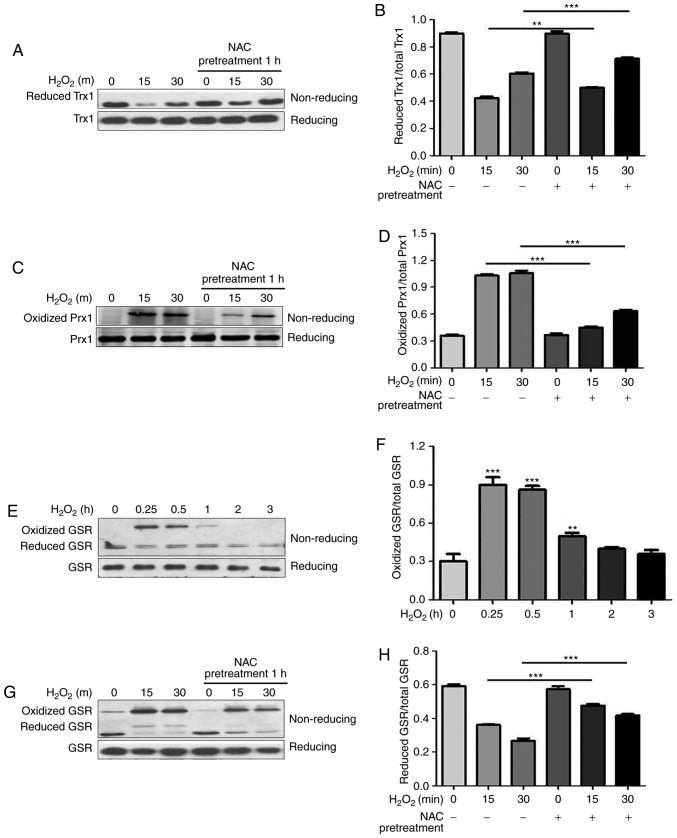
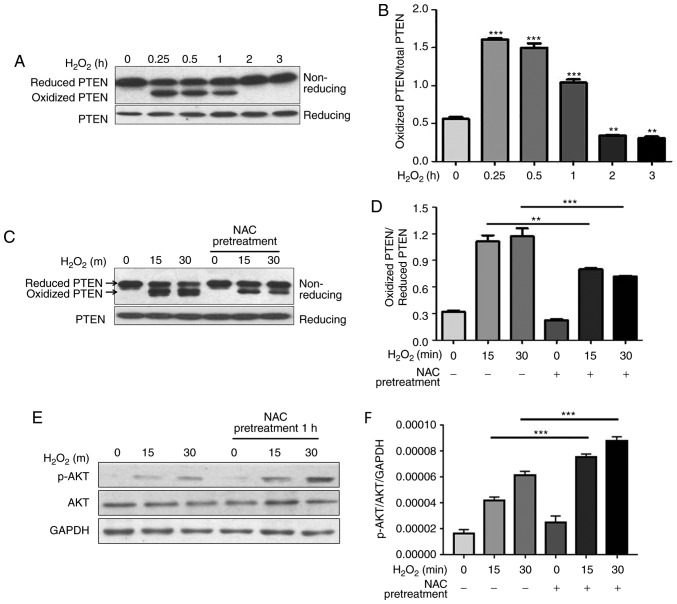
N‑acetylcysteine (NAC) is a thiol‑containing antioxidant that modulates the intracellular redox state. NAC can scavenge reactive oxygen species (ROS) and maintain reduced glutathione (GSH) levels, in order to protect cardiomyocytes from oxidative stress. The present study aimed to determine whether NAC protects cardiomyocytes from oxidative damage by regulating the redox status of intracellular antioxidant proteins. The results revealed that NAC pretreatment increased cell viability and inhibited the activation of caspase‑3, ‑8 and ‑9 during hydrogen peroxide (H2O2)‑induced oxidative stress in H9c2 cells. Furthermore, decreased ROS levels, and increased total and reduced GSH levels were detected in response to NAC pretreatment. Non‑reducing redox western blotting was performed to detect the redox status of intracellular antioxidant proteins, including thioredoxin 1 (Trx1), peroxiredoxin 1 (Prx1), GSH reductase (GSR), and phosphatase and tensin homolog (PTEN). The results revealed that the reduced form of Trx1 was markedly increased, and the oxidized forms of Prx1, GSR and PTEN were decreased following NAC pretreatment. Furthermore, NAC pretreatment decreased H2O2‑induced phosphorylation of apoptosis signal‑regulating kinase 1, which depends on the redox state of Trx1, and increased H2O2‑induced phosphorylation of protein kinase B, which is essential to cell survival. To the best of our knowledge, the present study is the first to reveal that NAC pretreatment may alleviate oxidation of intracellular antioxidant proteins to inhibit oxidative stress‑induced cardiomyocyte apoptosis.
N-乙酰半胱氨酸(NAC)是一种含巯基的抗氧化剂,可调节细胞内的氧化还原状态。NAC 可以清除活性氧(ROS)并维持还原型谷胱甘肽(GSH)水平,从而保护心肌细胞免受氧化应激。本研究旨在确定 NAC 是否通过调节细胞内抗氧化蛋白的氧化还原状态来保护心肌细胞免受氧化损伤。结果显示,NAC 预处理可增加细胞活力,并抑制过氧化氢(H2O2)诱导的氧化应激过程中 H9c2 细胞中 caspase-3、-8 和 -9 的激活。此外,NAC 预处理可降低 ROS 水平,并增加总 GSH 和还原型 GSH 水平。非还原型氧化还原 Western blot 用于检测细胞内抗氧化蛋白的氧化还原状态,包括硫氧还蛋白 1(Trx1)、过氧化物酶 1(Prx1)、谷胱甘肽还原酶(GSR)和磷酸酶和张力蛋白同源物(PTEN)。结果显示,NAC 预处理后 Trx1 的还原形式明显增加,而 Prx1、GSR 和 PTEN 的氧化形式减少。此外,NAC 预处理可降低依赖于 Trx1 氧化还原状态的凋亡信号调节激酶 1 的 H2O2 诱导磷酸化,并增加对细胞存活至关重要的 H2O2 诱导的蛋白激酶 B 的磷酸化。据我们所知,本研究首次揭示 NAC 预处理可能通过减轻细胞内抗氧化蛋白的氧化来抑制氧化应激诱导的心肌细胞凋亡。