Instituto de Geofísica, Universidad Nacional Autónoma de México, Cd. Universitaria, Circuito Exterior s/n, 14260, Mexico City, Mexico.
Istituto Nazionale di Geofisica e Vulcanologia, sezione di Napoli, Osservatorio Vesuviano, Via Diocleziano 328, 80124, Napoli, Italy.
Sci Rep. 2018 Nov 2;8(1):16254. doi: 10.1038/s41598-018-34456-x.
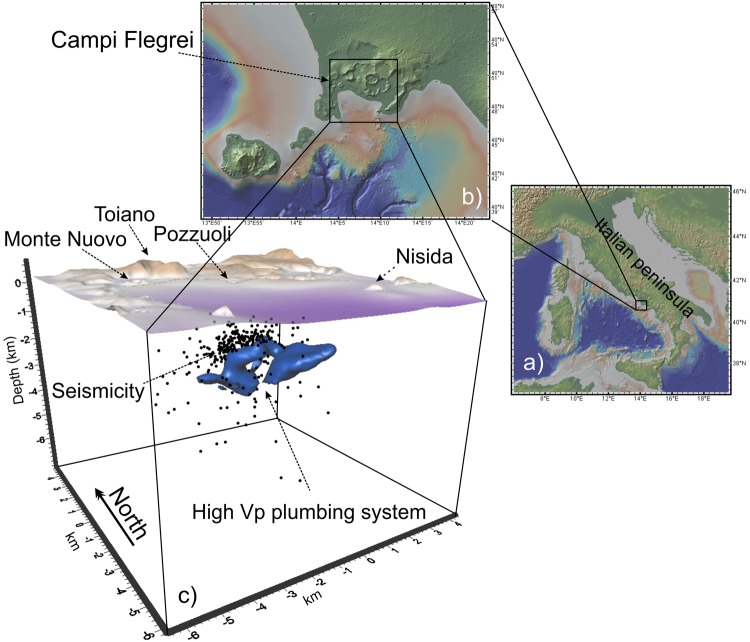
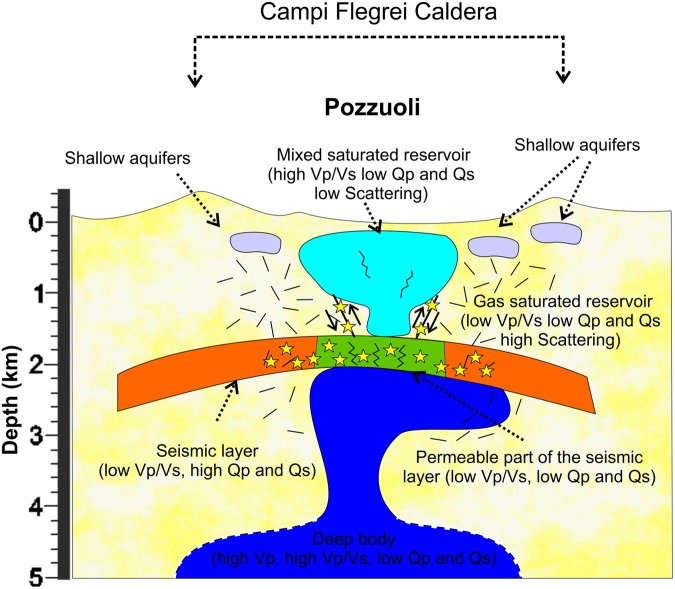
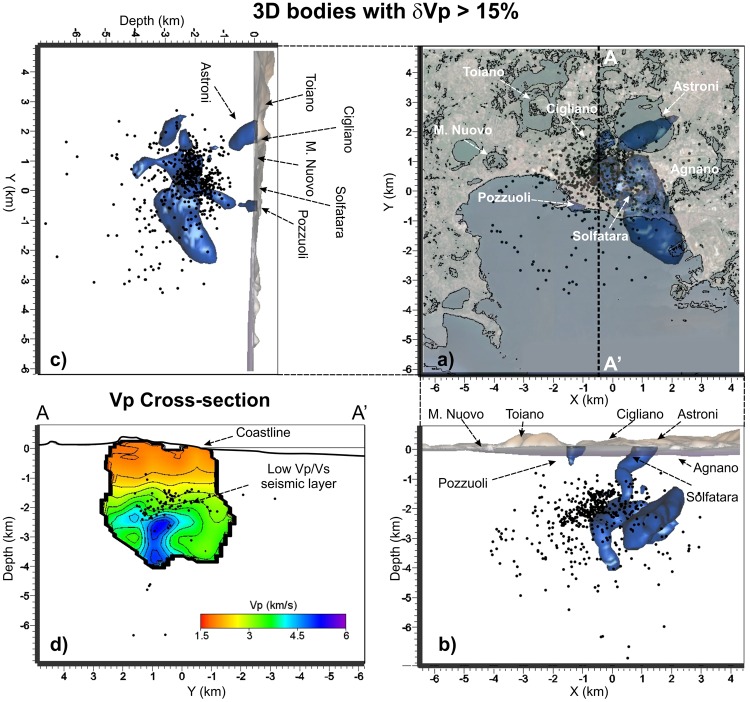
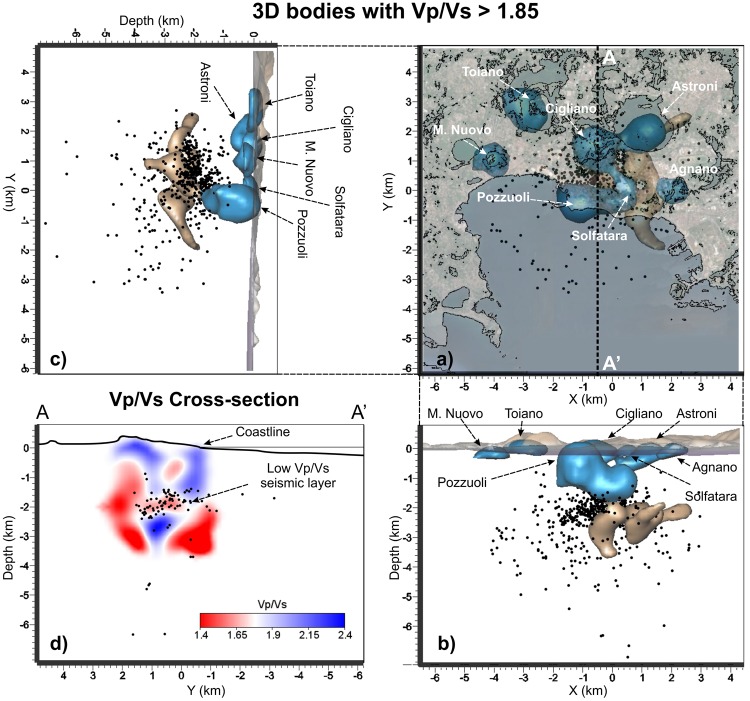
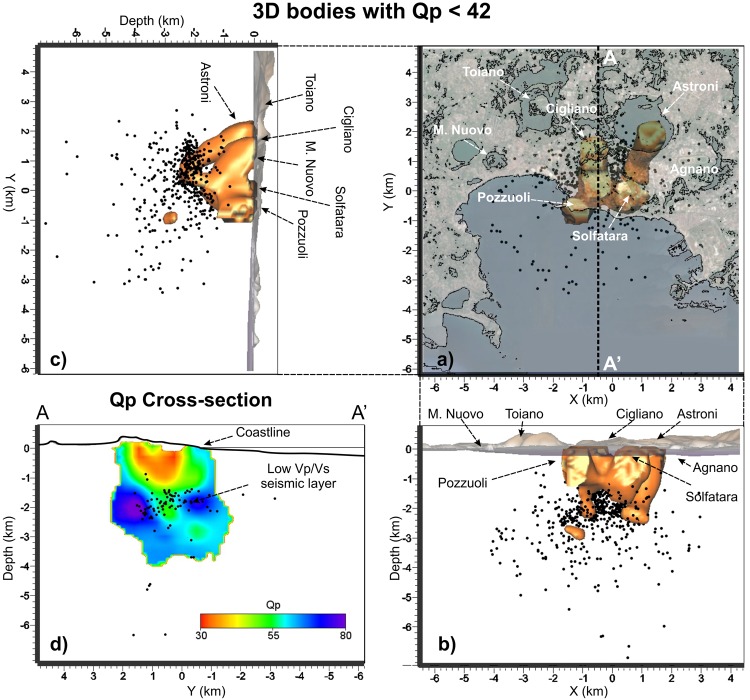
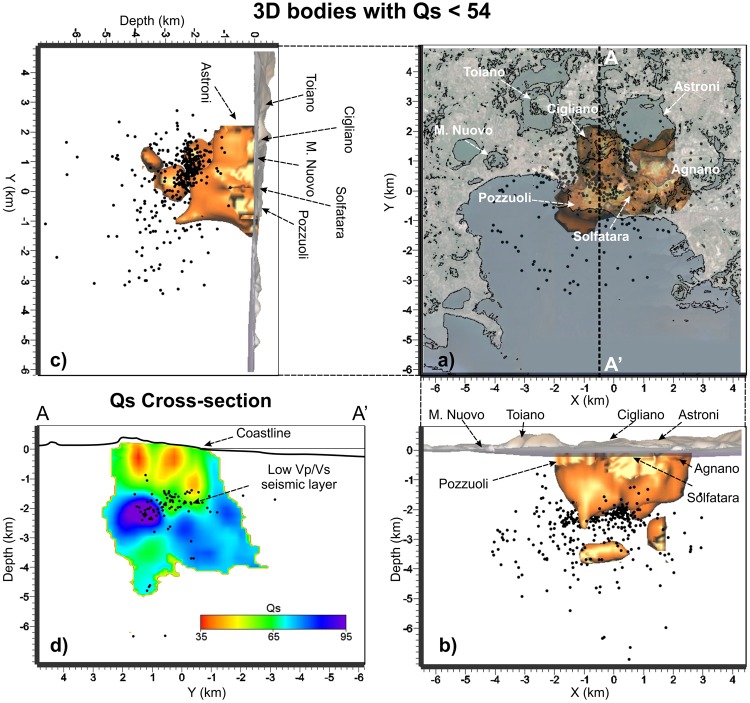
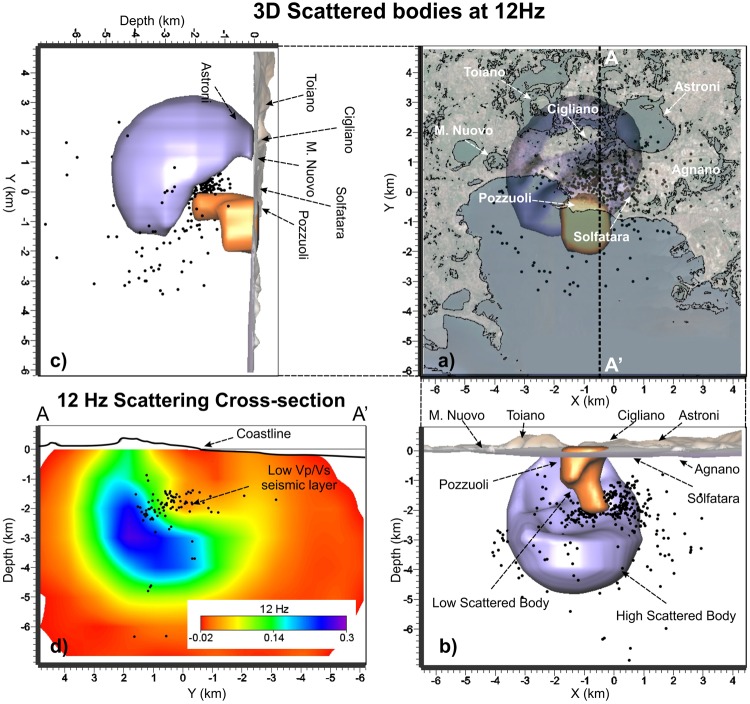
Campi Flegrei caldera (Southern Italy) is a densely inhabited area and suffered several unrest episodes in the last centuries. The dynamic of the caldera is highly debated because of conflicting interpretations. Here we present a detailed reconstruction of the Campi Flegrei structure obtained using the microseismicity recorded during the 1984 unrest. Enhanced Seismic Tomography models obtained with these data allow us describing seismic velocities, attenuation, and scattering patterns. Results show: (1) a plumbing system with a diameter of 1 km located between 2.3 km and 4 km depth (2) a 0.5 km thick caprock located at 2 km depth interpreted as the main structure regulating the fluid interchange between deep and shallow sectors of the caldera, (3) the shape and volume of a shallow reservoir beneath the city of Pozzuoli; this reservoir played a key role during the 1982-1984 unrest, (4) several small reservoirs beneath the main craters of the caldera. All these features fit into the debated question on magmatic or hydrothermal mechanism driving the caldera deformation resulting of crucial importance to allow a better assessment of the hazard.
坎皮弗莱格雷(意大利南部)火山区是一个人口密集的地区,在过去几个世纪中遭受了多次动荡事件。由于存在相互矛盾的解释,该火山区的动态一直存在争议。在这里,我们使用 1984 年动荡期间记录的微地震活动,详细重建了坎皮弗莱格雷结构。使用这些数据获得的增强地震层析成像模型使我们能够描述地震速度、衰减和散射模式。结果表明:(1)直径为 1 公里的管道系统位于 2.3 至 4 公里的深度之间;(2)位于 2 公里深处的 0.5 公里厚的盖层,被解释为调节火山区深部和浅部之间流体交换的主要结构;(3)在波佐利市下方有一个浅层储层,在 1982-1984 年动荡期间发挥了关键作用;(4)在火山区的主要火山口下方有几个小储层。所有这些特征都符合关于驱动火山区变形的岩浆或热液机制的争议问题,这对于更好地评估危险至关重要。