School of Marine and Atmospheric Science, Stony Brook University, Stony Brook, New York, 11794, United States of America.
Fundación Colombia Azul, Bogotá, Colombia.
Sci Rep. 2018 Nov 5;8(1):16313. doi: 10.1038/s41598-018-34663-6.
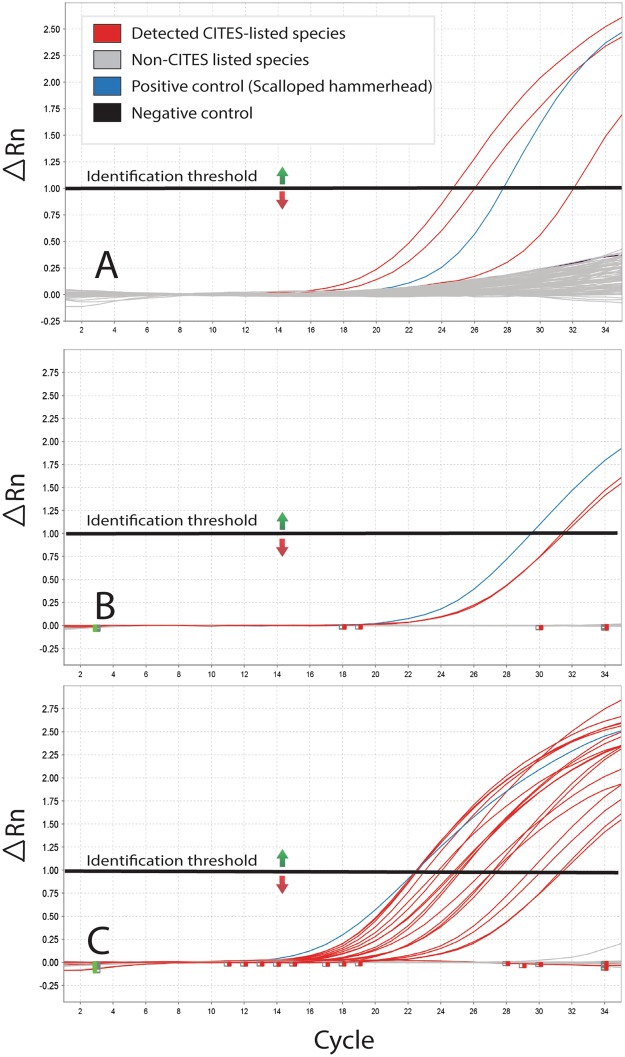
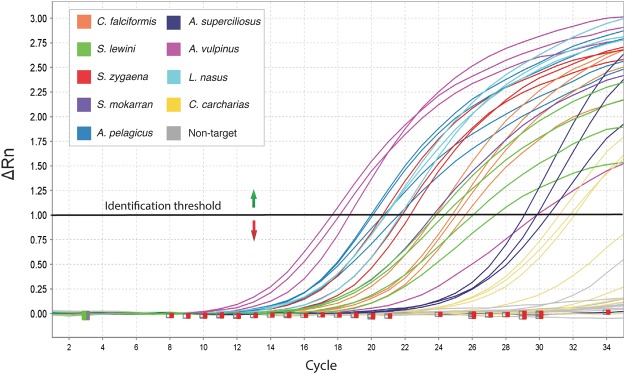
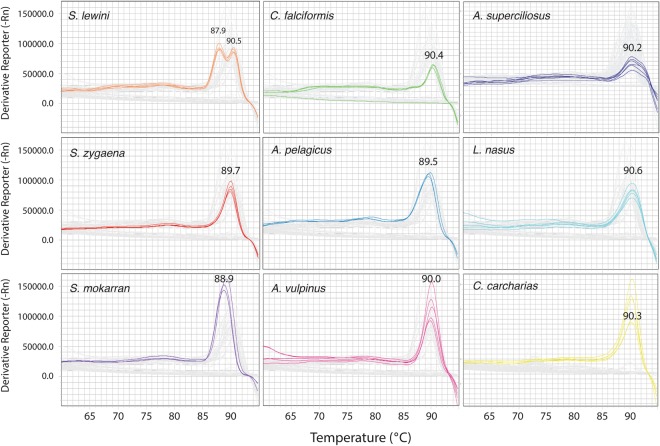
The Convention on International Trade in Endangered Species of Wild Fauna and Flora (CITES) is a multilateral environmental agreement to ensure that the international trade of threatened species is either prohibited (Appendix I listed species) or being conducted legally, sustainably, and transparently (Appendix II listed species). Twelve threatened shark species exploited for their fins, meat, and other products have been listed under CITES Appendix II. Sharks are often traded in high volumes, some of their products are visually indistinguishable, and most importing/exporting nations have limited capacity to detect illicit trade and enforce the regulations. High volume shipments often must be screened after only a short period of detainment (e.g., a maximum of 24 hours), which together with costs and capacity issues have limited the use of DNA approaches to identify illicit trade. Here, we present a reliable, field-based, fast (<4 hours), and cost effective ($0.94 USD per sample) multiplex real-time PCR protocol capable of detecting nine of the twelve sharks listed under CITES in a single reaction. This approach facilitates detection of illicit trade, with positive results providing probable cause to detain shipments for more robust forensic analysis. We also provide evidence of its application in real law enforcement scenarios in Hong Kong. Adoption of this approach can help parties meet their CITES requirements, avoiding potential international trade sanctions in the future.
《濒危野生动植物种国际贸易公约》(CITES)是一项旨在确保濒危物种国际贸易合法、可持续和透明进行的多边环境协定(附录 I 所列物种)或禁止(附录 I 所列物种)。有 12 种受威胁的鲨鱼物种因其鳍、肉和其他产品而被列入 CITES 附录 II。鲨鱼通常交易量很大,其部分产品在外观上难以区分,而且大多数进出口国家/地区检测非法贸易和执行法规的能力有限。大量货物通常在短时间的扣押后(例如,最长 24 小时)进行筛选,这与成本和能力问题一起限制了 DNA 方法在识别非法贸易中的应用。在这里,我们提出了一种可靠的、基于现场的、快速(<4 小时)且具有成本效益(每个样本 0.94 美元)的多重实时 PCR 协议,能够在单个反应中检测到 CITES 附录 II 中列出的 12 种鲨鱼中的 9 种。这种方法有助于检测非法贸易,阳性结果为扣押货物进行更强大的法医分析提供了可能的理由。我们还提供了在香港实际执法场景中应用该方法的证据。采用这种方法可以帮助各方满足其 CITES 要求,避免未来可能受到国际贸易制裁。