Division of Nephrology, Dept. of Medicine, Kidney Research Centre, Ottawa Hospital Research Institute, University of Ottawa, Ottawa, Ontario, Canada.
Division of Hematology, Dept. of Medicine, Ottawa Hospital Research Institute, University of Ottawa, Ottawa, Ontario, Canada.
Sci Rep. 2018 Nov 5;8(1):16320. doi: 10.1038/s41598-018-34557-7.
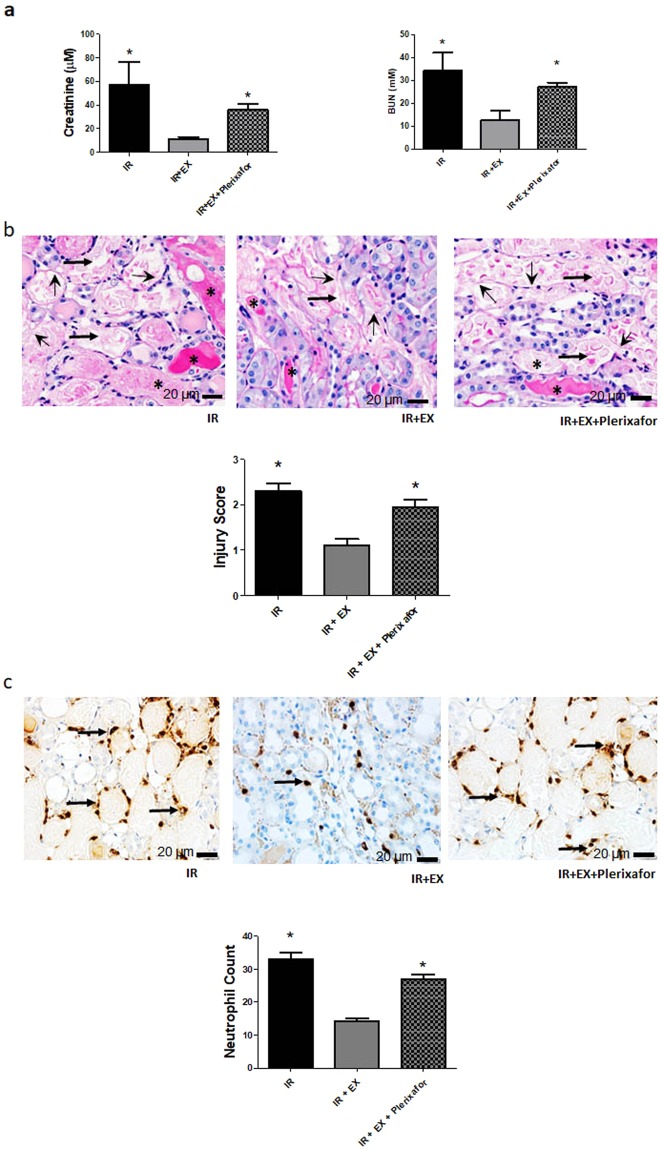
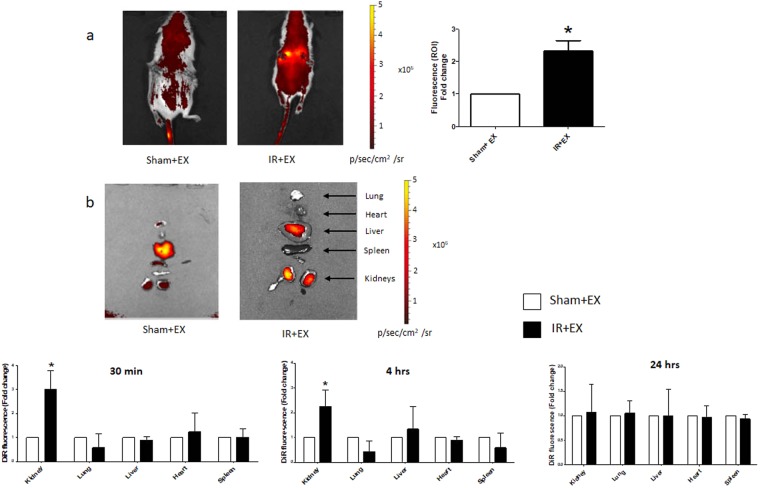
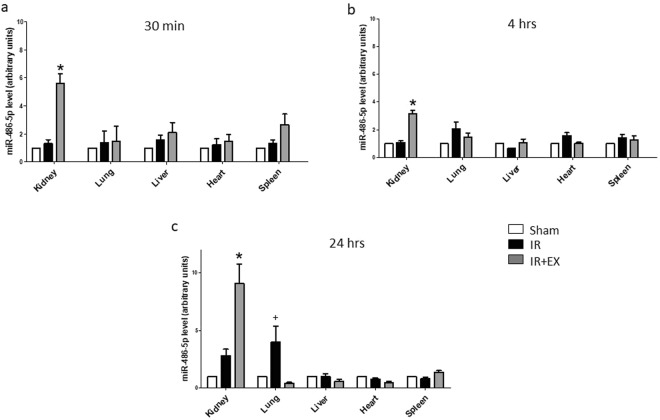
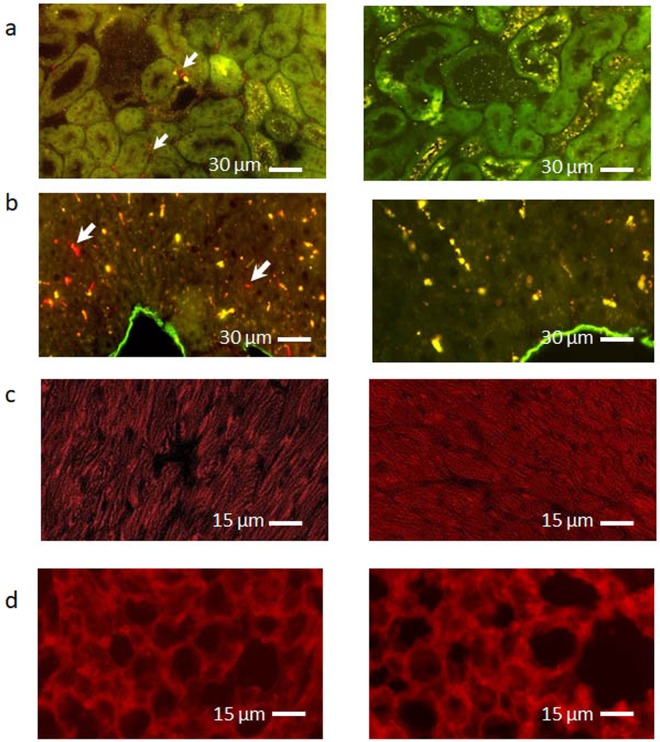
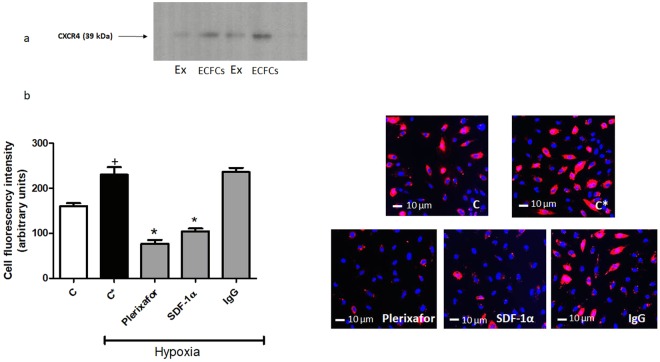
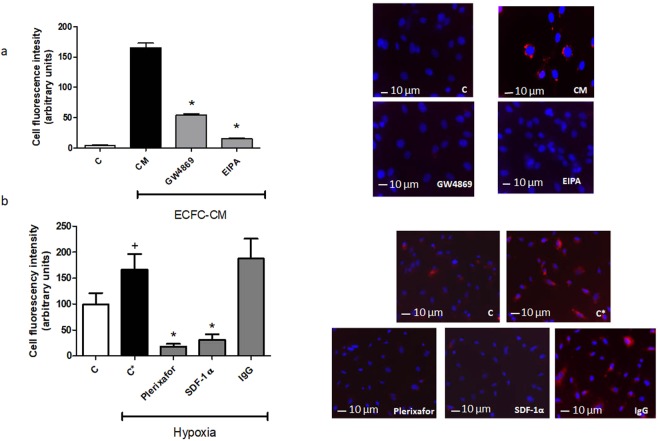
Endothelial colony forming cell (ECFC)-derived exosomes protect mice against ischemic kidney injury, via transfer of microRNA-(miR)-486-5p. Mechanisms mediating exosome recruitment to tissues are unclear. We hypothesized that ECFC exosomes target ischemic kidneys, involving interaction between exosomal CXC chemokine receptor type 4 (CXCR4) and stromal cell-derived factor (SDF)-1α. Ischemia-reperfusion was induced in mice by bilateral renal vascular clamp, with intravenous infusion of exosomes at reperfusion. Optical imaging determined exosome biodistribution, and miR-486-5p was measured by real-time PCR. Human umbilical vein endothelial cells (HUVECs) were cultured to study the CXCR4/SDF-1α interaction. Targeting of administered exosomes to ischemic kidneys was detected 30 min and 4 hrs after reperfusion. Exosomes increased miR-486-5p levels only in kidneys, within proximal tubules, glomeruli, and endothelial cells. Uptake of fluorescently-labeled exosomes into HUVECs, and exosomal transfer of miR-486-5p were enhanced by hypoxia, effects blocked by neutralizing antibody to SDF-1α or by the CXCR4 inhibitor plerixafor. Infusion of ECFC exosomes prevented ischemic kidney injury in vivo, an effect that was not observed when exosomes were pre-incubated with plerixafor. These data indicate that ECFC exosomes selectively target the kidneys after ischemic injury, with rapid cellular transfer of miR486-5p. Targeting of exosomes may involve interaction of CXCR4 with endothelial cell SDF-1α.
内皮祖细胞衍生的外泌体通过转移 microRNA-(miR)-486-5p 来保护小鼠免受缺血性肾损伤。介导外泌体向组织募集的机制尚不清楚。我们假设内皮祖细胞衍生的外泌体靶向缺血性肾脏,涉及外泌体 CXC 趋化因子受体 4 (CXCR4) 和基质细胞衍生因子 (SDF)-1α 之间的相互作用。通过双侧肾血管夹闭诱导小鼠缺血再灌注,再灌注时静脉输注外泌体。光学成像确定外泌体的生物分布,并通过实时 PCR 测量 miR-486-5p。培养人脐静脉内皮细胞 (HUVEC) 以研究 CXCR4/SDF-1α 相互作用。再灌注后 30 分钟和 4 小时检测给予的外泌体对缺血肾脏的靶向作用。外泌体仅在肾脏、近端肾小管、肾小球和内皮细胞中增加 miR-486-5p 水平。缺氧增强了 HUVEC 摄取荧光标记的外泌体和外泌体转移 miR-486-5p 的作用,该作用被 SDF-1α 中和抗体或 CXCR4 抑制剂 plerixafor 阻断。ECFC 外泌体的输注可防止体内缺血性肾损伤,而在用 plerixafor 预孵育外泌体时则观察不到这种作用。这些数据表明,ECFC 外泌体在缺血性损伤后选择性地靶向肾脏,并且快速地将 miR486-5p 转移到细胞中。外泌体的靶向作用可能涉及 CXCR4 与内皮细胞 SDF-1α 的相互作用。