Wilson Bethany, Serpell James, Herzog Harold, McGreevy Paul
Sydney School of Veterinary Science, Faculty of Science, University of Sydney, Sydney 2006, Australia.
School of Veterinary Medicine, University of Pennsylvania, Philadelphia, PA 19131, USA.
Animals (Basel). 2018 Nov 6;8(11):197. doi: 10.3390/ani8110197.
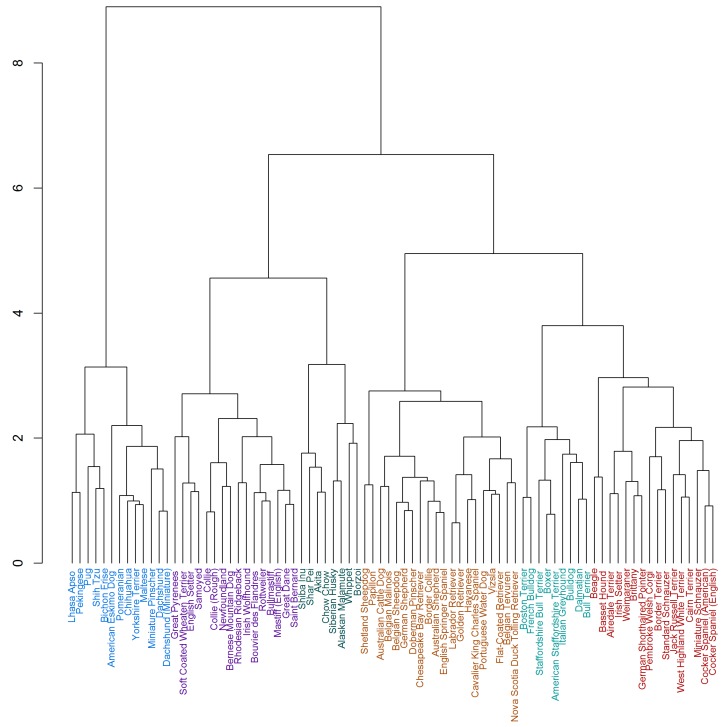
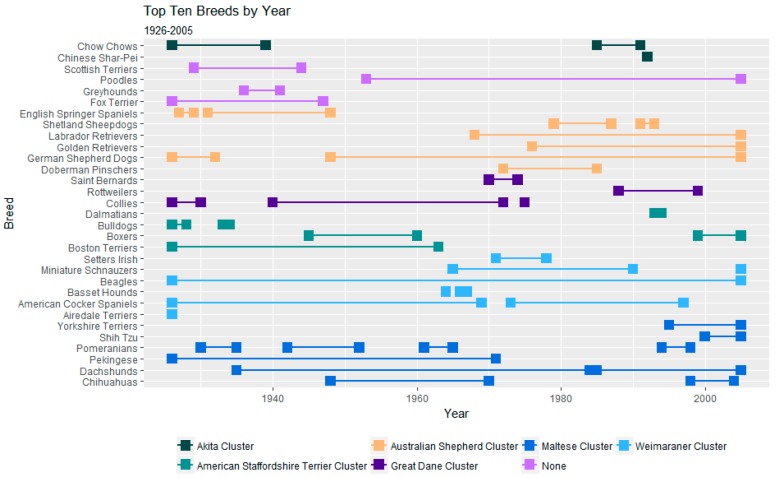
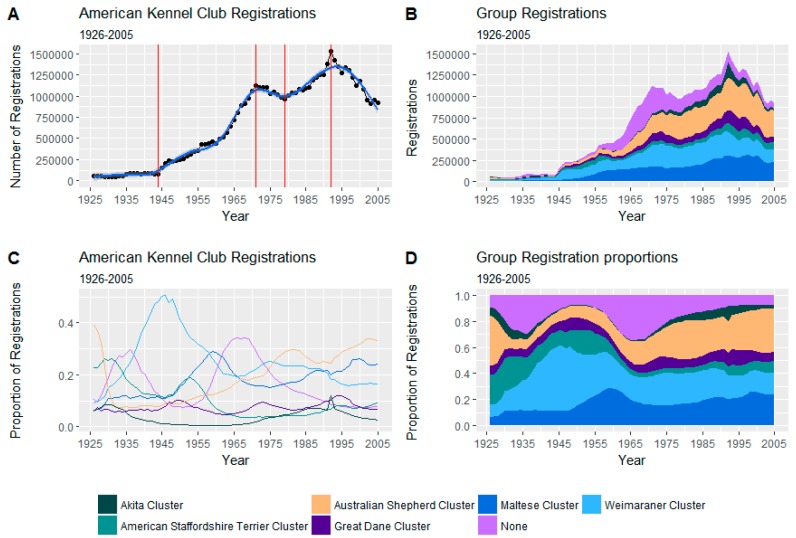
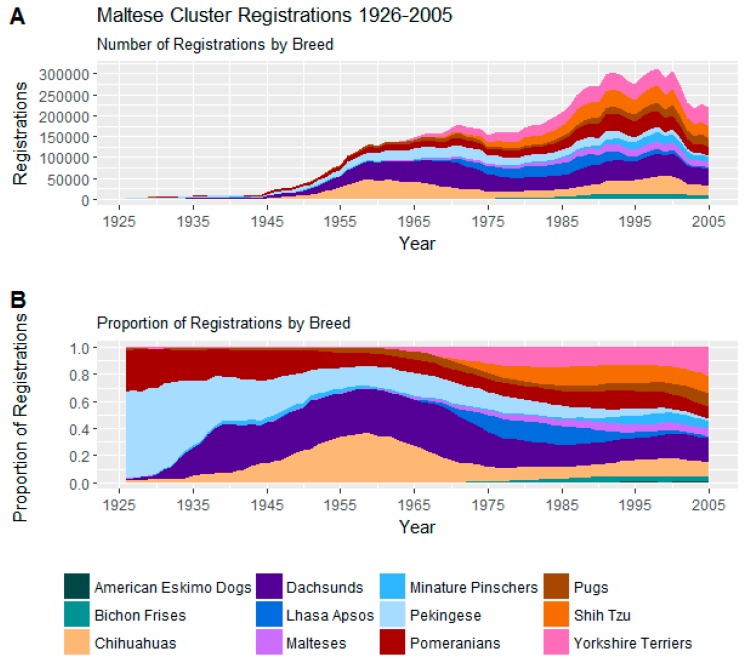
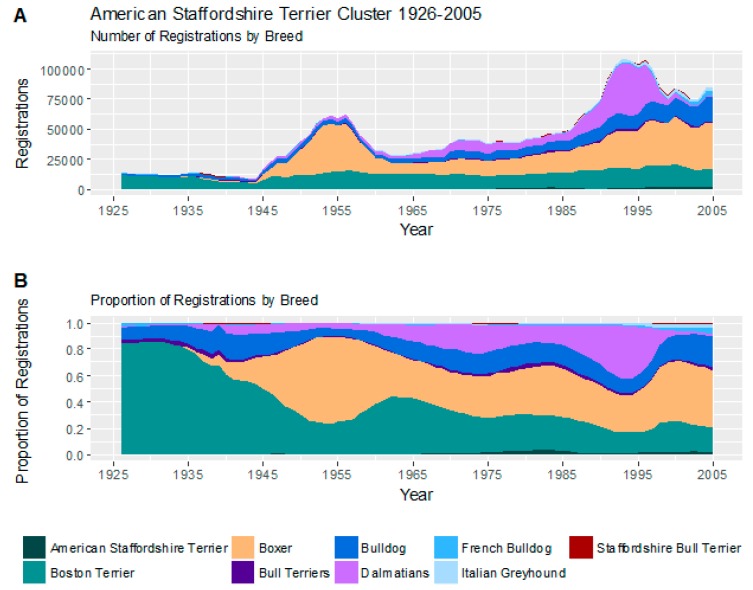
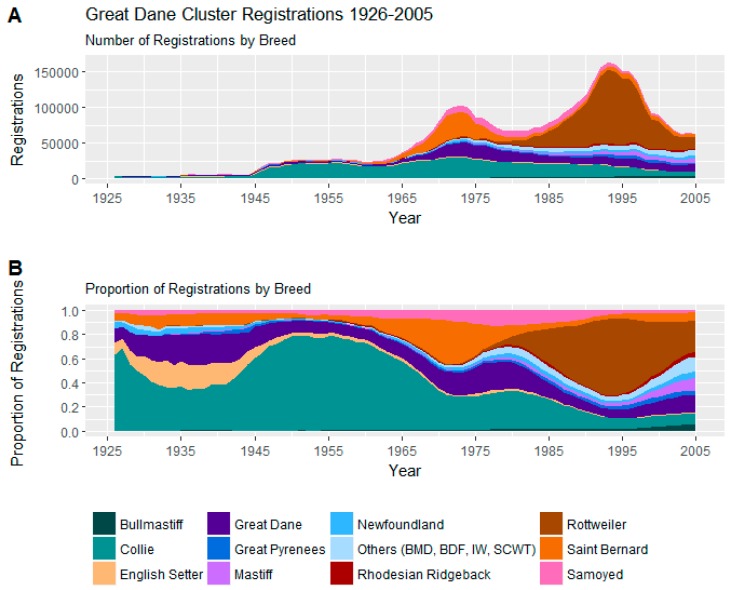
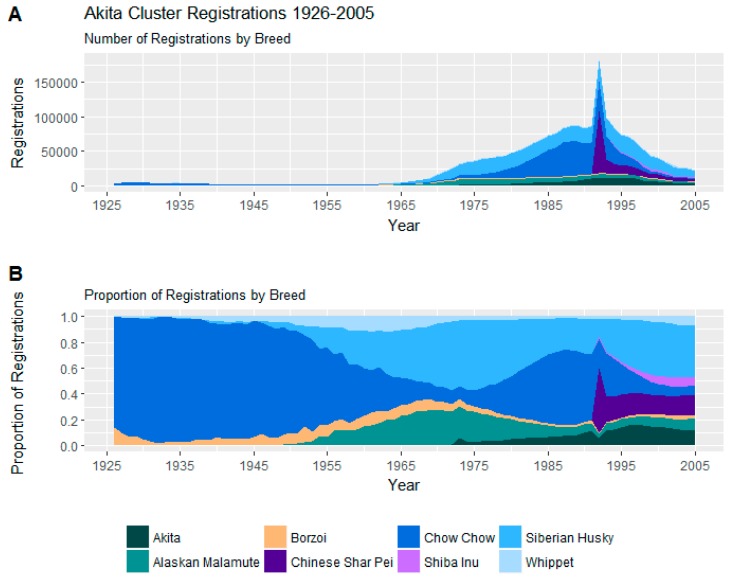
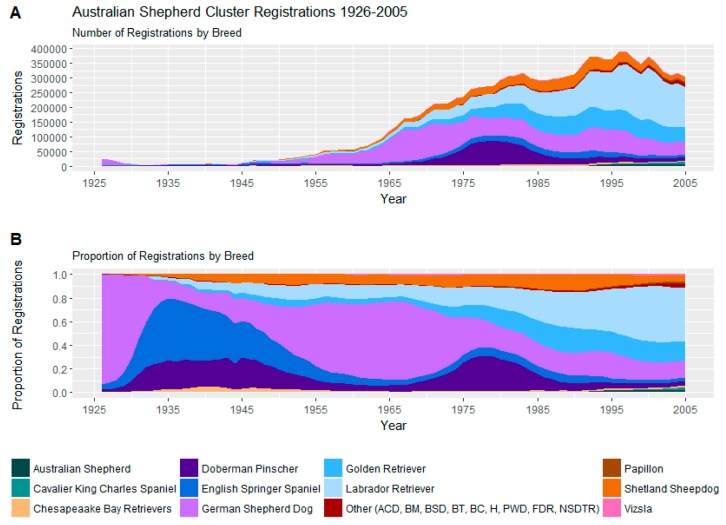
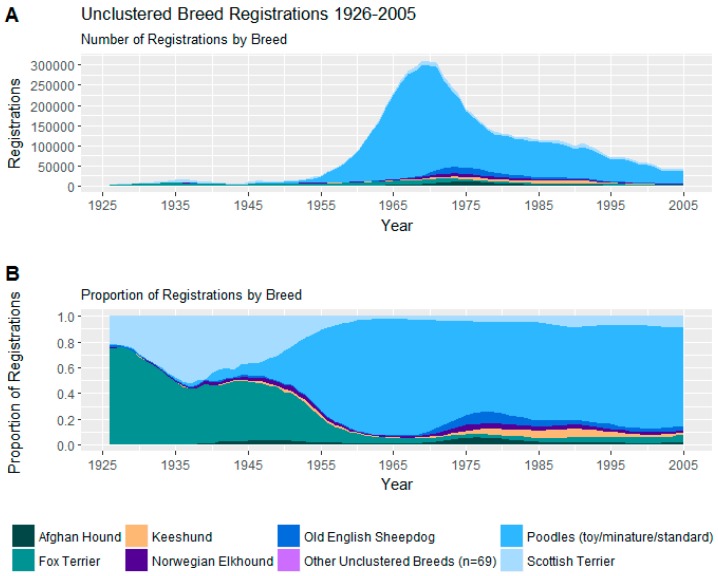
Drawing on American Kennel Club (AKC) puppy registration numbers for approximately 82 varieties of pedigree dogs between 1926 and 2005, the current article analyses behavioural reports on 32,005 dogs of these varieties reported through the Canine Behavioural Assessment and Research Questionnaire (C-BARQ). Cluster analysis of C-BARQ scores indicates that the 82 breeds fell into six clusters. Average scores for each of the 14 behavioural subscales and 22 miscellaneous traits in C-BARQ were calculated for each cluster, and the breeds in each cluster with average scores most similar to the cluster averages were selected as titular breeds. Titular breeds for each cluster were the Maltese terrier, the Great Dane, the Akita, the Australian shepherd, the American Staffordshire terrier, and the Weimaraner. Using the AKC data, we tracked longitudinal trends in annual registration numbers of breeds of each cluster over the period from 1926 to 2005. This period was subdivided into periods with differing overall trends by fitting natural cubic splines to the overall raw trend and considering both the spline and its derivative curves. Differences in the absolute numbers of dogs and trends in registrations over nearly 80 years were identified: an Early period (1926⁻1944, during which total registration numbers were very low); a Mid-Century Period (1945⁻1971, during which total registration numbers were tending to rise from year to year); a First Decline (1972⁻1979, a brief period during which registration numbers experienced a trend of more gradual decline); a Recovery (1980⁻1992, where registration numbers began to gradually rise again); and a Second Decline (1993⁻2005, a second sustained period of falling registration numbers, more dramatic than the first decline). The current article describes the ways in which the clustered behaviour of dogs associate with these trends. That said, there is no compelling evidence that shifts in the popularity within or between the clusters reflect consumer canine behavioural preferences. Understanding historic trends in the demand for certain canine behavioural traits could help veterinary and urban animal management stakeholders to anticipate future needs for education and infrastructure.
本文利用美国养犬俱乐部(AKC)1926年至2005年间约82个品种纯种犬的幼犬登记数据,分析了通过犬类行为评估与研究问卷(C-BARQ)报告的这些品种的32,005只犬的行为报告。对C-BARQ分数进行聚类分析表明,这82个品种可分为六个集群。计算了每个集群在C-BARQ中14个行为子量表和22个其他特征的平均分数,并选择每个集群中平均分数与集群平均分最相似的品种作为代表品种。每个集群的代表品种分别是马尔济斯犬、大丹犬、秋田犬、澳大利亚牧羊犬、美国斯塔福郡梗和魏玛猎犬。利用AKC的数据,我们追踪了1926年至2005年期间每个集群品种的年度登记数量的纵向趋势。通过对整体原始趋势拟合自然三次样条曲线并考虑样条曲线及其导数曲线,将这一时期细分为具有不同总体趋势的阶段。确定了近80年来犬只绝对数量和登记趋势的差异:早期(1926 - 1944年,在此期间总登记数量非常低);中世纪时期(1945 - 1971年,在此期间总登记数量逐年上升);首次下降(1972 - 1979年,这是一个短暂时期,登记数量经历了较为缓慢的下降趋势);恢复期(1980 - 1992年,登记数量再次开始逐渐上升);以及第二次下降(1993 - 2005年,这是登记数量持续下降的第二个时期,比首次下降更为显著)。本文描述了犬类集群行为与这些趋势相关联的方式。也就是说,没有令人信服的证据表明集群内部或之间受欢迎程度的变化反映了消费者对犬类行为的偏好。了解某些犬类行为特征需求的历史趋势有助于兽医和城市动物管理利益相关者预测未来的教育和基础设施需求。