Geidel Sascha, Peransi Llopis Sergio, Rodrigo Manuel, de Diego-Castilla Graciela, Sousa Antonio, Nestler Jörg, Otto Thomas, Gessner Thomas, Parro Victor
Fraunhofer Institute for Electronic Nanosystems (ENAS), Technologie-Campus 3, 09126 Chemnitz, Germany.
DAS Photonics S.L., Valencia 46022, Spain.
Micromachines (Basel). 2016 Sep 13;7(9):153. doi: 10.3390/mi7090153.
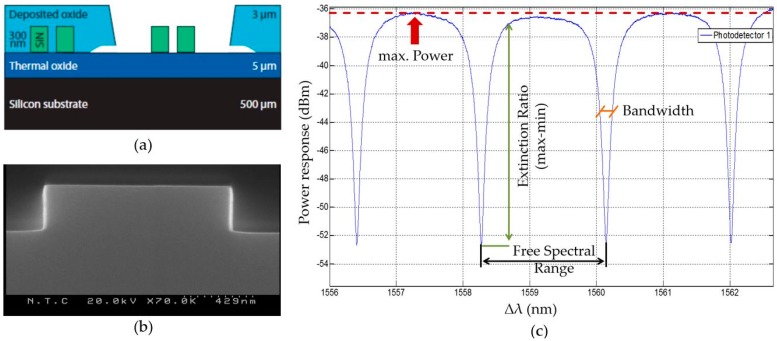
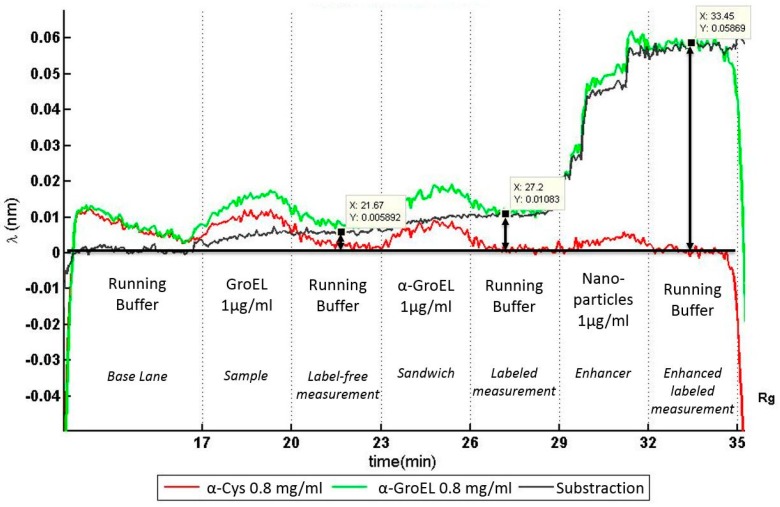
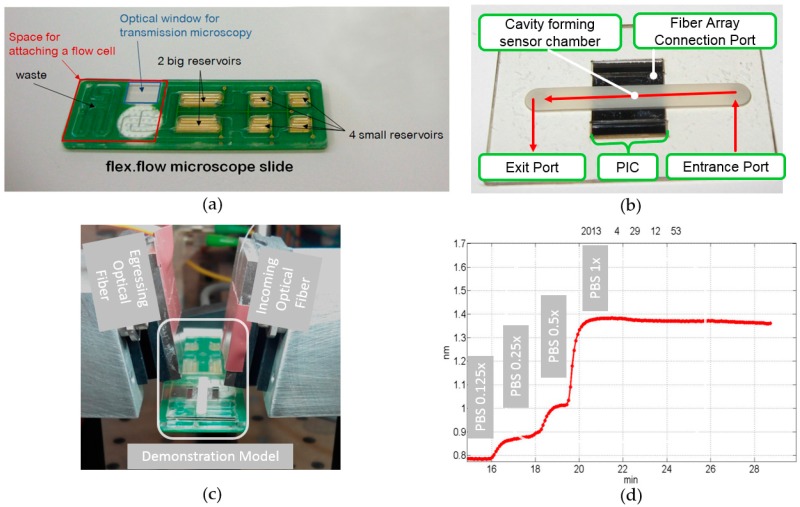
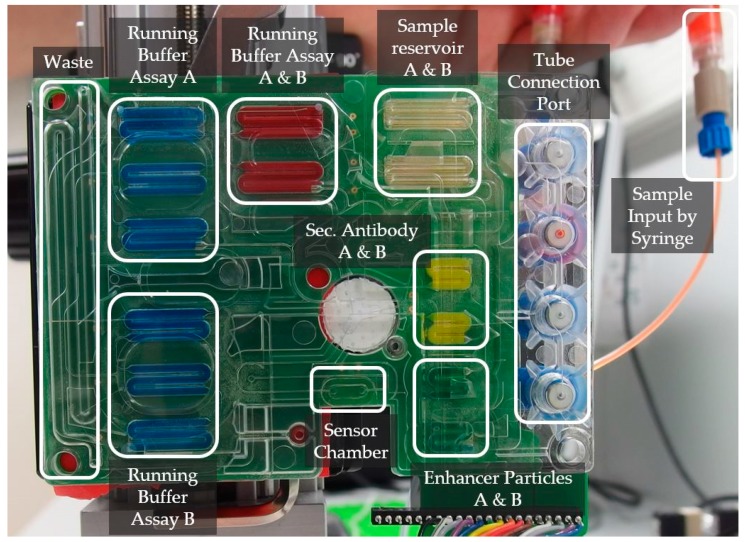
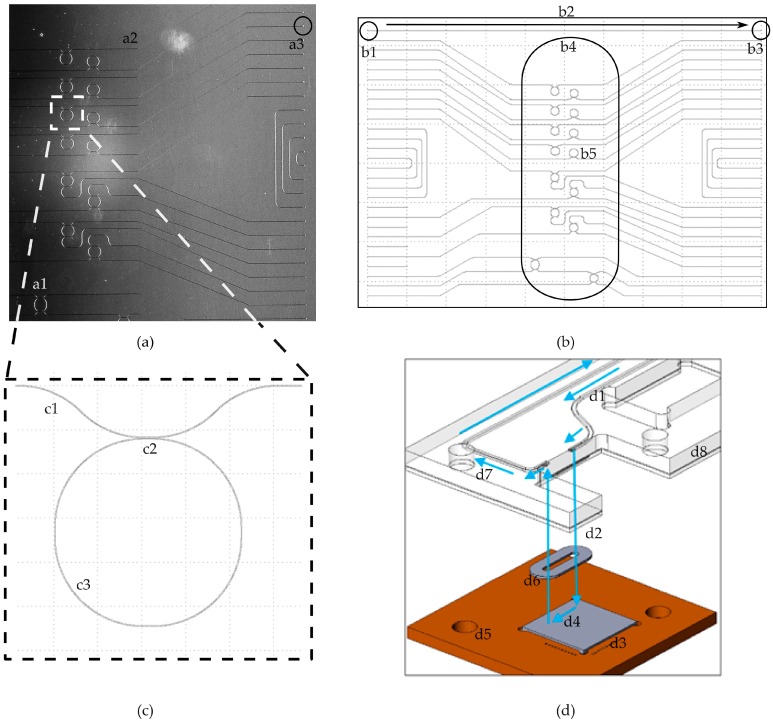
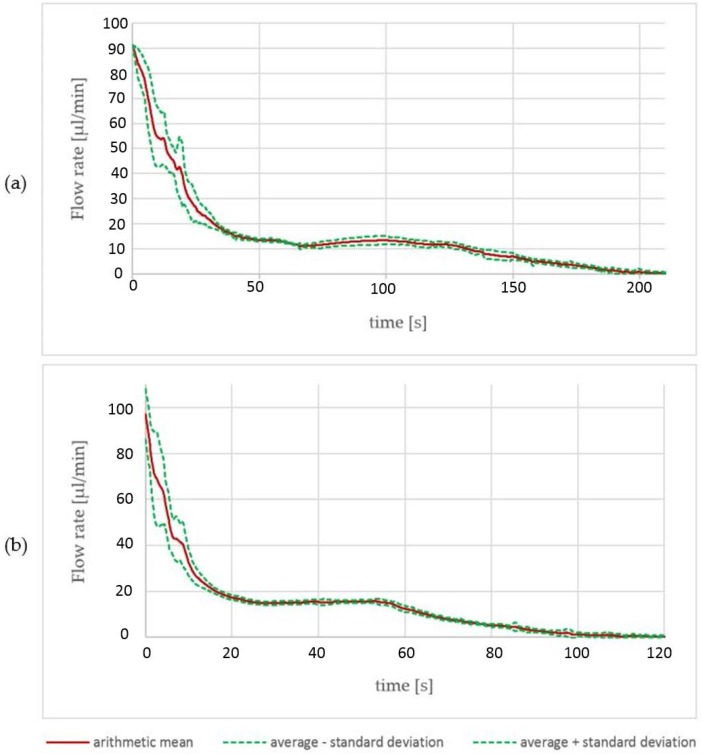
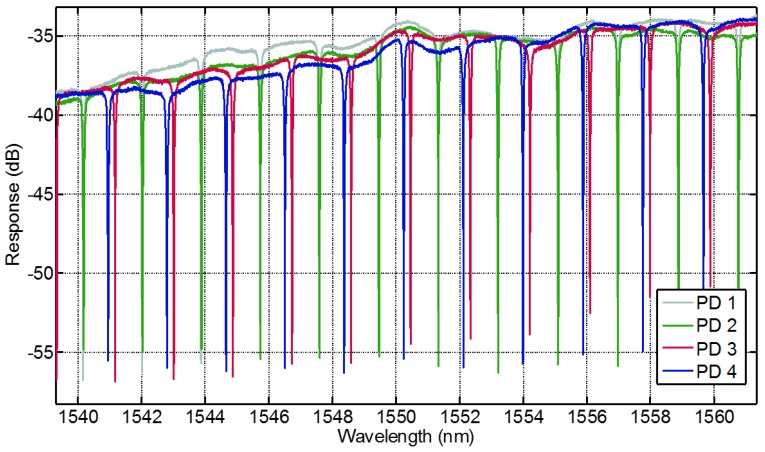
While there have been huge advances in the field of biosensors during the last decade, their integration into a microfluidic environment avoiding external tubing and pumping is still neglected. Herein, we show a new microfluidic design that integrates multiple reservoirs for reagent storage and single-use electrochemical pumps for time-controlled delivery of the liquids. The cartridge has been tested and validated with a silicon nitride-based photonic biosensor incorporating multiple optical ring resonators as sensing elements and an immunoassay as a potential target application. Based on experimental results obtained with a demonstration model, subcomponents were designed and existing protocols were adapted. The newly-designed microfluidic cartridges and photonic sensors were separately characterized on a technical basis and performed well. Afterwards, the sensor was functionalized for a protein detection. The microfluidic cartridge was loaded with the necessary assay reagents. The integrated pumps were programmed to drive the single process steps of an immunoassay. The prototype worked selectively, but only with a low sensitivity. Further work must be carried out to optimize biofunctionalization of the optical ring resonators and to have a more suitable flow velocity progression to enhance the system's reproducibility.
尽管在过去十年中生物传感器领域取得了巨大进展,但它们在避免外部管道和泵送的微流体环境中的集成仍然被忽视。在此,我们展示了一种新的微流体设计,该设计集成了多个用于试剂存储的储液器和用于液体定时输送的一次性电化学泵。该芯片已通过基于氮化硅的光子生物传感器进行测试和验证,该传感器包含多个光学环形谐振器作为传感元件,并以免疫测定作为潜在的目标应用。基于通过示范模型获得的实验结果,设计了子组件并调整了现有方案。新设计的微流体芯片和光子传感器在技术基础上分别进行了表征,表现良好。之后,对传感器进行功能化以进行蛋白质检测。微流体芯片装载了必要的检测试剂。对集成泵进行编程以驱动免疫测定的单个工艺步骤。该原型具有选择性地工作,但灵敏度较低。必须进一步开展工作,以优化光学环形谐振器的生物功能化,并获得更合适的流速变化,以提高系统的重现性。