Kaminaga Maho, Ishida Tadashi, Omata Toru
Department of Mechanical Engineering, School of Engineering, Tokyo Institute of Technology, Yokohama 226-8502, Kanagawa, Japan.
Micromachines (Basel). 2016 Dec 9;7(12):224. doi: 10.3390/mi7120224.
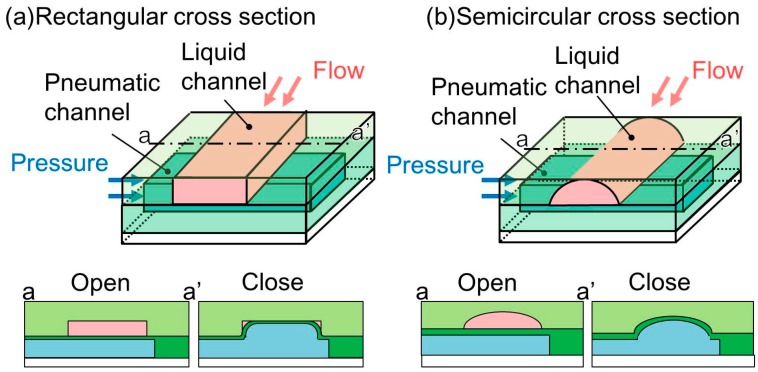
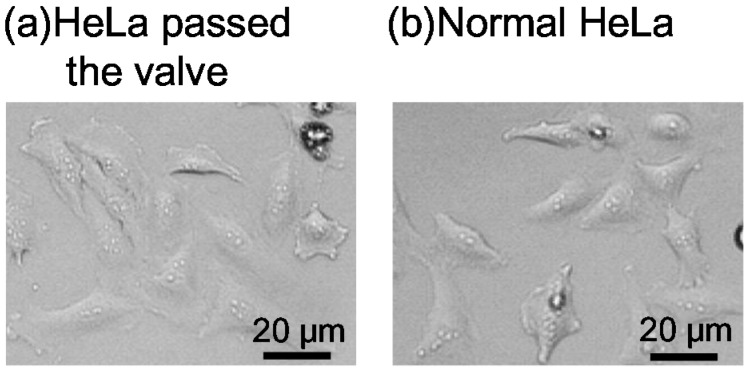
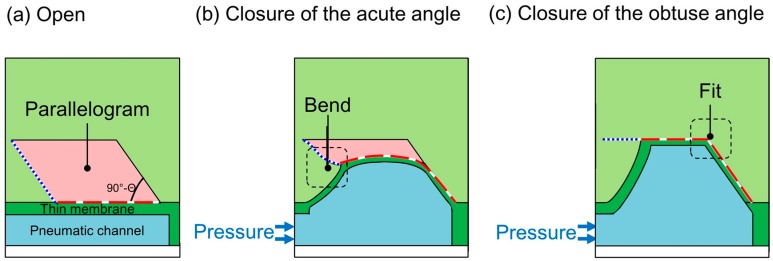
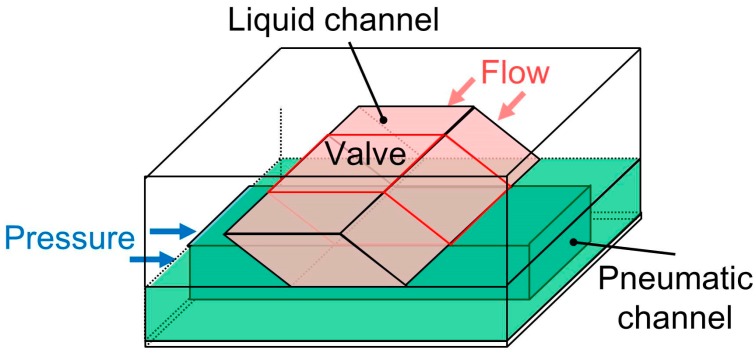
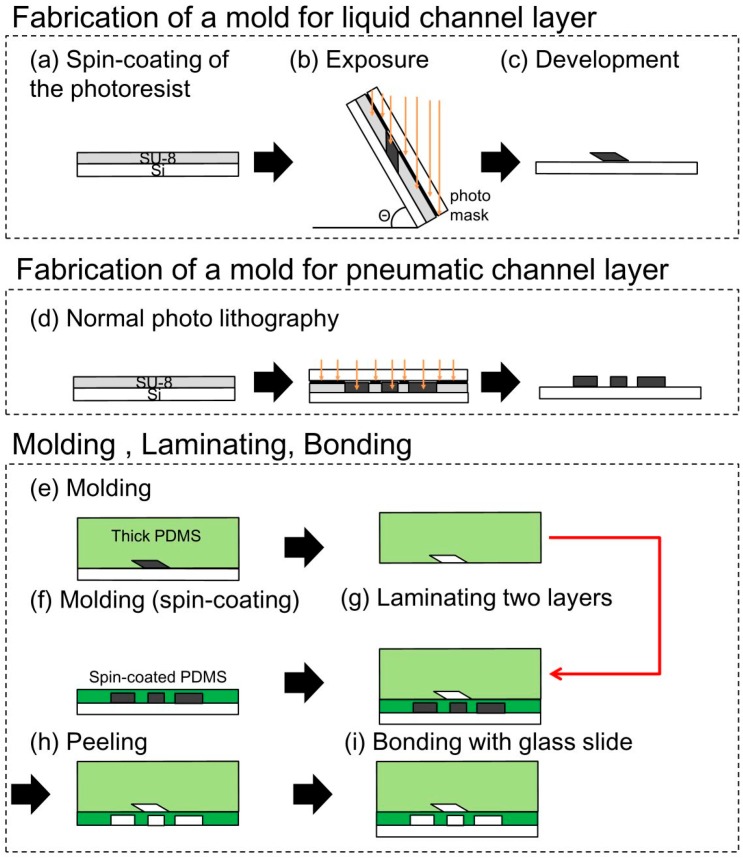
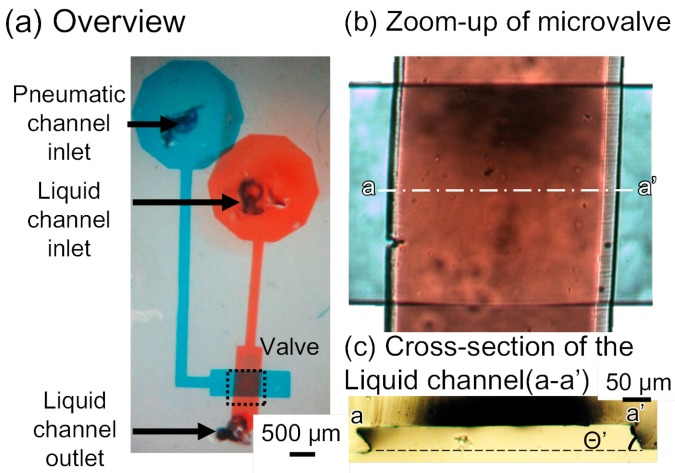
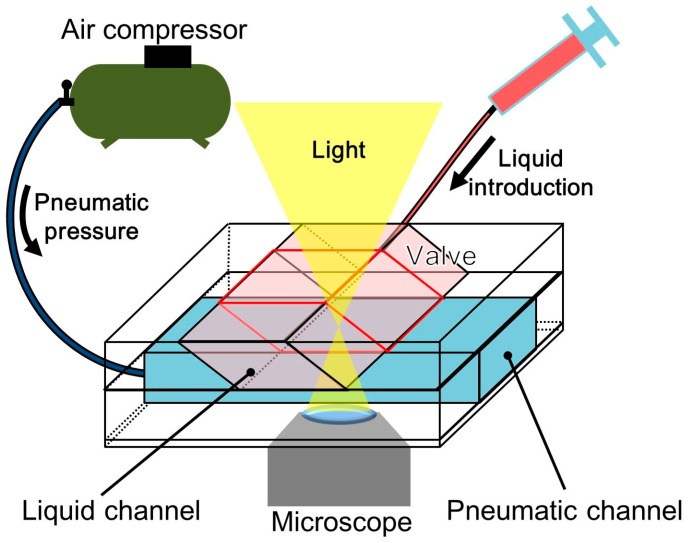
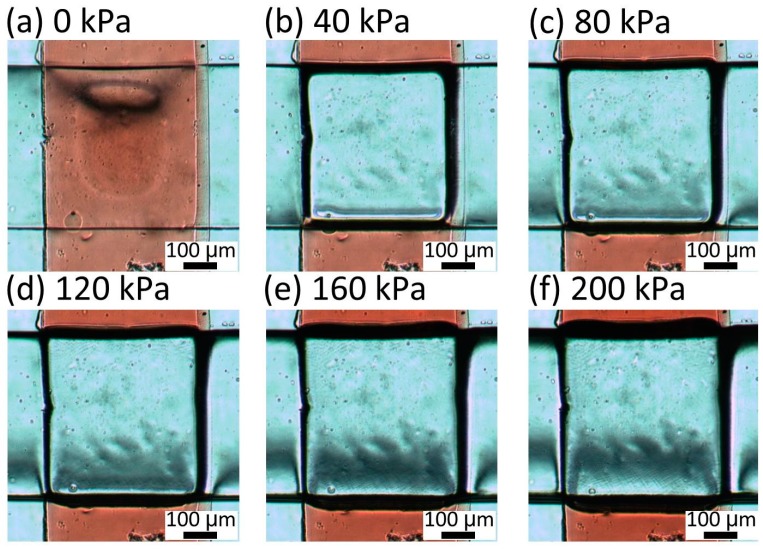
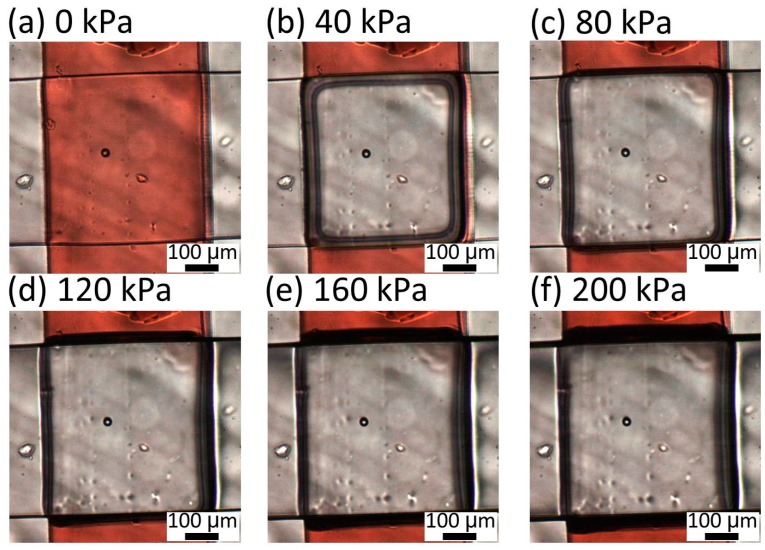
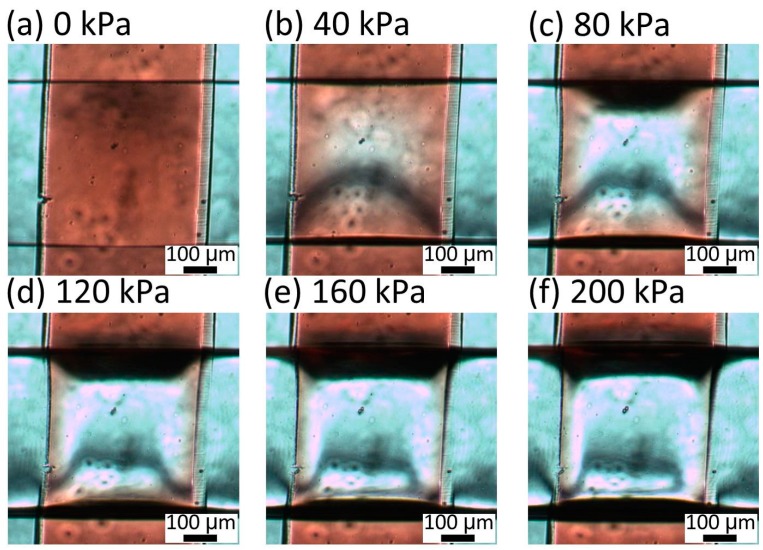
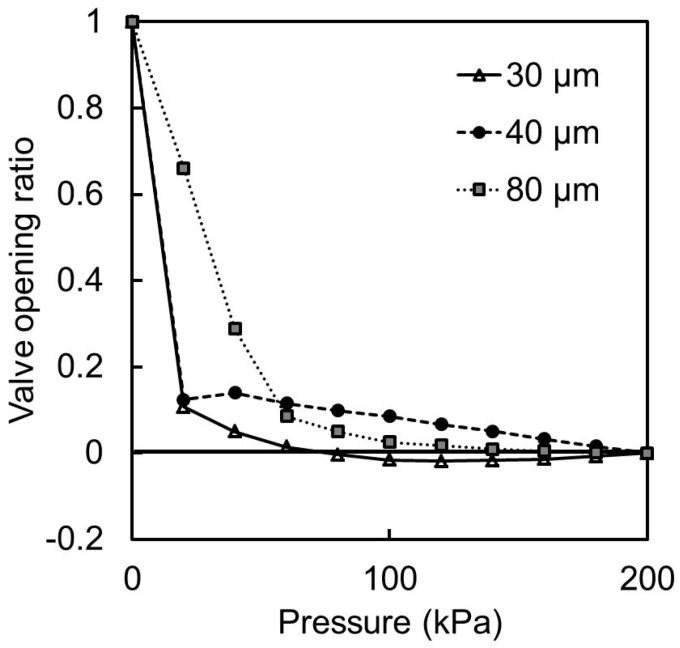
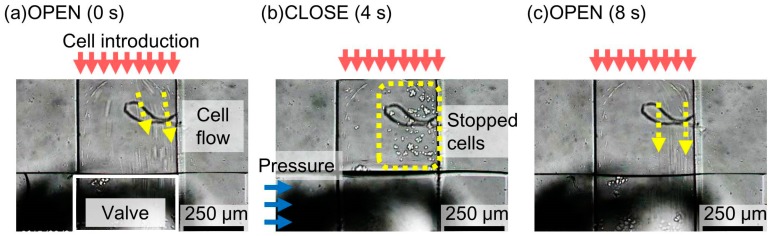
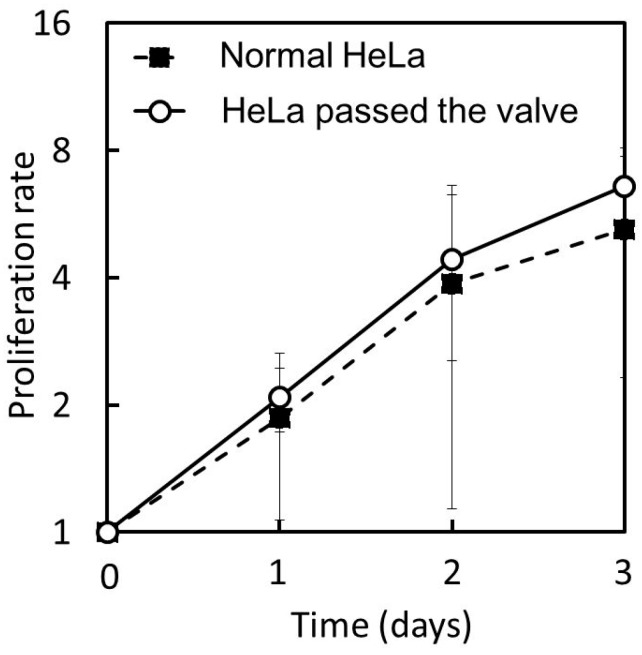
We used inclined lithography to fabricate a pneumatic microvalve for tall microchannels such as those used to convey large cells. The pneumatic microvalve consists of three layers. The upper layer is the actual liquid microchannel, which has a parallelogram-shaped cross section of width 500 μm, height 100 μm, and an acute angle of 53.6°. The lower layer is a pneumatic microchannel that functions as an actuator, and the middle layer is a thin polydimethylsiloxane membrane between the upper and lower layers. The operation of the pneumatic microchannel actuator causes the thin membrane to bend, resulting in the bending of the liquid microchannel and its closure. It was confirmed that the closure of the liquid microchannel completely stopped the flow of the HeLa cell suspension that was used to demonstrate the operation of the microvalve. The HeLa cells that passed through the microchannel were also observed to retain their proliferation and morphological properties.
我们采用倾斜光刻技术制造了一种用于高大微通道(如用于输送大细胞的微通道)的气动微阀。该气动微阀由三层组成。上层是实际的液体微通道,其横截面为平行四边形,宽度为500μm,高度为100μm,锐角为53.6°。下层是用作致动器的气动微通道,中间层是上下层之间的薄聚二甲基硅氧烷膜。气动微通道致动器的操作会使薄膜弯曲,导致液体微通道弯曲并关闭。经证实,液体微通道的关闭完全停止了用于演示微阀操作的HeLa细胞悬液的流动。还观察到通过微通道的HeLa细胞保持了它们的增殖和形态特性。