Department of Biochemistry and Molecular Genetics, University of Virginia School of Medicine, 1340 Jefferson Park Ave, Pinn Hall, Room: 6228, Charlottesville, VA, 22903, USA.
Center for Cell Signalling, University of Virginia School of Medicine, Charlottesville, VA, USA.
Genome Biol. 2018 Nov 7;19(1):190. doi: 10.1186/s13059-018-1572-4.
The mutational processes underlying non-coding cancer mutations and their biological significance in tumor evolution are poorly understood. To get better insights into the biological mechanisms of mutational processes in breast cancer, we integrate whole-genome level somatic mutations from breast cancer patients with chromatin states and transcription factor binding events.
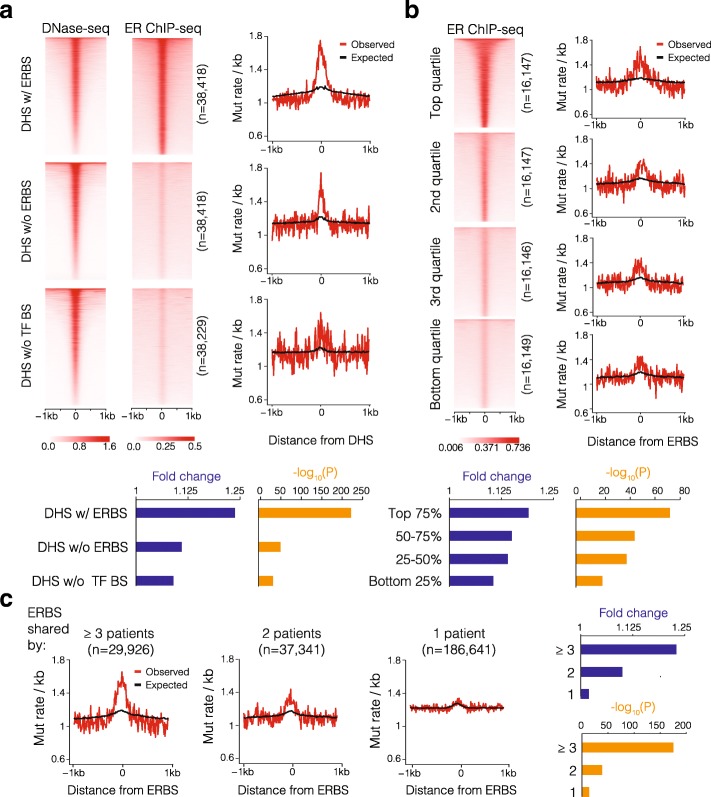
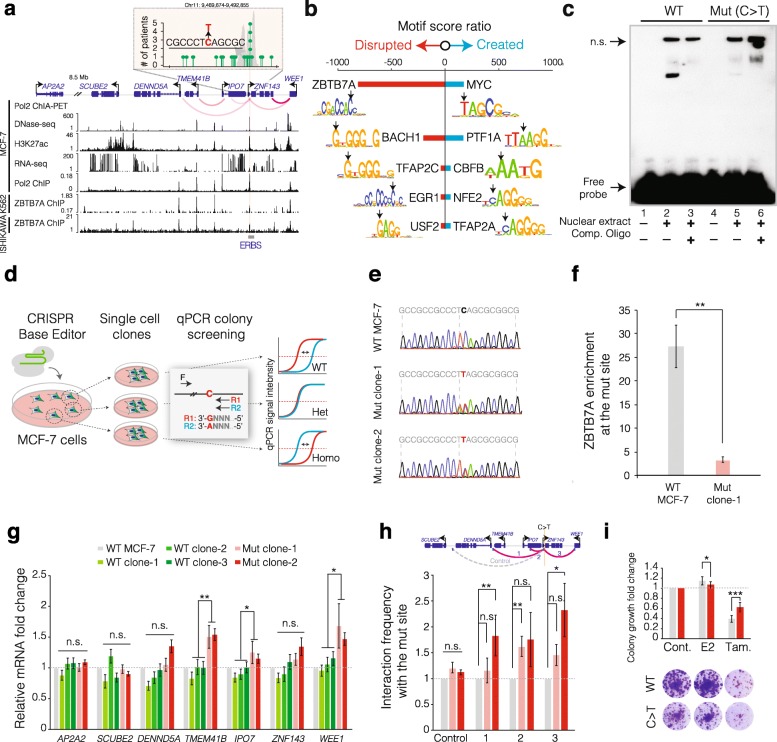
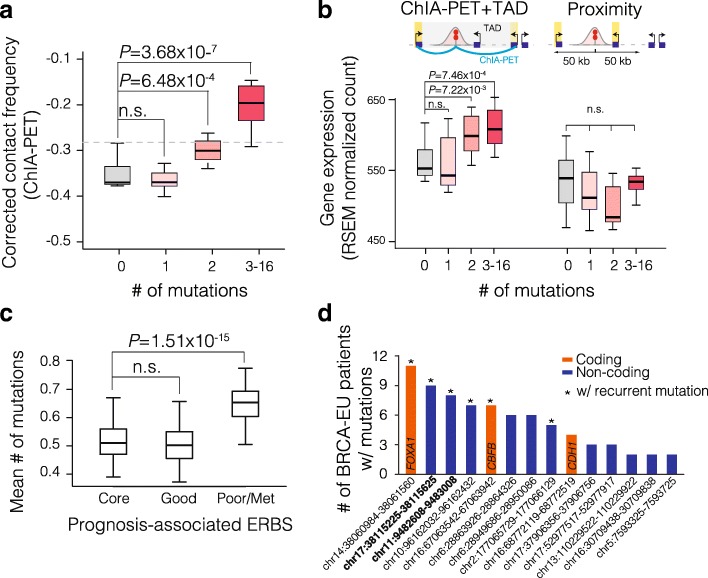
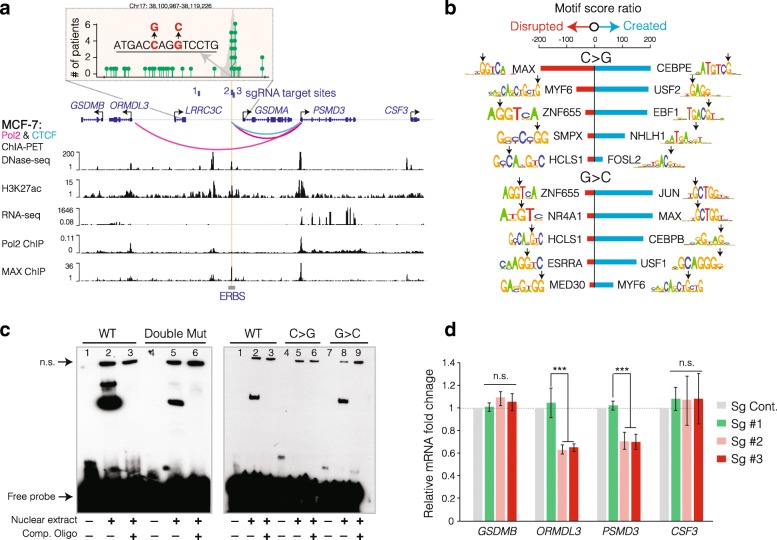
We discover that a large fraction of non-coding somatic mutations in estrogen receptor (ER)-positive breast cancers are confined to ER binding sites. Notably, the highly mutated estrogen receptor binding sites are associated with more frequent chromatin loop contacts and the associated distal genes are expressed at higher level. To elucidate the functional significance of these non-coding mutations, we focus on two of the recurrently mutated estrogen receptor binding sites. Our bioinformatics and biochemical analysis suggest loss of DNA-protein interactions due to the recurrent mutations. Through CRISPR interference, we find that the recurrently mutated regulatory element at the LRRC3C-GSDMA locus impacts the expression of multiple distal genes. Using a CRISPR base editor, we show that the recurrent C→T conversion at the ZNF143 locus results in decreased TF binding, increased chromatin loop formation, and increased expression of multiple distal genes. This single point mutation mediates reduced response to estradiol-induced cell proliferation but increased resistance to tamoxifen-induced growth inhibition.
Our data suggest that ER binding is associated with localized accumulation of somatic mutations, some of which affect chromatin architecture, distal gene expression, and cellular phenotypes in ER-positive breast cancer.
非编码癌症突变的突变过程及其在肿瘤进化中的生物学意义尚不清楚。为了更深入地了解乳腺癌突变过程的生物学机制,我们整合了来自乳腺癌患者的全基因组水平体细胞突变与染色质状态和转录因子结合事件。
我们发现,雌激素受体(ER)阳性乳腺癌中很大一部分非编码体细胞突变局限于 ER 结合位点。值得注意的是,高度突变的雌激素受体结合位点与更频繁的染色质环接触相关,并且相关的远端基因表达水平更高。为了阐明这些非编码突变的功能意义,我们专注于两个经常发生突变的雌激素受体结合位点。我们的生物信息学和生化分析表明,由于反复发生的突变,导致 DNA-蛋白质相互作用丧失。通过 CRISPR 干扰,我们发现 LRRC3C-GSDMA 基因座上反复突变的调节元件会影响多个远端基因的表达。通过使用 CRISPR 碱基编辑器,我们发现 ZNF143 基因座上反复发生的 C→T 转换导致 TF 结合减少、染色质环形成增加以及多个远端基因表达增加。这种单点突变导致对雌二醇诱导的细胞增殖的反应降低,但对他莫昔芬诱导的生长抑制的抗性增加。
我们的数据表明,ER 结合与体细胞突变的局部积累有关,其中一些突变会影响 ER 阳性乳腺癌中的染色质结构、远端基因表达和细胞表型。