Iconaru Simona Liliana, Motelica-Heino Mikael, Guegan Regis, Beuran Mircea, Costescu Adrian, Predoi Daniela
National Institute of Materials Physics, Atomistilor Street, No. 405A, P.O. Box MG 07, 077125 Magurele, Romania.
ISTO, UMR 7327 CNRS Université d'Orléans, 1A rue de la Férollerie, 45071 Orléans CEDEX 2, France.
Materials (Basel). 2018 Nov 7;11(11):2204. doi: 10.3390/ma11112204.
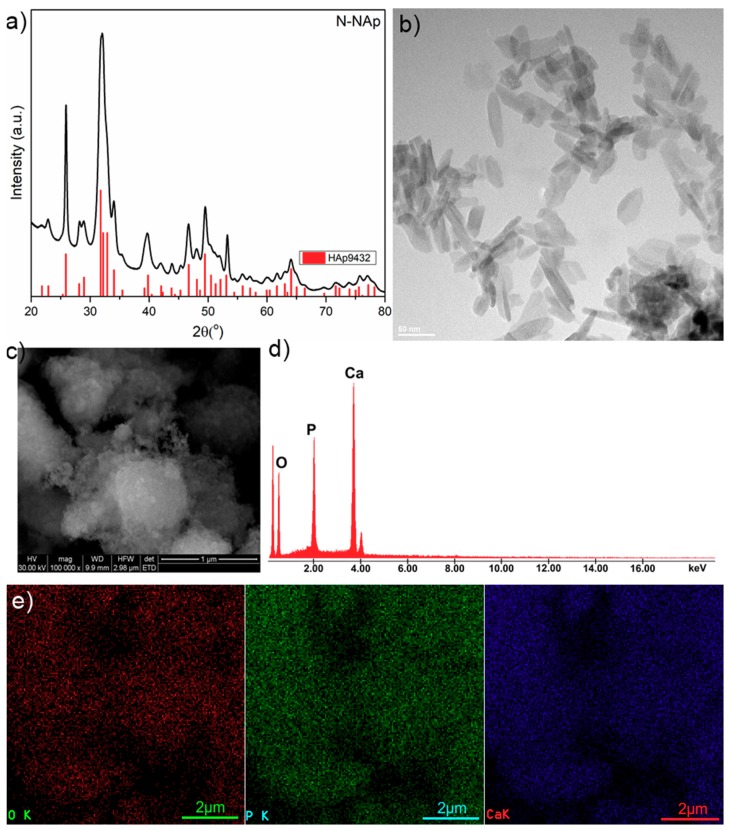
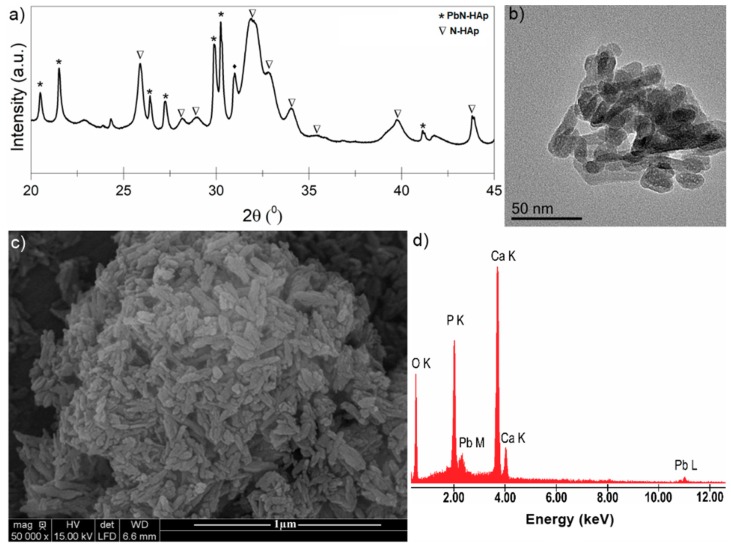
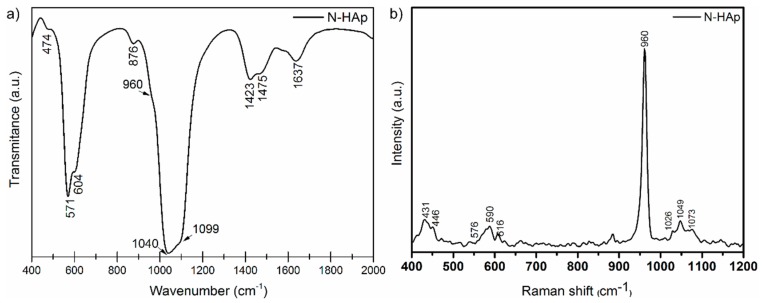
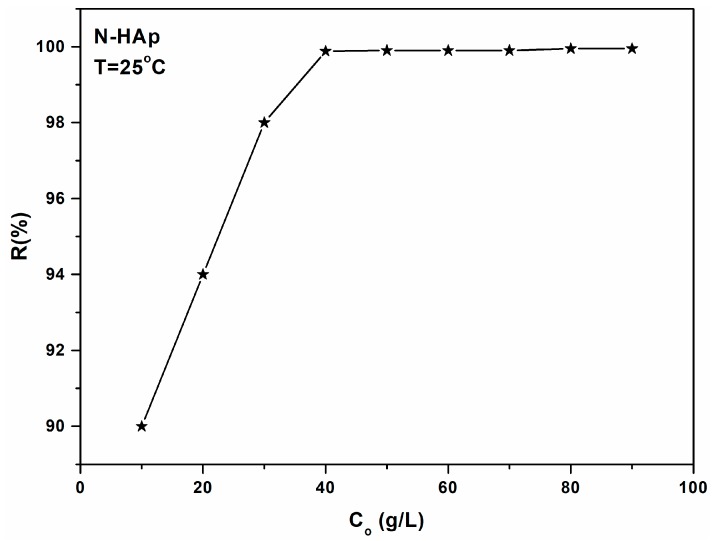
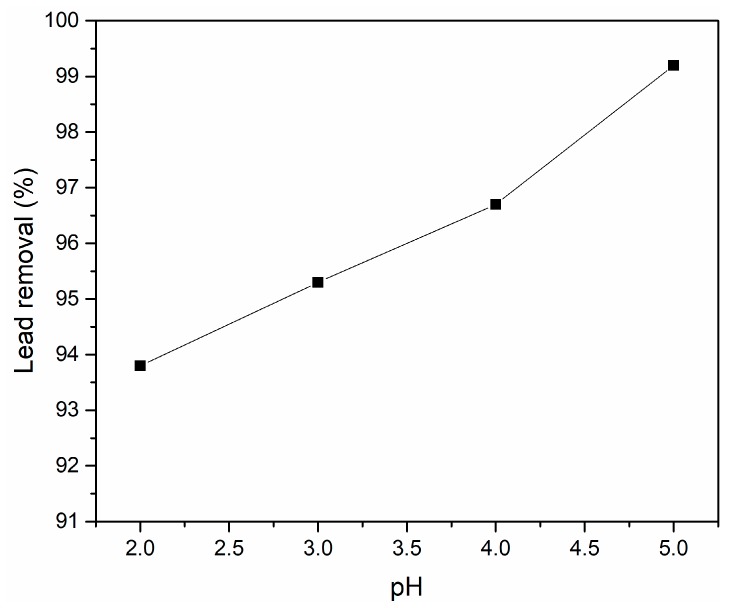
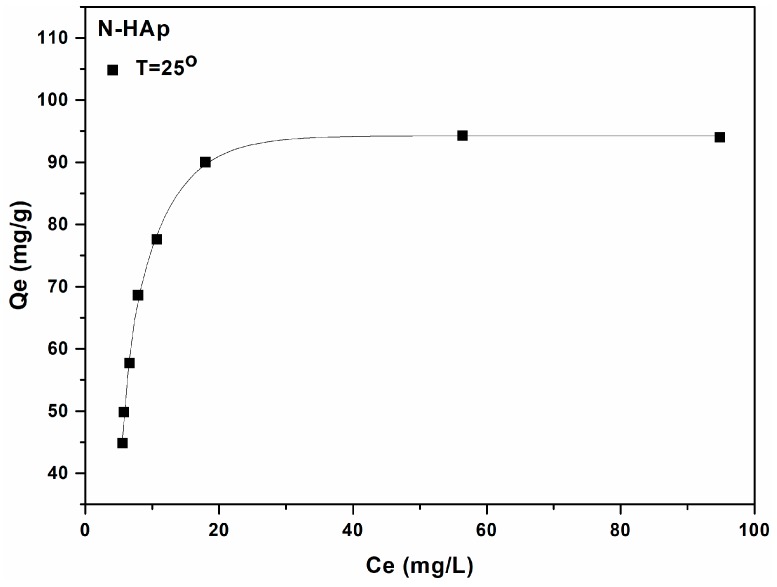
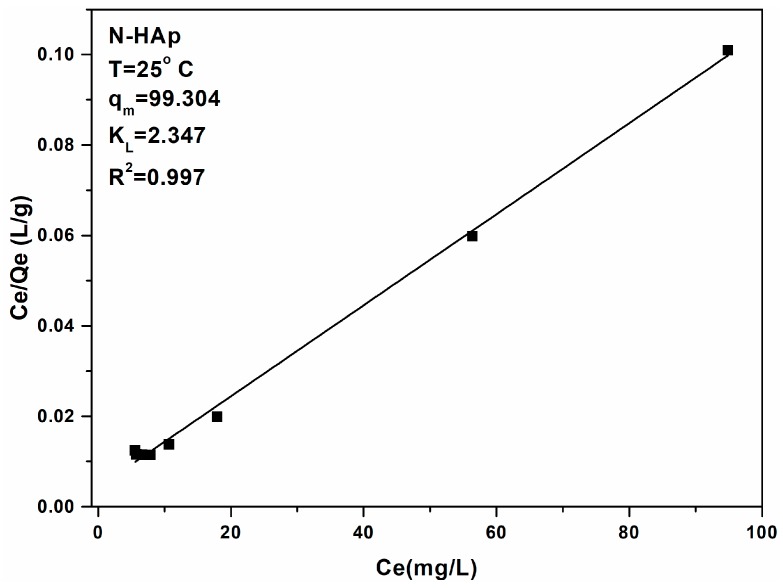
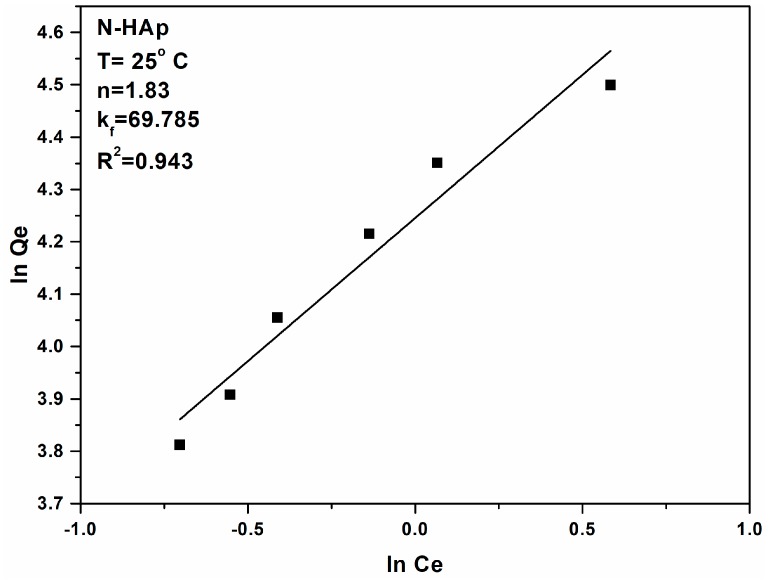
Contamination of water with heavy metals such as lead is a major worldwide problem because they affect the physiological functions of living organisms, cause cancer, and damage the immune system. Hydroxyapatite, (Ca₅(PO₄)₃OH) is considered one of the most effective materials for removing heavy metals from contaminated water. The hydroxyapatite nanopowders (N-HAp) obtained by a co-precipitation method were used in this research to determine the effectiveness in removing lead ions from contaminated solutions. In this study, we have investigated the structure and morphology of N-HAp nanopowders using X-ray diffraction (XRD), electronic transmission microscopy (TEM), and scanning electron microscopy (SEM). The structure information was also obtained by spectroscopy measurements. The Fourier transform infrared spectroscopy (FTIR) and Raman spectroscopy measurements revealed the presence of peaks corresponding to the phosphate and hydroxyl groups. The ability of N-HAp nanopowders to adsorb lead ions from aqueous solutions were established. The results of the kinetic and equilibrium studies on the removal of Pb (II) from aqueous solution revealed that the adsorption of lead (II) cations is due to the surface reaction with the hydroxyl terminal groups on the adsorbent and the combination of the positive charges of the metal cations with the negative charges on the adsorbent surfaces. These observations could validate the use of these ceramic nanopowders in ecological remediation strategies.
诸如铅等重金属对水的污染是一个全球性的重大问题,因为它们会影响生物体的生理功能、引发癌症并损害免疫系统。羟基磷灰石(Ca₅(PO₄)₃OH)被认为是从受污染水中去除重金属最有效的材料之一。本研究采用共沉淀法制备的羟基磷灰石纳米粉末(N-HAp)来测定从受污染溶液中去除铅离子的效果。在本研究中,我们使用X射线衍射(XRD)、电子透射显微镜(TEM)和扫描电子显微镜(SEM)研究了N-HAp纳米粉末的结构和形态。还通过光谱测量获得了结构信息。傅里叶变换红外光谱(FTIR)和拉曼光谱测量揭示了对应于磷酸根和羟基的峰的存在。确定了N-HAp纳米粉末从水溶液中吸附铅离子的能力。从水溶液中去除Pb(II)的动力学和平衡研究结果表明,铅(II)阳离子的吸附是由于与吸附剂上的羟基端基发生表面反应以及金属阳离子的正电荷与吸附剂表面的负电荷相结合。这些观察结果可以验证这些陶瓷纳米粉末在生态修复策略中的应用。