Ludwig Center for Cancer Genetics and Therapeutics, Sidney Kimmel Comprehensive Cancer Center, The Johns Hopkins University School of Medicine, Baltimore, MD, USA.
Department of Microbiology and Immunology, Albert Einstein College of Medicine, Bronx, NY, USA.
Nat Rev Cancer. 2018 Dec;18(12):727-743. doi: 10.1038/s41568-018-0070-z.
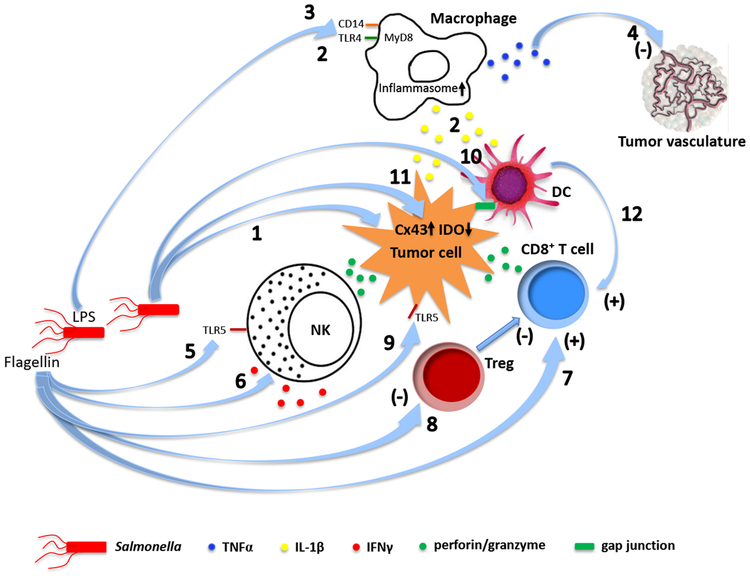
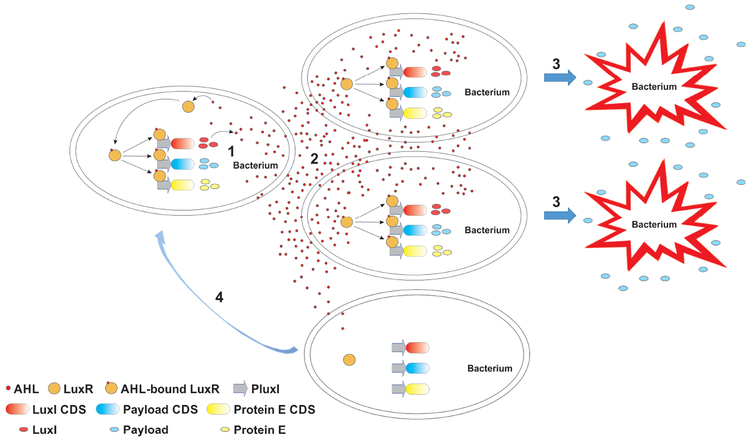
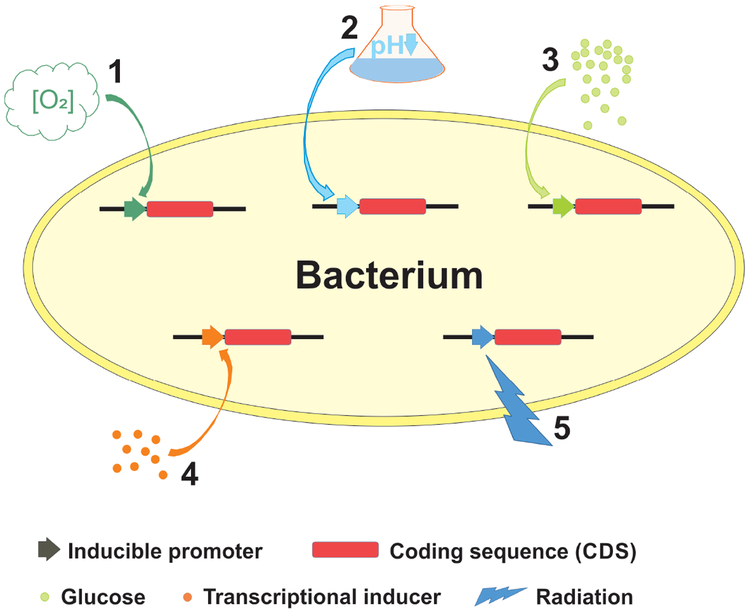
Recent advances in targeted therapy and immunotherapy have once again raised the hope that a cure might be within reach for many cancer types. Yet, most late-stage cancers are either insensitive to the therapies to begin with or develop resistance later. Therapy with live tumour-targeting bacteria provides a unique option to meet these challenges. Compared with most other therapeutics, the effectiveness of tumour-targeting bacteria is not directly affected by the 'genetic makeup' of a tumour. Bacteria initiate their direct antitumour effects from deep within the tumour, followed by innate and adaptive antitumour immune responses. As microscopic 'robotic factories', bacterial vectors can be reprogrammed following simple genetic rules or sophisticated synthetic bioengineering principles to produce and deliver anticancer agents on the basis of clinical needs. Therapeutic approaches using live tumour-targeting bacteria can either be applied as a monotherapy or complement other anticancer therapies to achieve better clinical outcomes. In this Review, we summarize the potential benefits and challenges of this approach. We discuss how live bacteria selectively induce tumour regression and provide examples to illustrate different ways to engineer bacteria for improved safety and efficacy. Finally, we share our experience and insights on oncology clinical trials with tumour-targeting bacteria, including a discussion of the regulatory issues.
近年来,靶向治疗和免疫疗法的进展再次燃起了希望,许多癌症类型可能即将得到治愈。然而,大多数晚期癌症要么一开始对这些疗法不敏感,要么后来产生耐药性。使用活体肿瘤靶向细菌进行治疗为应对这些挑战提供了一个独特的选择。与大多数其他疗法相比,肿瘤靶向细菌的有效性不受肿瘤“基因构成”的直接影响。细菌从肿瘤内部深处开始发挥其直接抗肿瘤作用,随后引发先天和适应性抗肿瘤免疫反应。作为微观的“机器人工厂”,细菌载体可以根据临床需求,按照简单的遗传规则或复杂的合成生物工程原理进行重新编程,以产生和输送抗癌药物。使用活体肿瘤靶向细菌的治疗方法既可以作为单一疗法应用,也可以与其他抗癌疗法联合应用,以实现更好的临床效果。在这篇综述中,我们总结了这种方法的潜在益处和挑战。我们讨论了活细菌如何选择性地诱导肿瘤消退,并举例说明了如何通过不同的方式对细菌进行工程改造以提高安全性和疗效。最后,我们分享了我们在肿瘤靶向细菌的肿瘤学临床试验方面的经验和见解,包括对监管问题的讨论。