
代谢型谷氨酸受体7:神经发育障碍中的一个新治疗靶点。
Metabotropic Glutamate Receptor 7: A New Therapeutic Target in Neurodevelopmental Disorders.
作者信息
Fisher Nicole M, Seto Mabel, Lindsley Craig W, Niswender Colleen M
机构信息
Department of Pharmacology and Vanderbilt Center for Neuroscience Drug Discovery, Vanderbilt University, Nashville, TN, United States.
Department of Chemistry, Vanderbilt University, Nashville, TN, United States.
出版信息
Front Mol Neurosci. 2018 Oct 23;11:387. doi: 10.3389/fnmol.2018.00387. eCollection 2018.
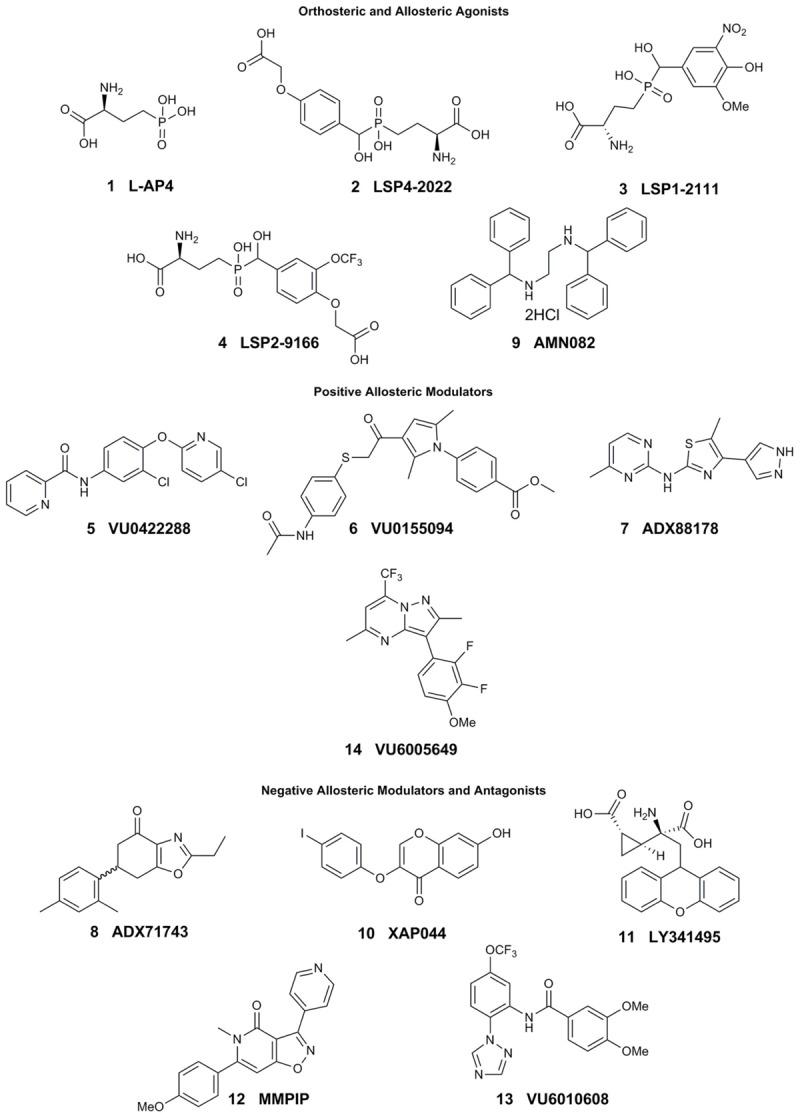
Neurodevelopmental disorders (NDDs) are characterized by a wide range of symptoms including delayed speech, intellectual disability, motor dysfunction, social deficits, breathing problems, structural abnormalities, and epilepsy. Unfortunately, current treatment strategies are limited and innovative new approaches are sorely needed to address these complex diseases. The metabotropic glutamate receptors are a class of G protein-coupled receptors that act to modulate neurotransmission across many brain structures. They have shown great promise as drug targets for numerous neurological and psychiatric diseases. Moreover, the development of subtype-selective allosteric modulators has allowed detailed studies of each receptor subtype. Here, we focus on the metabotropic glutamate receptor 7 (mGlu) as a potential therapeutic target for NDDs. mGlu is expressed widely throughout the brain in regions that correspond to the symptom domains listed above and has established roles in synaptic physiology and behavior. Single nucleotide polymorphisms and mutations in the gene have been associated with idiopathic autism and other NDDs in patients. In rodent models, existing literature suggests that decreased mGlu expression and/or function may lead to symptoms that overlap with those of NDDs. Furthermore, potentiation of mGlu activity has shown efficacy in a mouse model of Rett syndrome. In this review, we summarize current findings that provide rationale for the continued development of mGlu modulators as potential therapeutics.
神经发育障碍(NDDs)具有一系列广泛的症状,包括言语迟缓、智力残疾、运动功能障碍、社交缺陷、呼吸问题、结构异常和癫痫。不幸的是,目前的治疗策略有限,迫切需要创新的新方法来应对这些复杂疾病。代谢型谷氨酸受体是一类G蛋白偶联受体,其作用是调节多个脑结构的神经传递。它们作为众多神经和精神疾病的药物靶点已显示出巨大潜力。此外,亚型选择性变构调节剂的开发使得对每个受体亚型进行详细研究成为可能。在这里,我们将代谢型谷氨酸受体7(mGlu)作为NDDs的潜在治疗靶点进行重点研究。mGlu在大脑中与上述症状领域相对应的区域广泛表达,并在突触生理学和行为中发挥既定作用。该基因中的单核苷酸多态性和突变与患者的特发性自闭症和其他NDDs有关。在啮齿动物模型中,现有文献表明mGlu表达和/或功能的降低可能导致与NDDs重叠的症状。此外,增强mGlu活性已在雷特综合征小鼠模型中显示出疗效。在本综述中,我们总结了当前的研究结果,这些结果为继续开发mGlu调节剂作为潜在治疗方法提供了理论依据。
 Zotero 插件