Fu Jianmei, Song Xiaoling, Liu Biao, Shi Yu, Shen Wenjing, Fang Zhixiang, Zhang Li
Weed Research Lab, College of Life Science, Nanjing Agricultural University, Nanjing, China.
Nanjing Institute of Environmental Sciences, Ministry of Environmental Protection, Nanjing, China.
Front Plant Sci. 2018 Oct 23;9:1552. doi: 10.3389/fpls.2018.01552. eCollection 2018.
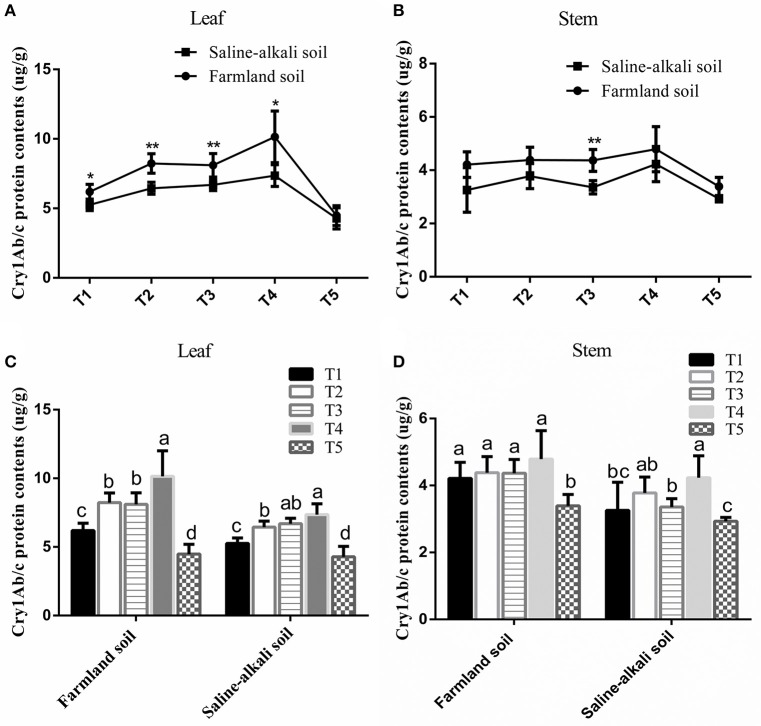
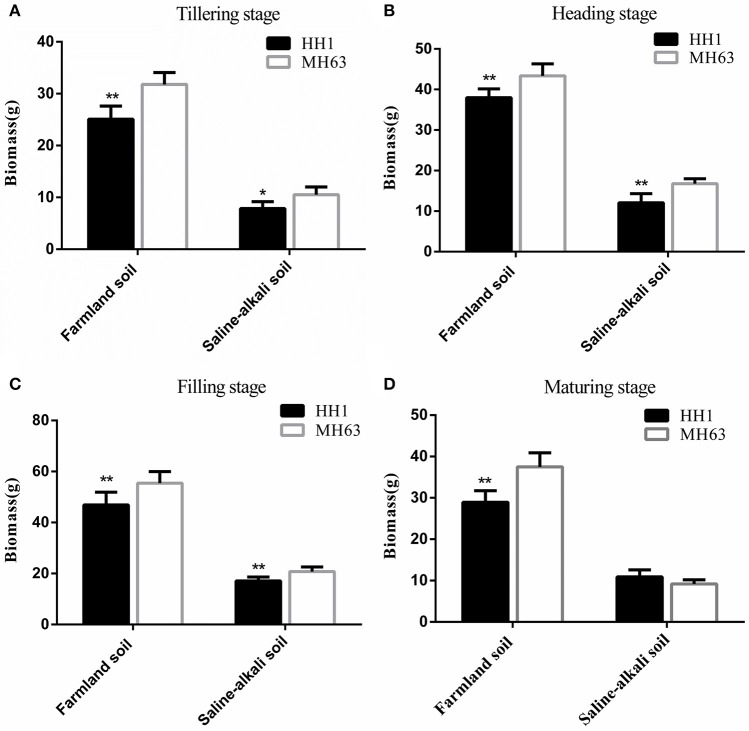
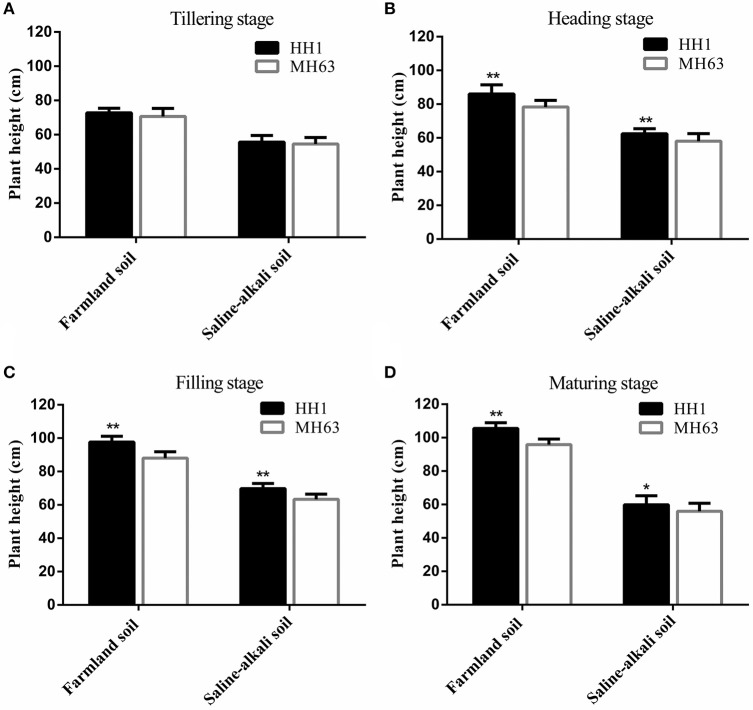
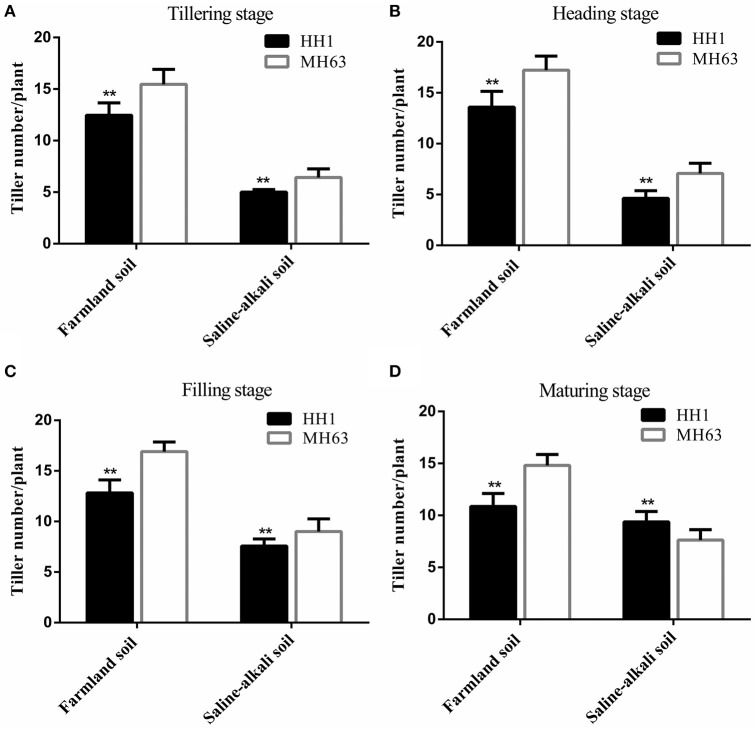
The environmental release and biosafety of transgenic crops have attracted global attention. China has a large area of saline-alkali land, which is ideal for large-scale production of transgenic rice. Therefore an understanding of the fitness of transgenic rice in saline-alkaline soils and the ability to predict its long-term environmental effects are important for the future sustainable use of these crops. In the present study, we aimed to evaluate the fitness of transgenic rice in both farmland and natural ecosystems. Transgenic rice Huahui1, for which a national biosafety certificate was obtained, was grown on normal farmland and saline-alkaline soils in a glass greenhouse. The expression pattern of exogenous Cry1Ab/c protein, and vegetative and reproductive fitness of rice were assessed. The expression of the exogenous Cry1Ab/c protein in the transgenic rice grown on saline-alkaline soil was lower than that in the strain grown on farmland soil. Under both the soil conditions, vegetative growth abilities, as evaluated by tiller number and biomass, and reproductive growth abilities, as measured by filled grain number and filled grain weight per plant, showed a significantly higher fitness cost for Huahui1 than that for the parental rice Minghui63 grown under the same soil conditions. In saline-alkaline soil, the fitness cost of Huahui1was moderately higher than that of Minghui63. Therefore, the ecological risk of transgenic rice is not expected to be higher than that of parental rice Minghui63 if the former escapes into natural saline-alkaline soil. The results of the present study provide a scientific basis to improve environmental safety assessment of the insect-resistant transgenic rice strain Huahui1 before commercialization.
转基因作物的环境释放及生物安全性已引起全球关注。中国有大面积盐碱地,非常适合大规模种植转基因水稻。因此,了解转基因水稻在盐碱土壤中的适应性以及预测其长期环境影响的能力,对于这些作物未来的可持续利用至关重要。在本研究中,我们旨在评估转基因水稻在农田和自然生态系统中的适应性。获得国家生物安全证书的转基因水稻华恢1号,种植于玻璃温室的正常农田和盐碱土壤中。评估了外源Cry1Ab/c蛋白的表达模式以及水稻的营养生长和生殖适应性。在盐碱土壤上种植的转基因水稻中外源Cry1Ab/c蛋白的表达低于在农田土壤上种植的株系。在两种土壤条件下,通过分蘖数和生物量评估的营养生长能力,以及通过每株实粒数和实粒重测量的生殖生长能力,华恢1号的适应性代价均显著高于在相同土壤条件下种植的亲本水稻明恢63。在盐碱土壤中,华恢1号的适应性代价略高于明恢63。因此,如果转基因水稻逸入天然盐碱土壤,预计其生态风险不会高于亲本水稻明恢63。本研究结果为抗虫转基因水稻品系华恢1号商业化前改进其环境安全性评估提供了科学依据。