State Environmental Protection Key Laboratory on Biosafety, Research Center for Biodiversity Conservation and Biosafety, Nanjing Institute of Environmental Sciences, Ministry of Ecology and Environment, Nanjing, Jiangsu, China.
Department of Rice Pest, Institute of Plant Protection, Jiangsu Academy of Agricultural Sciences, Nanjing, Jiangsu, China.
GM Crops Food. 2022 Dec 31;13(1):156-170. doi: 10.1080/21645698.2022.2107385.
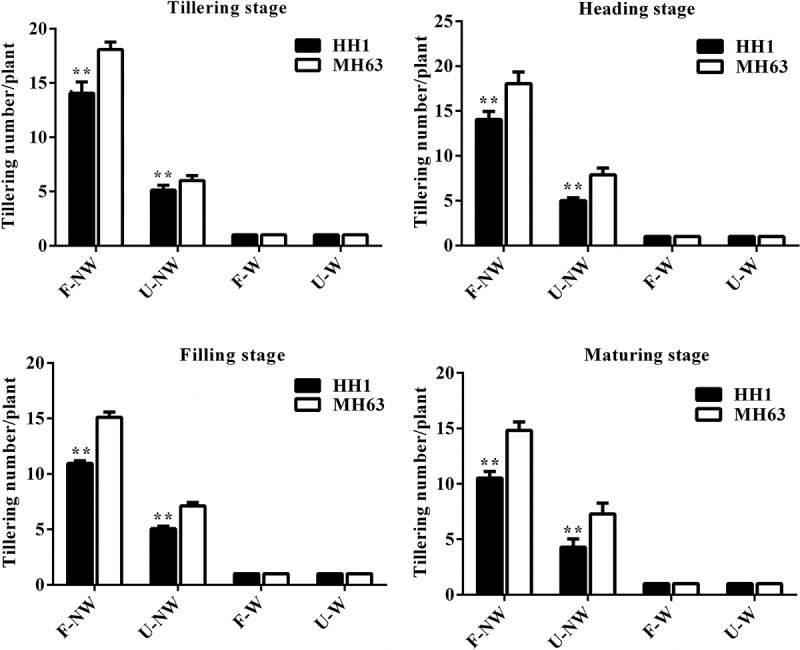
Considering the anticipated commercial exploitation of insect-resistant transgenic rice and that the planting area of cultivated rice overlaps with wild rice, simulating an escape of transgenic rice from farmlands and exploring its fitness after entering semi-natural or natural ecosystems through uncontrolled seed dispersal or gene flow are critical to understand the resulting potential long-term environmental risks. The expression of foreign Cry1Ab/c protein and vegetative and reproductive fitness of insect-resistant transgenic rice Huahui1 (HH1) and its parental-line Minghui63 (MH63) were studied under four treatments combining land use and weed competition: farmland and uncultivated land under weed control (F-NW and U-NW, respectively), and farmland and uncultivated land without weed control (F-W and U-W, respectively). The expression of Cry1Ab/c was significantly lower in U-NW, F-W, and U-W than that in the control treatment, F-NW. Except for plant height, key vegetative (tiller number and biomass) and reproductive (grain number and grain weight per plant) growth indices of transgenic HH1 were significantly lower than those of the parental-line MH63 in F-NW and U-NW, indicating a significant fitness cost. In F-W and U-W, vegetative growth indices (plant height, tiller number, and biomass) were similar in HH1 and MH63; however, key reproductive indices including seed-set rate were significantly higher in HH1 than in MH63, indicating significant fitness benefits. Although these results support large-scale cultivation of insect-resistant transgenic rice in China, the ecological risk involved is high in farmland or uncultivated land without weed control (F-W and U-W).
考虑到抗虫转基因水稻的预期商业开发,以及栽培水稻的种植面积与野生稻重叠,模拟转基因水稻从农田逃逸,并通过不受控制的种子散布或基因流进入半自然或自然生态系统后,探索其适应性,对于了解由此产生的潜在长期环境风险至关重要。本研究在四种结合土地利用和杂草竞争的处理方式下,研究了抗虫转基因水稻华恢 1 号(HH1)及其亲本明恢 63(MH63)的外源 Cry1Ab/c 蛋白表达和营养与生殖适应性:杂草控制下的农田和未开垦地(F-NW 和 U-NW),以及无杂草控制下的农田和未开垦地(F-W 和 U-W)。与对照处理(F-NW)相比,U-NW、F-W 和 U-W 中的 Cry1Ab/c 表达显著降低。除株高外,转基因 HH1 的关键营养生长(分蘖数和生物量)和生殖生长(每株粒数和粒重)指标在 F-NW 和 U-NW 中均显著低于亲本 MH63,表明存在显著的适应性成本。在 F-W 和 U-W 中,HH1 和 MH63 的营养生长指标(株高、分蘖数和生物量)相似;然而,包括结实率在内的关键生殖指标在 HH1 中显著高于 MH63,表明存在显著的适应性优势。尽管这些结果支持在中国大规模种植抗虫转基因水稻,但在没有杂草控制的农田或未开垦地(F-W 和 U-W)中,其生态风险很高。