Bailey Daniel C, Bohac Tabbetha J, Shapiro Justin A, Giblin Daryl E, Wencewicz Timothy A, Gulick Andrew M
Department of Structural Biology , Jacobs School of Medicine & Biomedical Sciences at the University at Buffalo , 955 Main Street , Buffalo , New York 14203 , United States.
Department of Chemistry , Washington University in St. Louis , One Brookings Drive , St. Louis , Missouri 63130 , United States.
Biochemistry. 2018 Dec 4;57(48):6653-6661. doi: 10.1021/acs.biochem.8b00986. Epub 2018 Nov 15.
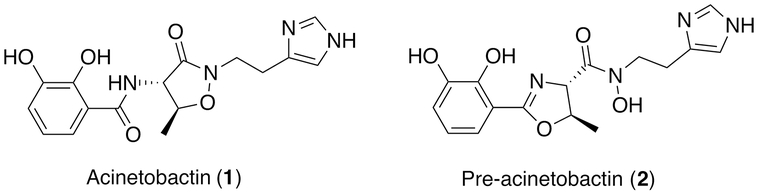
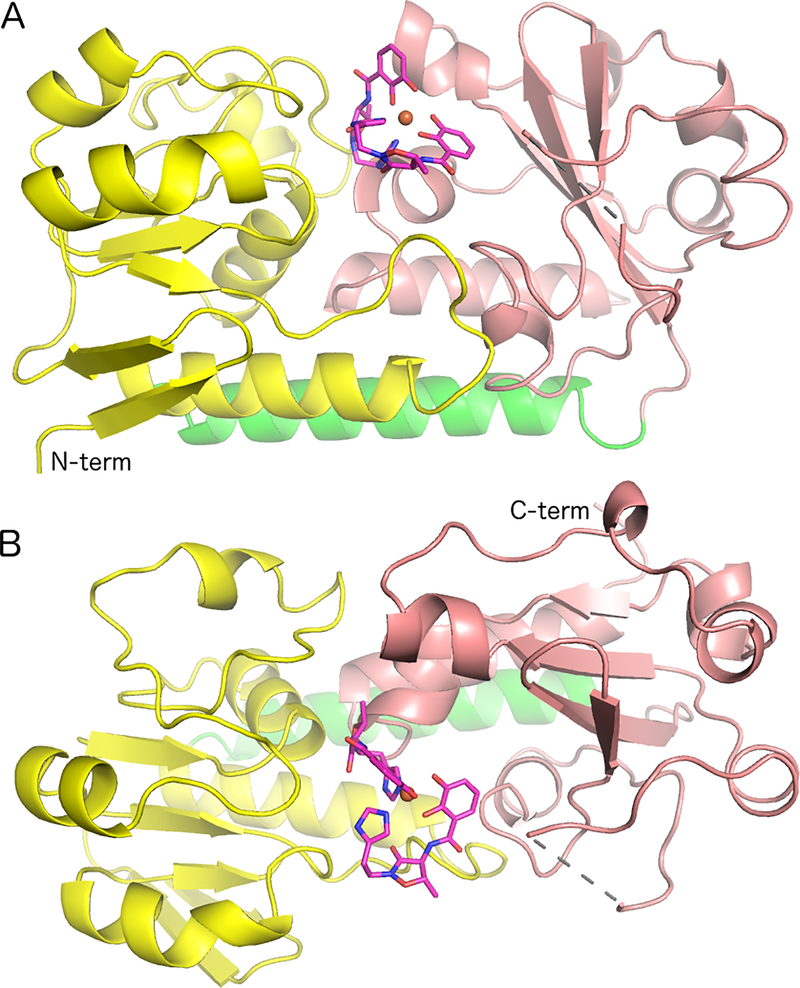
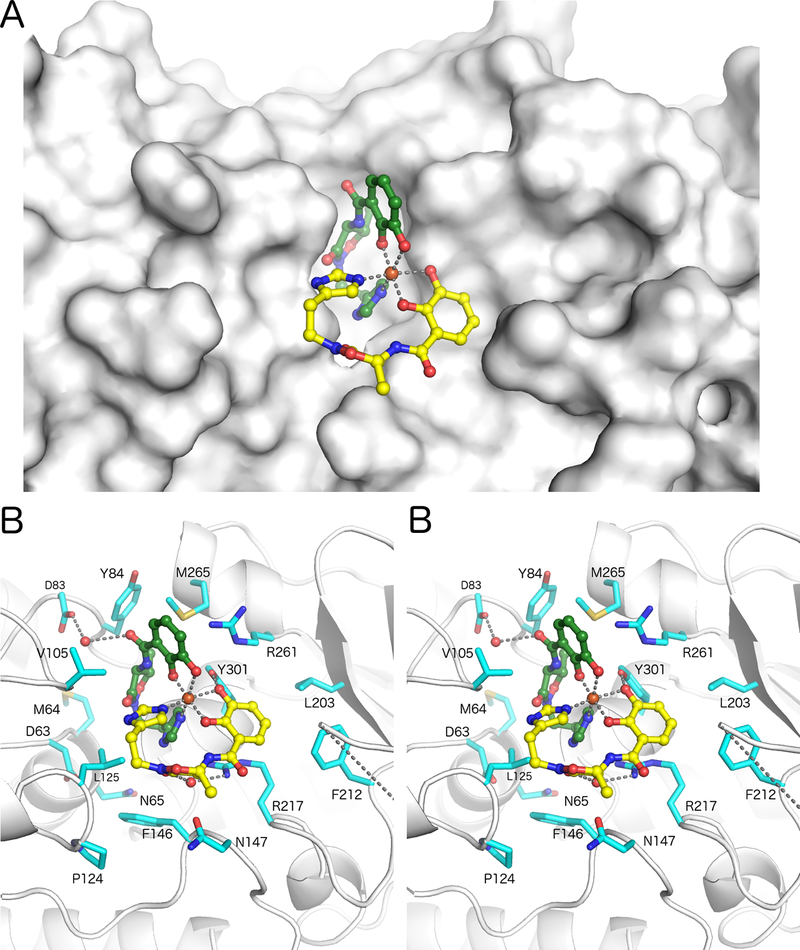
The critical role that iron plays in many biochemical processes has led to an elaborate battle between bacterial pathogens and their hosts to acquire and withhold this critical nutrient. Exploitation of iron nutritional immunity is being increasingly appreciated as a potential antivirulence therapeutic strategy, especially against problematic multidrug resistant Gram-negative pathogens such as Acinetobacter baumannii. To facilitate iron uptake and promote growth, A. baumannii produces a nonribosomally synthesized peptide siderophore called acinetobactin. Acinetobactin is unusual in that it is first biosynthesized in an oxazoline form called preacinetobactin that spontaneously isomerizes to the final isoxazolidinone acinetobactin. Interestingly, both isomers can bind iron and both support growth of A. baumannii. To address how the two isomers chelate their ferric cargo and how the complexes are used by A. baumannii, structural studies were carried out with the ferric acinetobactin complex and its periplasmic siderophore binding protein BauB. Herein, we present the crystal structure of BauB bound to a bis-tridentate (FeL) siderophore complex. Additionally, we present binding studies that show multiple variants of acinetobactin bind BauB with no apparent change in affinity. These results are consistent with the structural model that depicts few direct polar interactions between BauB and the acinetobactin backbone. This structural and functional characterization of acinetobactin and its requisite binding protein BauB provides insight that could be exploited to target this critical iron acquisition system and provide a novel approach to treat infections caused by this important multidrug resistant pathogen.
铁在许多生化过程中发挥的关键作用,引发了细菌病原体与其宿主之间为获取和保留这种关键营养素而展开的一场复杂斗争。利用铁营养免疫作为一种潜在的抗毒力治疗策略越来越受到重视,尤其是针对鲍曼不动杆菌等有问题的多重耐药革兰氏阴性病原体。为了促进铁的摄取并促进生长,鲍曼不动杆菌产生一种非核糖体合成的肽类铁载体,称为鲍曼不动杆菌素。鲍曼不动杆菌素的不同寻常之处在于,它首先以一种称为前鲍曼不动杆菌素的恶唑啉形式进行生物合成,该形式会自发异构化为最终的异恶唑烷酮鲍曼不动杆菌素。有趣的是,这两种异构体都能结合铁,并且都能支持鲍曼不动杆菌的生长。为了研究这两种异构体如何螯合其三价铁货物以及鲍曼不动杆菌如何利用这些复合物,我们对三价铁鲍曼不动杆菌素复合物及其周质铁载体结合蛋白BauB进行了结构研究。在此,我们展示了与双齿(FeL)铁载体复合物结合的BauB的晶体结构。此外,我们还展示了结合研究,结果表明鲍曼不动杆菌素的多种变体与BauB结合,亲和力没有明显变化。这些结果与结构模型一致,该模型描绘了BauB与鲍曼不动杆菌素主链之间几乎没有直接的极性相互作用。对鲍曼不动杆菌素及其必需结合蛋白BauB的这种结构和功能表征提供了一些见解,可用于靶向这一关键的铁获取系统,并为治疗由这种重要的多重耐药病原体引起的感染提供一种新方法。