Robinson Robert, Wong Liam, Monnat Raymond J, Fu Elain
School of Chemical, Biological, and Environmental Engineering, Oregon State University, Corvallis, OR 97331, USA.
Departments of Pathology and Genome Sciences, University of Washington, Seattle, WA 98195, USA.
Micromachines (Basel). 2016 Feb 15;7(2):28. doi: 10.3390/mi7020028.
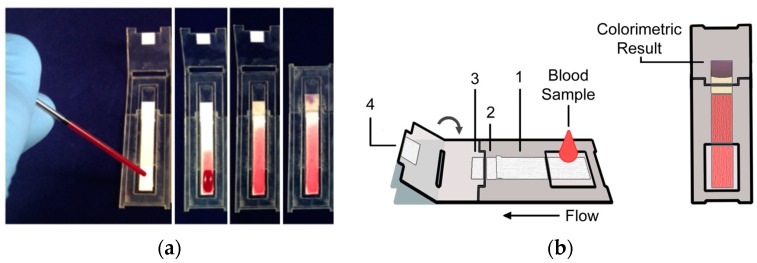
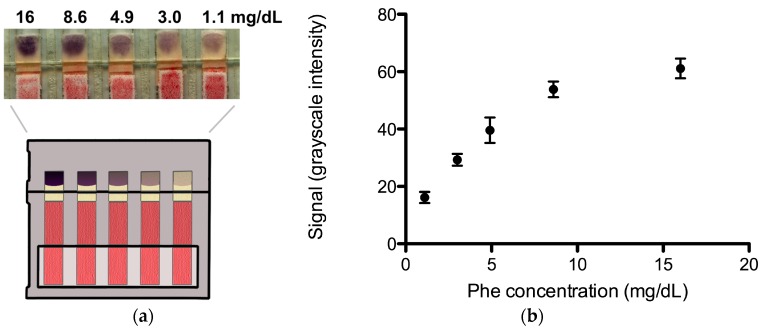
Laboratory-based testing does not allow for the sufficiently rapid return of data to enable optimal therapeutic monitoring of patients with metabolic diseases such as phenylketonuria (PKU). The typical turn-around time of several days for current laboratory-based testing is too slow to be practically useful for effective monitoring or optimizing therapy. This report describes the development of a rapid, paper-based, point-of-care device for phenylalanine detection using a small volume (40 μL) of whole blood. The quantitative resolution and reproducibility of this device with instrumented readout are described, together with the potential use of this device for point-of-care monitoring by PKU patients.
基于实验室的检测无法足够快速地返回数据,以实现对苯丙酮尿症(PKU)等代谢疾病患者的最佳治疗监测。当前基于实验室的检测通常需要几天的周转时间,这对于有效的监测或优化治疗来说太慢,实际上并无用处。本报告描述了一种用于苯丙氨酸检测的快速、基于纸张的即时检测设备的开发,该设备使用少量(40μL)全血。文中介绍了该设备在仪器读数下的定量分辨率和重现性,以及PKU患者将该设备用于即时检测监测的潜在用途。