Chen Chih-Li, Tsai Yu-Shuen, Huang Yen-Hua, Liang Yuh-Jin, Sun Ya-Yun, Su Chien-Wei, Chau Gar-Yang, Yeh Yi-Chen, Chang Yung-Sheng, Hu Jui-Ting, Wu Jaw-Ching
School of Medicine, College of Medicine Fu Jen Catholic University New Taipei City Taiwan.
Center for Systems and Synthetic Biology and Institute of Biomedical Informatics National Yang-Ming University Taipei Taiwanl.
Hepatol Commun. 2018 Sep 28;2(11):1392-1407. doi: 10.1002/hep4.1229. eCollection 2018 Nov.
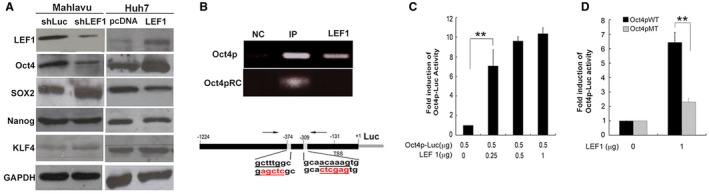
Lymphoid enhancer factor 1 (LEF1) activity is associated with progression of several types of cancers. The role of LEF1 in progression of hepatocellular carcinoma (HCC) remains poorly known. We investigated LEF1 expression in HCC and its interactions with epithelial-mesenchymal transition (EMT) regulators (e.g., Snail, Slug, Twist) and stemness genes (e.g., octamer-binding transcription factor 4 [], sex determining region Y-box 2 [], Nanog homeobox []). Microarray analysis was performed on resected tumor samples from patients with HCC with or without postoperative recurrence. LEF1 expression was associated with postoperative recurrence as validated by immunohistochemical staining in another HCC cohort. Among 74 patients, 44 displayed a relatively high percentage of LEF1 staining (>30% of HCC cells), which was associated with a reduced recurrence-free interval ( 0.001) and overall survival ( = 0.009). In multivariate analysis, a high percentage of LEF1 staining was significantly associated with low albumin level ( = 0.035), Twist overexpression ( = 0.018), Snail overexpression ( = 0.064), co-expression of Twist and Snail ( = 0.054), and multinodular tumors ( = 0.025). Down-regulation of LEF1 by short hairpin RNA decreased tumor sphere formation, soft agar colony formation, and transwell invasiveness of HCC cell lines Mahlavu and PLC. Xenotransplant and tail vein injection experiments revealed that LEF1 down-regulation in Mahlavu reduced tumor size and metastasis. LEF1 up-regulation in Huh7 increased sphere formation, soft agar colony formation, and transwell invasiveness. LEF1 was shown to physically interact with and transcriptionally activate promoter regions of Oct4, Snail, Slug, and Twist. Furthermore, Oct4, Snail, and Twist transactivated LEF1 to form a regulatory positive-feedback loop. LEF1 plays a pivotal role in HCC progression through transcriptional regulation of Oct4 and EMT regulators.
淋巴样增强因子1(LEF1)的活性与多种癌症的进展相关。LEF1在肝细胞癌(HCC)进展中的作用仍鲜为人知。我们研究了LEF1在HCC中的表达及其与上皮-间质转化(EMT)调节因子(如Snail、Slug、Twist)和干性基因(如八聚体结合转录因子4[Oct4]、性别决定区Y盒2[Sox2]、Nanog同源盒[Nanog])的相互作用。对有或无术后复发的HCC患者的切除肿瘤样本进行了微阵列分析。在另一组HCC队列中,通过免疫组织化学染色验证,LEF1表达与术后复发相关。在74例患者中,44例LEF1染色百分比相对较高(>30%的HCC细胞),这与无复发生存期缩短(P<0.001)和总生存期缩短(P = 0.009)相关。在多变量分析中,高百分比的LEF1染色与低白蛋白水平(P = 0.035)、Twist过表达(P = 0.018)、Snail过表达(P = 0.064)、Twist和Snail共表达(P = 0.054)以及多结节肿瘤(P = 0.025)显著相关。短发夹RNA下调LEF1可减少HCC细胞系Mahlavu和PLC的肿瘤球形成、软琼脂集落形成和Transwell侵袭。异种移植和尾静脉注射实验表明,Mahlavu中LEF1下调可减小肿瘤大小并减少转移。Huh7中LEF1上调增加了球形成、软琼脂集落形成和Transwell侵袭。研究表明,LEF1与Oct4、Snail、Slug和Twist的启动子区域发生物理相互作用并转录激活这些区域。此外,Oct4、Snail和Twist可反式激活LEF1,形成调节性正反馈环。LEF1通过对Oct4和EMT调节因子的转录调控在HCC进展中起关键作用。