a School of Traditional Chinese Materia Medica , Shenyang Pharmaceutical University , Shenyang , China.
b Pharmaceutical Research Laboratory , Shenyang Research Institute of Chemical Industry Co., Ltd , Shenyang , China.
Pharm Biol. 2018 Dec;56(1):580-593. doi: 10.1080/13880209.2018.1517184.
Ma Huang Tang (MHT) has been used to treat influenza, fever, bronchial asthma, etc. as a traditional Chinese medication. However, the anti-inflammation mechanism of MHT remains unclear.
The study identifies the possible mechanisms of MHT on ovalbumin (OVA)-induced acute bronchial asthma in mice.
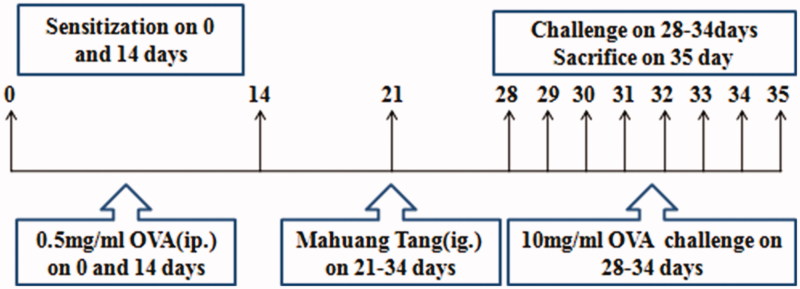
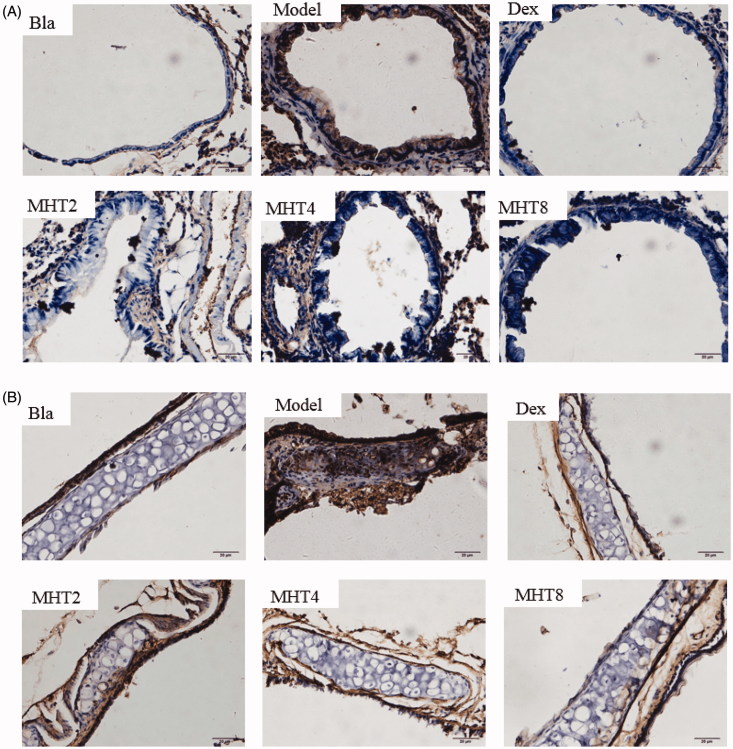
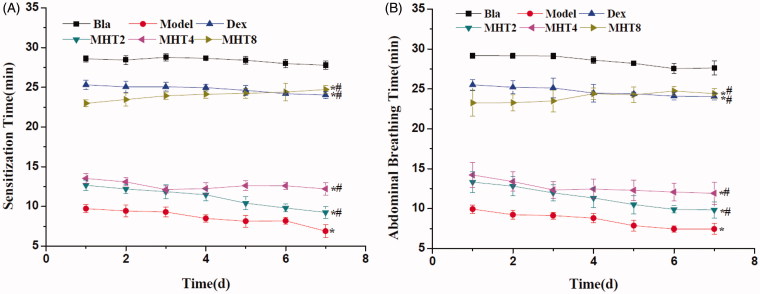
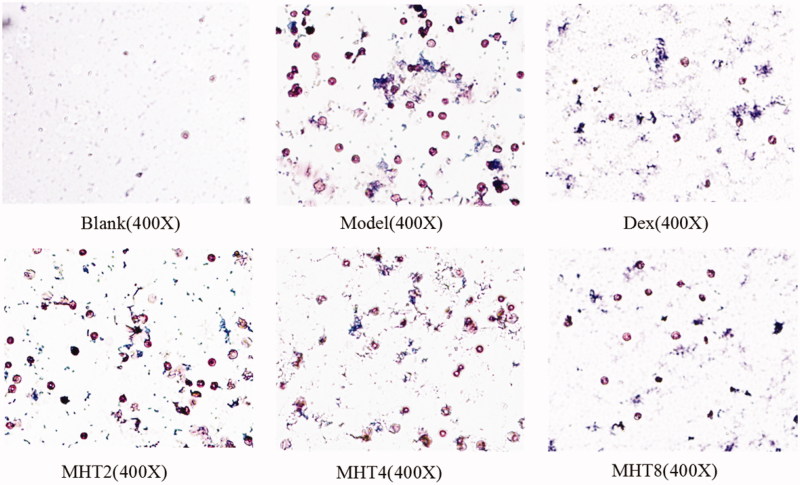
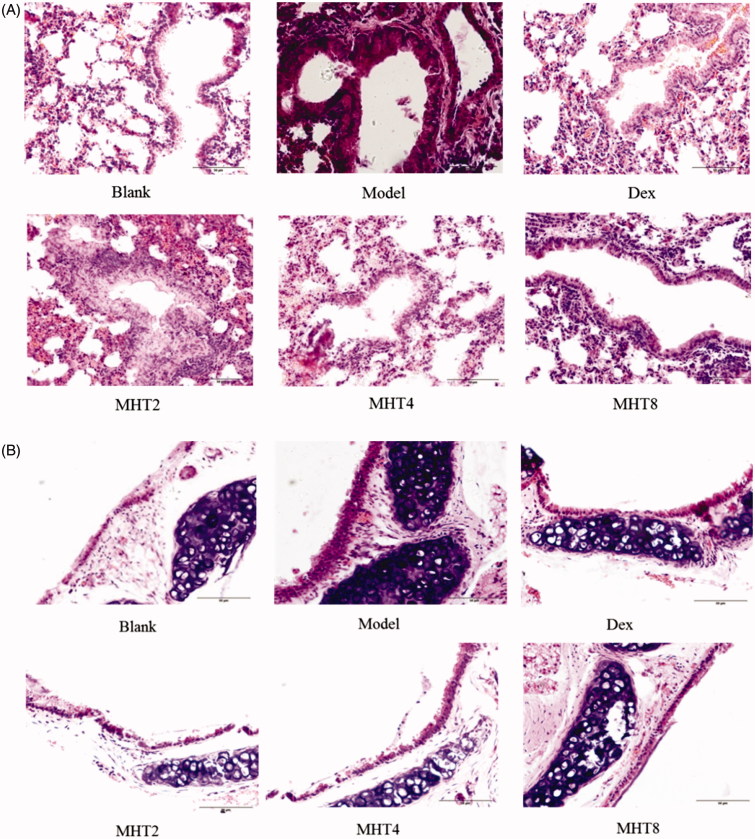
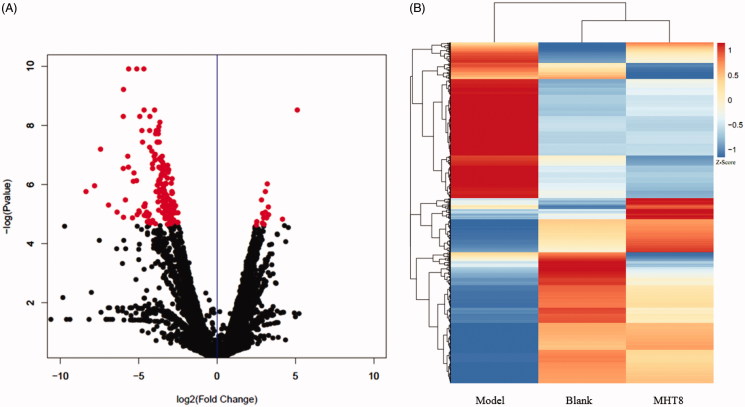
First, an asthma-related protein-protein interaction (PPI) network was constructed. And then, the acute bronchial asthma mice models were established by exposing to aerosolized 1% ovalbumin for 30 min/day for 1 week, and the mice were administered 2.0, 4.0, or 8.0 g/kg of MHT daily. To evaluate therapeutic effect, sensitization time, abdominal breathing time, eosinophils in bronchoalveolar lavage fluid, and tissue and trachea pathology were examined. Related genes were measured using RNA sequencing (RNA-seq). The expression levels of TLR9 in lung and trachea tissues were determined by immunohistochemical staining.
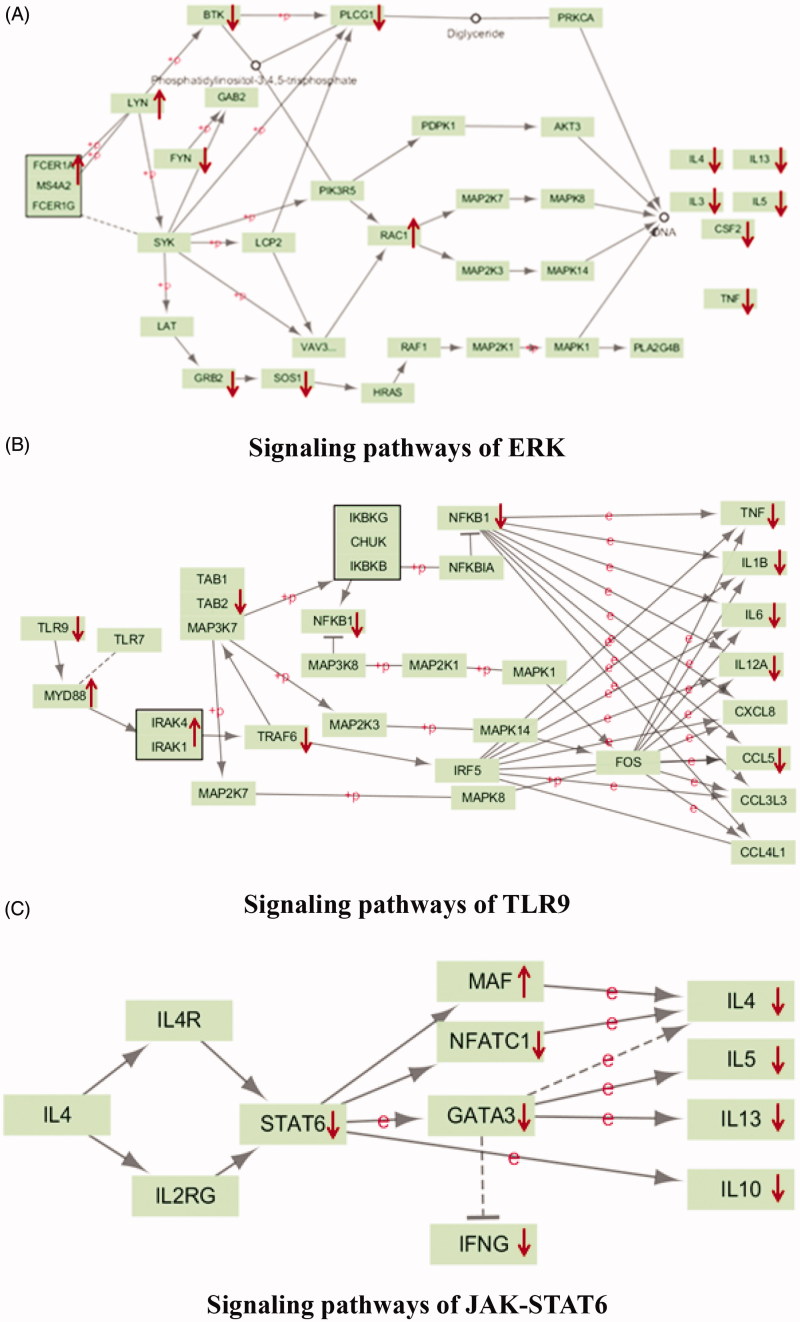
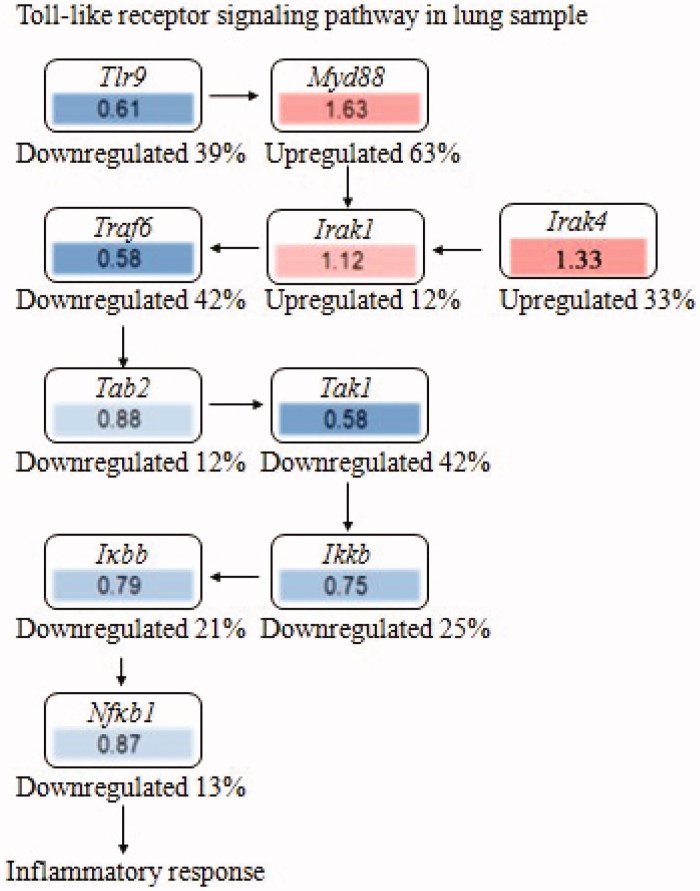
MHT had a LD = 19.2 g/kg against asthma, while MHT at high doses (8 g/kg) effectively extended the sensitization time and abdominal breathing time and alleviated OVA-induced eosinophilic airway inflammation and mitigated pathological changes. The RNA-seq assay showed that the high-dose MHT resulted in a significant decrease in the levels of TLR9, TRAF6, TAB2, etc. in the lung tissue. Immunohistochemical assay confirmed the down-regulated of TLR9. Molecular docking revealed that six MHT compounds potentially mediated the TLR9 signaling pathway.
MHT could mitigate the pathological changes of acute asthma-like syndrome through inhibition of the TLR9 pathway. Results of this study may provide a reference for the development of a novel therapy for patients with allergic asthma.
麻黄汤是一种传统的中药,用于治疗流感、发热、支气管哮喘等。然而,麻黄汤的抗炎机制尚不清楚。
本研究旨在探讨麻黄汤对卵白蛋白(OVA)诱导的急性支气管哮喘小鼠的作用机制。
首先构建了哮喘相关的蛋白质-蛋白质相互作用(PPI)网络,然后通过雾化 1%OVA 30min/d 持续 1 周诱导建立急性支气管哮喘小鼠模型,给予小鼠 2.0、4.0 或 8.0g/kg 的麻黄汤。通过评估致敏时间、腹部呼吸时间、支气管肺泡灌洗液中的嗜酸性粒细胞以及组织和气管病理变化来评价治疗效果。采用 RNA 测序(RNA-seq)检测相关基因。通过免疫组织化学染色检测肺和气管组织中 TLR9 的表达水平。
麻黄汤的 LD50 为 19.2g/kg,高剂量(8g/kg)麻黄汤可显著延长致敏时间和腹部呼吸时间,减轻 OVA 诱导的嗜酸性气道炎症,缓解病理变化。RNA-seq 分析显示,高剂量麻黄汤可显著降低肺组织中 TLR9、TRAF6、TAB2 等基因的表达水平。免疫组织化学检测证实 TLR9 表达下调。分子对接显示,麻黄汤中的 6 种化合物可能通过调控 TLR9 信号通路发挥作用。
麻黄汤通过抑制 TLR9 通路缓解急性哮喘样综合征的病理变化。本研究结果可为过敏性哮喘患者的新型治疗方法提供参考。