Department of Microbiology, University of Georgia, Athens, Georgia, United States of America.
Center for Tropical and Emerging Global Diseases, University of Georgia, Athens, Georgia, United States of America.
PLoS Pathog. 2018 Nov 12;14(11):e1007410. doi: 10.1371/journal.ppat.1007410. eCollection 2018 Nov.
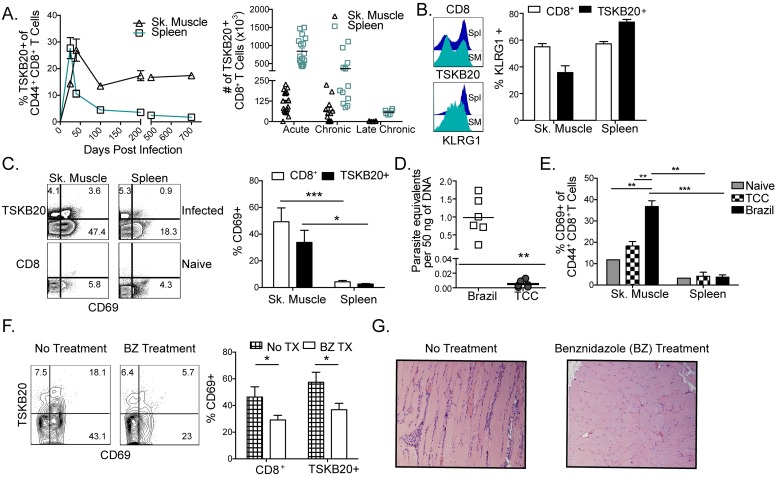
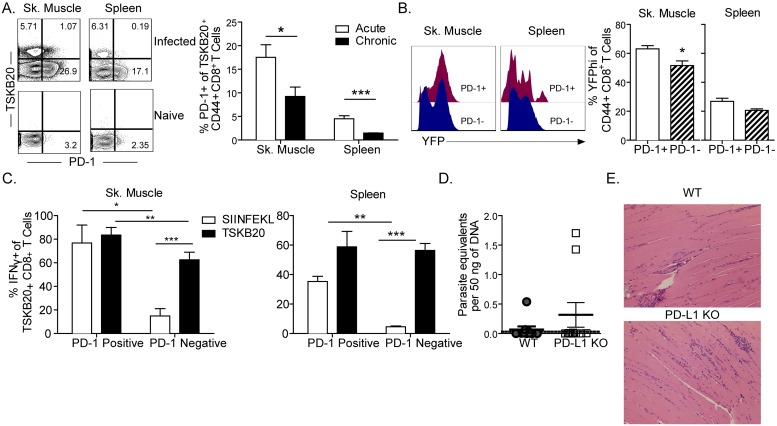
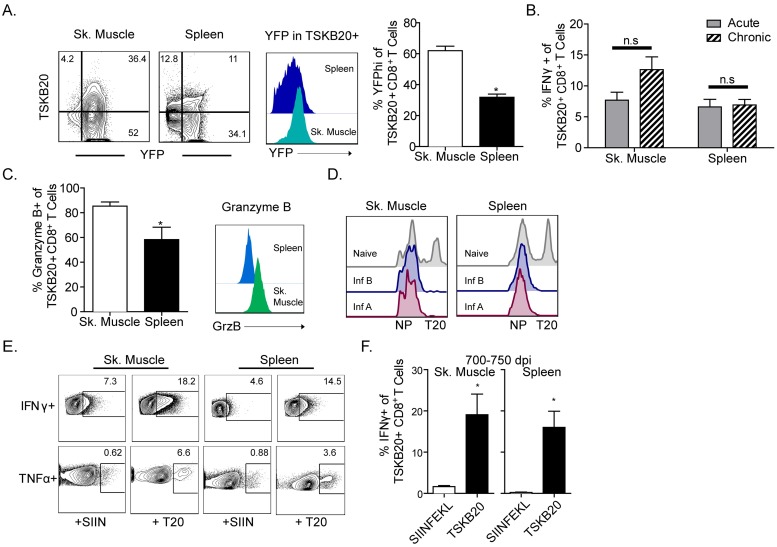
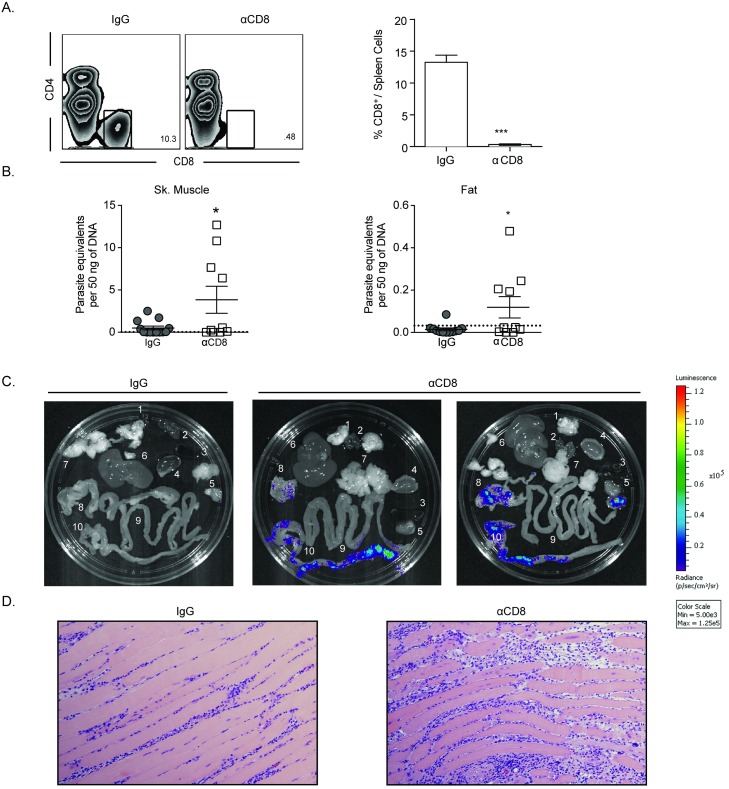
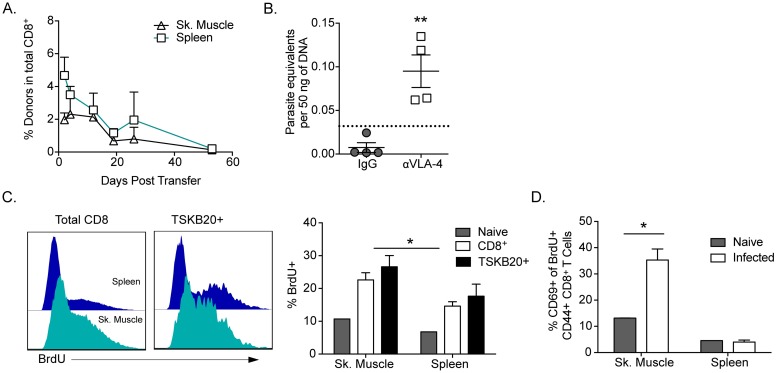
Trypanosoma cruzi infection is characterized by chronic parasitism of non-lymphoid tissues and is rarely eliminated despite potent adaptive immune responses. This failure to cure has frequently been attributed to a loss or impairment of anti-T. cruzi T cell responses over time, analogous to the T cell dysfunction described for other persistent infections. In this study, we have evaluated the role of CD8+ T cells during chronic T. cruzi infection (>100 dpi), with a focus on sites of pathogen persistence. Consistent with repetitive antigen exposure during chronic infection, parasite-specific CD8+ T cells from multiple organs expressed high levels of KLRG1, but exhibit a preferential accumulation of CD69+ cells in skeletal muscle, indicating recent antigen encounter in a niche for T. cruzi persistence. A significant proportion of CD8+ T cells in the muscle also produced IFNγ, TNFα and granzyme B in situ, an indication of their detection of and functional response to T. cruzi in vivo. CD8+ T cell function was crucial for the control of parasite burden during chronic infection as exacerbation of parasite load was observed upon depletion of this population. Attempts to improve T cell function by blocking PD-1 or IL-10, potential negative regulators of T cells, failed to increase IFNγ and TNFα production or to enhance T. cruzi clearance. These results highlight the capacity of the CD8+ T cell population to retain essential in vivo function despite chronic antigen stimulation and support a model in which CD8+ T cell dysfunction plays a negligible role in the ability of Trypanosoma cruzi to persist in mice.
克氏锥虫感染的特征是无淋巴组织的慢性寄生虫寄生,尽管适应性免疫反应强烈,但仍很少被消除。这种无法治愈的情况通常归因于随着时间的推移,抗克氏锥虫 T 细胞反应的丧失或受损,类似于其他持续性感染中描述的 T 细胞功能障碍。在这项研究中,我们评估了 CD8+T 细胞在慢性克氏锥虫感染(>100dpi)期间的作用,重点是病原体持续存在的部位。与慢性感染期间反复抗原暴露一致,来自多个器官的寄生虫特异性 CD8+T 细胞表达高水平的 KLRG1,但在骨骼肌中优先积累 CD69+细胞,表明在克氏锥虫持续存在的小生境中最近遇到了抗原。肌肉中相当一部分 CD8+T 细胞也原位产生 IFNγ、TNFα 和颗粒酶 B,表明它们在体内检测到并对克氏锥虫作出功能性反应。CD8+T 细胞功能对于慢性感染期间寄生虫负荷的控制至关重要,因为该群体的耗竭会导致寄生虫负荷加重。通过阻断 PD-1 或 IL-10(T 细胞的潜在负调节剂)来改善 T 细胞功能的尝试未能增加 IFNγ 和 TNFα 的产生或增强克氏锥虫的清除。这些结果突出了 CD8+T 细胞群体在慢性抗原刺激下保持重要体内功能的能力,并支持了一种模型,即 CD8+T 细胞功能障碍在克氏锥虫在小鼠中持续存在的能力方面起着微不足道的作用。