Peking University China-Japan Friendship School of Clinical Medicine, Beijing, China; China-Japan Friendship Hospital, Capital Medical University, Beijing, China.
Department of Pulmonary and Critical Care Medicine, Department of Clinical Microbiology, Zibo City Key Laboratory of Respiratory Infection and Clinical Microbiology, Linzi District People's Hospital, Zibo, Shandong, China.
PLoS Pathog. 2018 Nov 13;14(11):e1007428. doi: 10.1371/journal.ppat.1007428. eCollection 2018 Nov.
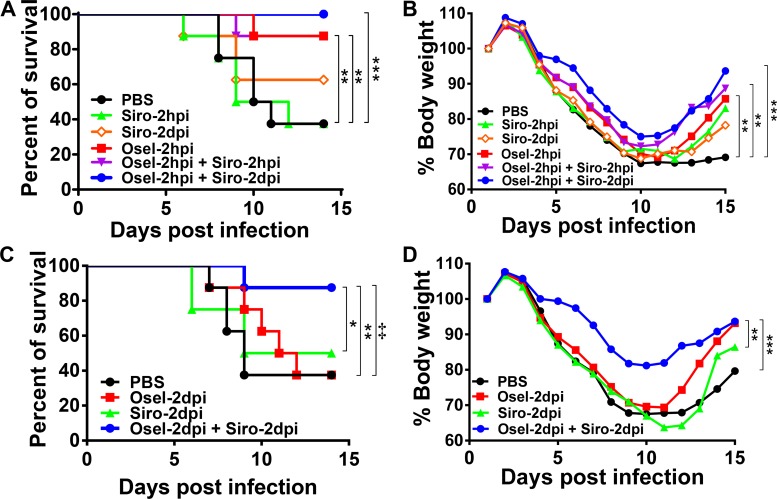
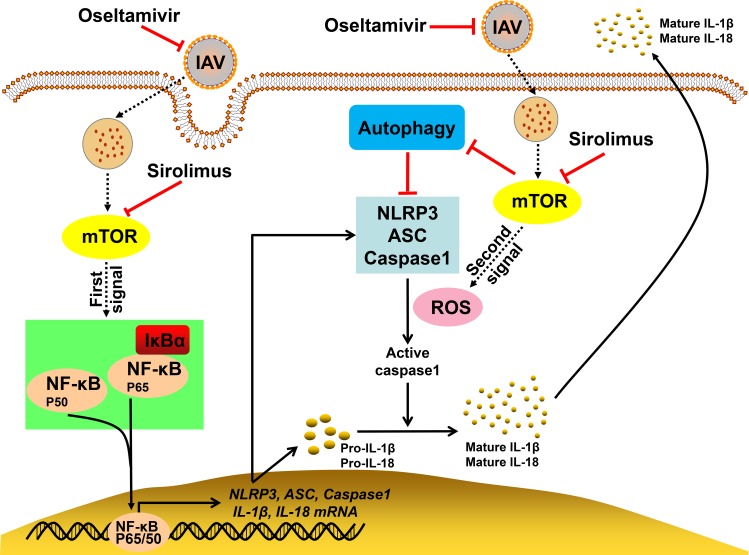
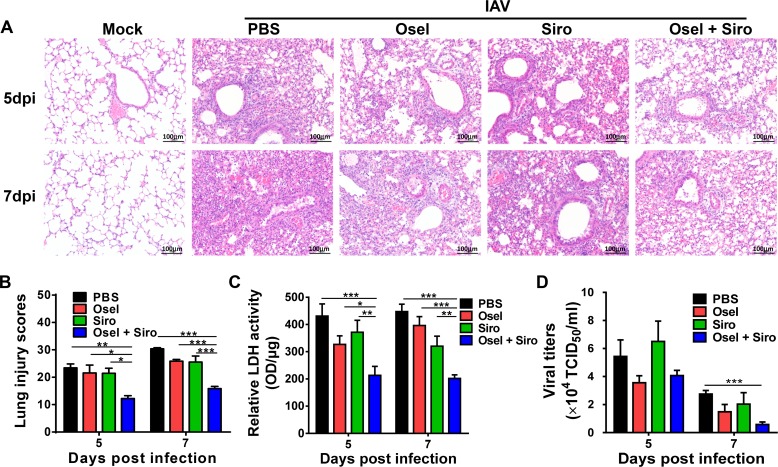
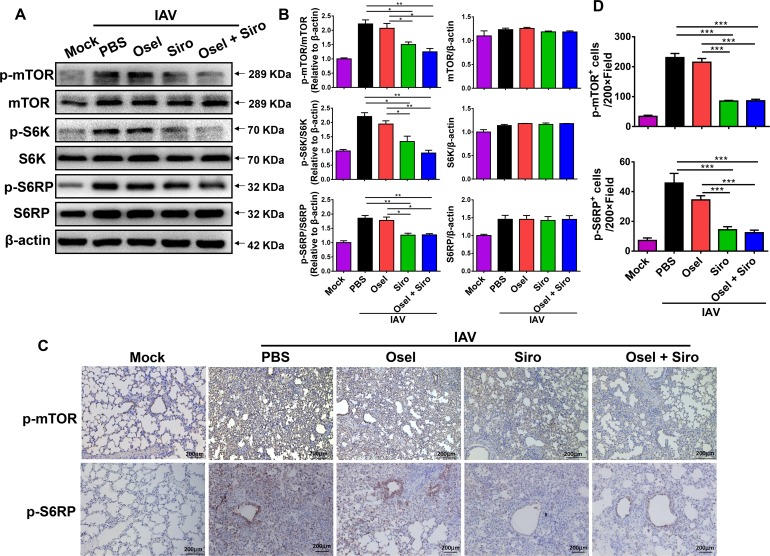
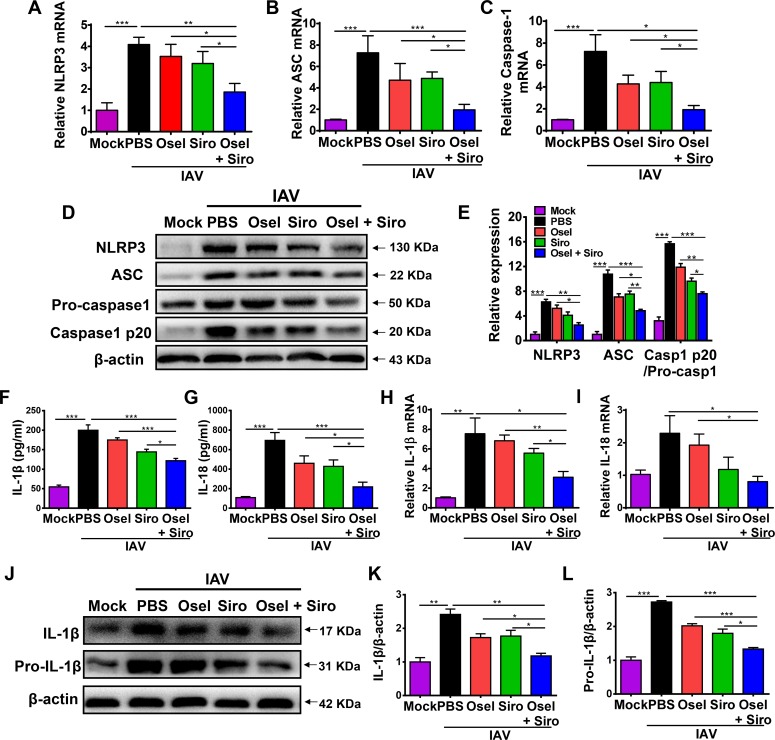
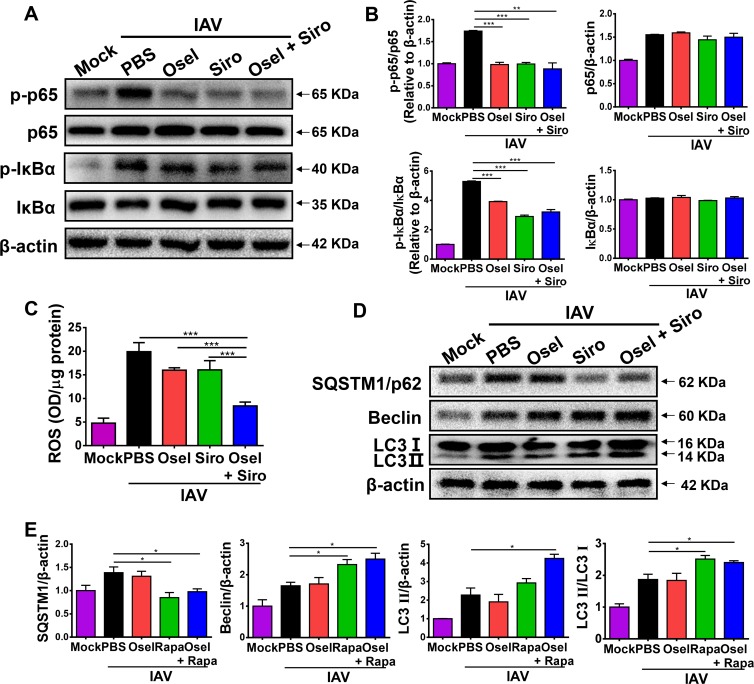
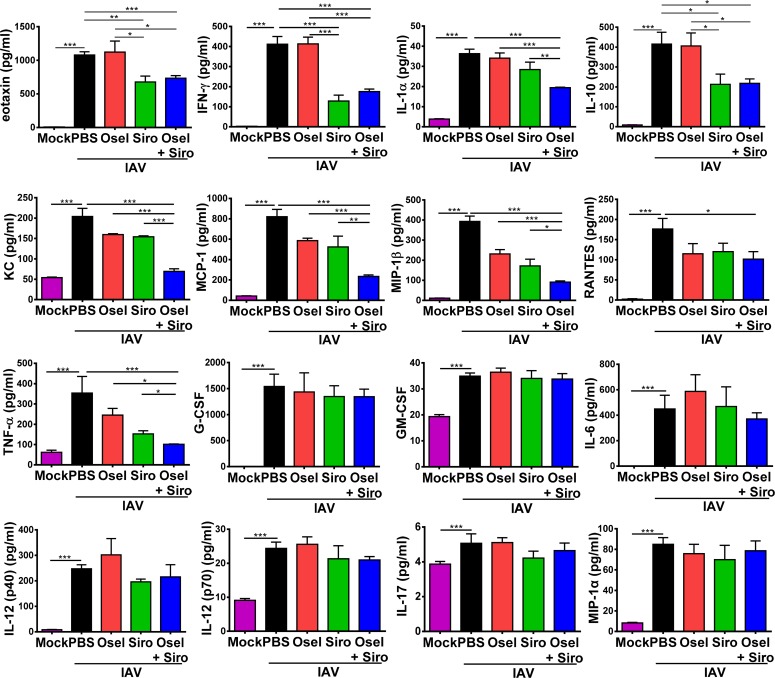
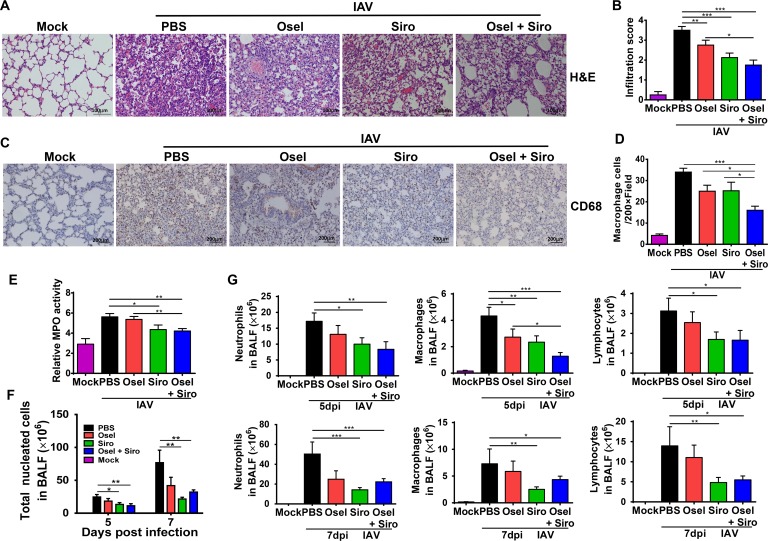
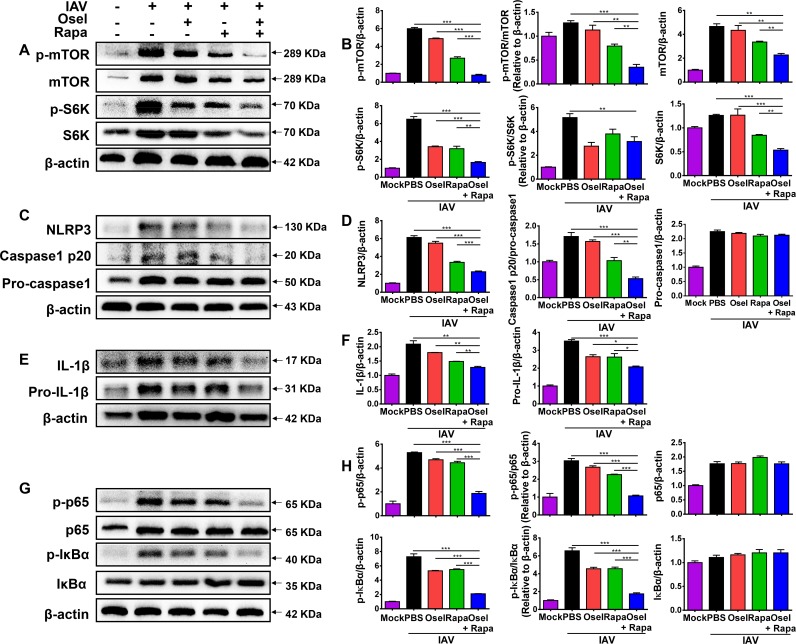
Severe influenza A virus infection causes high mortality and morbidity worldwide due to delayed antiviral treatment and inducing overwhelming immune responses, which contribute to immunopathological lung injury. Sirolimus, an inhibitor of mammalian target of rapamycin (mTOR), was effective in improving clinical outcomes in patients with severe H1N1 infection; however, the mechanisms by which it attenuates acute lung injury have not been elucidated. Here, delayed oseltamivir treatment was used to mimic clinical settings on lethal influenza A (H1N1) pdm09 virus (pH1N1) infection mice model. We revealed that delayed oseltamivir plus sirolimus treatment protects mice against lethal pH1N1 infection by attenuating severe lung damage. Mechanistically, the combined treatment reduced viral titer and pH1N1-induced mTOR activation. Subsequently, it suppressed the NOD-like receptor family pyrin domain containing 3 (NLRP3) inflammasome-mediated secretion of interleukin (IL)-1β and IL-18. It was noted that decreased NLRP3 inflammasome activation was associated with inhibited nuclear factor (NF)-κB activation, reduced reactive oxygen species production and increased autophagy. Additionally, the combined treatment reduced the expression of other proinflammatory cytokines and chemokines, and decreased inflammatory cell infiltration in lung tissue and bronchioalveolar lavage fluid. Consistently, it inhibited the mTOR-NF-κB-NLRP3 inflammasome-IL-1β axis in a lung epithelial cell line. These results demonstrated that combined treatment with sirolimus and oseltamivir attenuates pH1N1-induced severe lung injury, which is correlated with suppressed mTOR-NLRP3-IL-1β axis and reduced viral titer. Therefore, treatment with sirolimus as an adjuvant along with oseltamivir may be a promising immunomodulatory strategy for managing severe influenza.
严重的甲型流感病毒感染会导致全球高死亡率和发病率,这是由于抗病毒治疗的延迟和引发的免疫反应过度,导致免疫病理肺损伤。雷帕霉素是一种哺乳动物雷帕霉素靶蛋白(mTOR)的抑制剂,在改善严重 H1N1 感染患者的临床结局方面是有效的;然而,其减轻急性肺损伤的机制尚未阐明。在这里,我们使用延迟奥司他韦治疗来模拟临床环境下对致死性甲型流感(H1N1)pdm09 病毒(pH1N1)感染小鼠模型的治疗。我们揭示了延迟奥司他韦加雷帕霉素治疗通过减轻严重肺损伤来保护小鼠免受致死性 pH1N1 感染。从机制上讲,联合治疗降低了病毒滴度和 pH1N1 诱导的 mTOR 激活。随后,它抑制了 NOD 样受体家族含pyrin 域蛋白 3(NLRP3)炎性体介导的白细胞介素(IL)-1β和 IL-18 的分泌。值得注意的是,NLRP3 炎性体激活的减少与 NF-κB 激活的抑制、活性氧产生的减少和自噬的增加有关。此外,联合治疗降低了其他促炎细胞因子和趋化因子的表达,并减少了肺组织和支气管肺泡灌洗液中的炎症细胞浸润。一致地,它抑制了肺上皮细胞系中的 mTOR-NF-κB-NLRP3 炎性体-IL-1β 轴。这些结果表明,雷帕霉素和奥司他韦联合治疗可减轻 pH1N1 诱导的严重肺损伤,这与抑制 mTOR-NLRP3-IL-1β 轴和降低病毒滴度有关。因此,雷帕霉素作为佐剂与奥司他韦联合治疗可能是管理严重流感的一种有前途的免疫调节策略。