Department of Urology, Zhongshan Hospital, Fudan University, 200032, Shanghai, P. R. China.
Shanghai Medical College, Fudan University, 200032, Shanghai, P.R. China.
Cell Death Dis. 2018 Nov 13;9(11):1126. doi: 10.1038/s41419-018-1157-x.
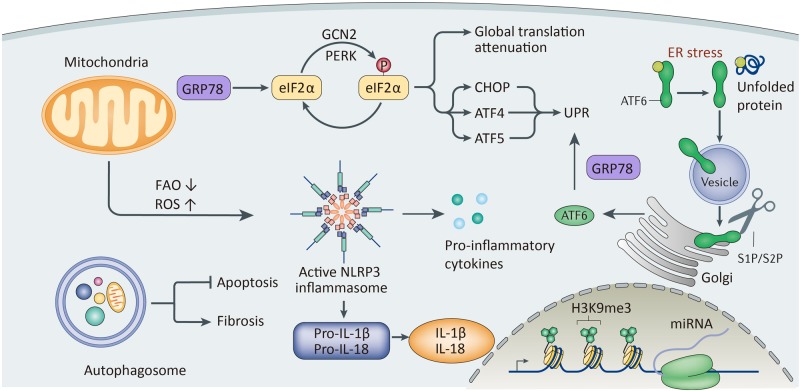
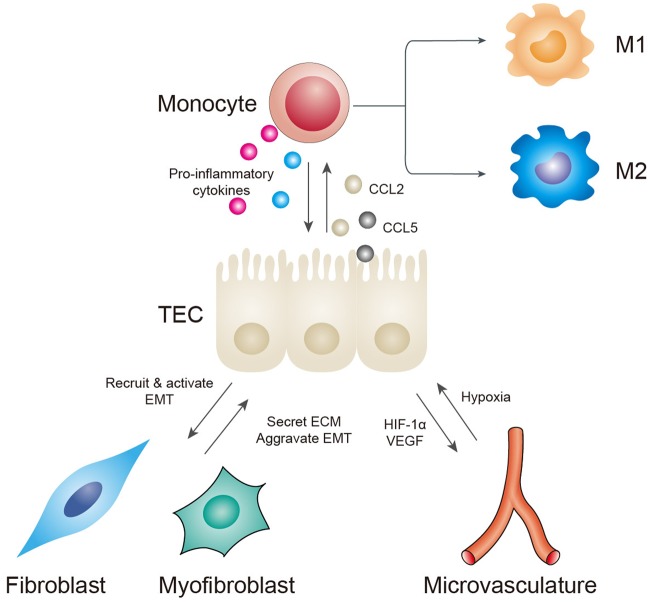
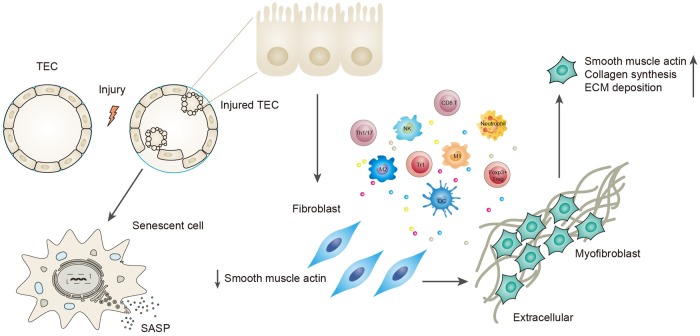
Renal fibrosis, especially tubulointerstitial fibrosis, is the inevitable outcome of all progressive chronic kidney diseases (CKDs) and exerts a great health burden worldwide. For a long time, interests in renal fibrosis have been concentrated on fibroblasts and myofibroblasts. However, in recent years, growing numbers of studies have focused on the role of tubular epithelial cells (TECs). TECs, rather than a victim or bystander, are probably a neglected mediator in renal fibrosis, responding to a variety of injuries. The maladaptive repair mechanisms of TECs may be the key point in this process. In this review, we will focus on the role of TECs in tubulointerstitial fibrosis. We will follow the fate of a tubular cell and depict the intracellular changes after injury. We will then discuss how the repair mechanism of tubular cells becomes maladaptive, and we will finally discuss the intercellular crosstalk in the interstitium that ultimately proceeds tubulointerstitial fibrosis.
肾纤维化,尤其是肾小管间质纤维化,是所有进行性慢性肾脏病(CKD)的必然结局,在全球范围内造成了巨大的健康负担。长期以来,人们对肾纤维化的兴趣主要集中在成纤维细胞和肌成纤维细胞上。然而,近年来,越来越多的研究关注肾小管上皮细胞(TECs)的作用。TECs 不是受害者或旁观者,而是肾纤维化中被忽视的重要介质,对各种损伤作出反应。TECs 的适应性修复机制可能是这一过程的关键点。在这篇综述中,我们将重点关注 TECs 在肾小管间质纤维化中的作用。我们将跟随一个肾小管细胞的命运,描述损伤后的细胞内变化。然后,我们将讨论肾小管细胞的修复机制如何变得失调,最后,我们将讨论间质中的细胞间串扰,最终导致肾小管间质纤维化。