Tan-Lim Carol Stephanie C, Esteban-Ipac Natasha Ann R
College of Medicine, University of the Philippines Manila, Paz Mendoza Hall, 547 Pedro Gil Street, Ermita, 1000 Manila, Philippines.
World Allergy Organ J. 2018 Nov 6;11(1):25. doi: 10.1186/s40413-018-0204-5. eCollection 2018.
The burden of disease of food allergy is increasing worldwide. The standard of management is allergen avoidance and symptomatic treatment. Probiotics have been proposed to be beneficial for treatment and prevention of food allergy.
To determine the effectiveness of probiotic administration in treating food allergies among pediatric patients.
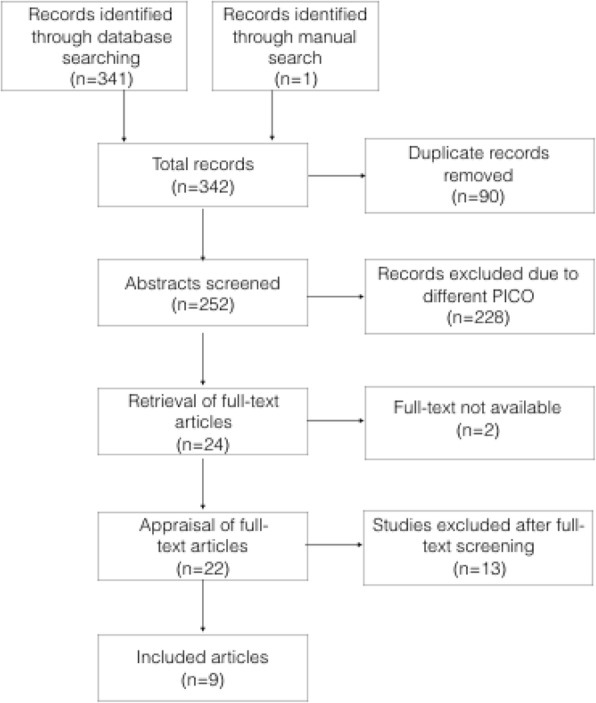
A systematic search of electronic medical literature databases was conducted. Manual search of the reference lists and search for unpublished articles were also done. All randomized controlled trials available from inception until February 19, 2018 were retrieved. The primary outcome of interest was relief of allergic symptoms, while the secondary outcome of interest was inducement of tolerance. Two independent authors did the search, screening, appraisal, and data abstraction. Data analysis and synthesis were done using RevMan 5.3 software. Subgroup analysis was done based on the probiotic strains and time periods in measuring the outcome. Exclusion sensitivity analysis was also done.
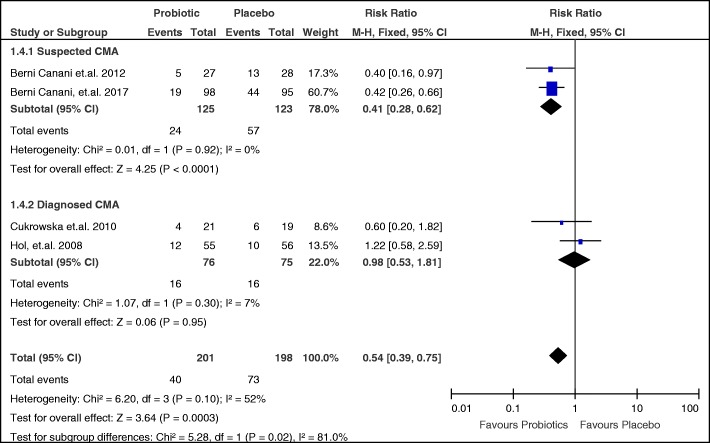
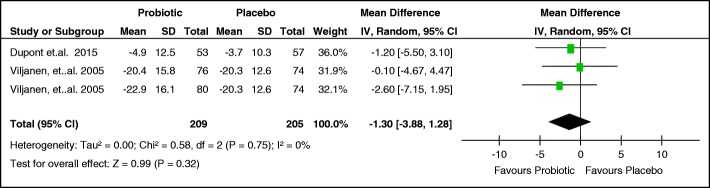
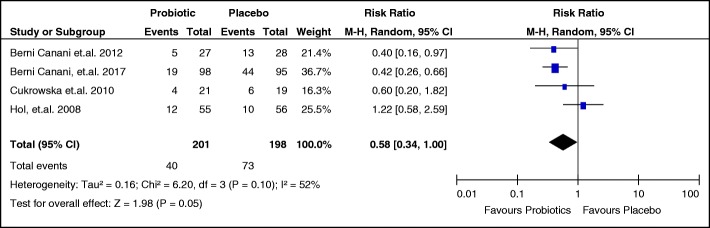
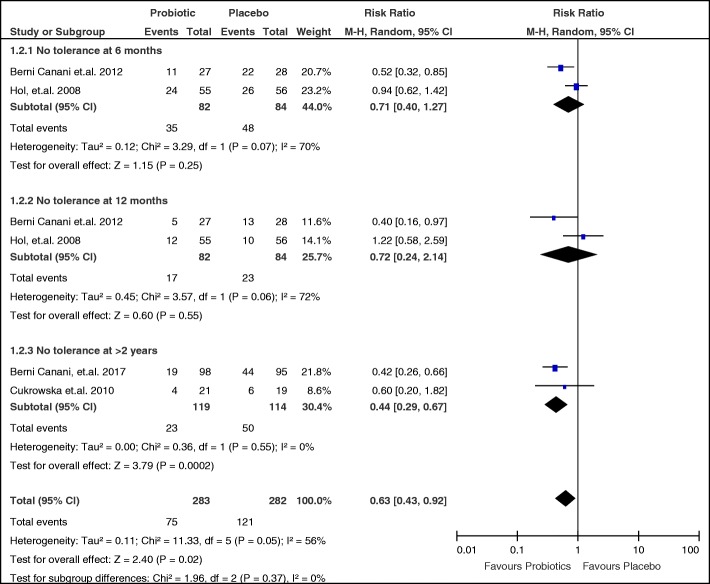
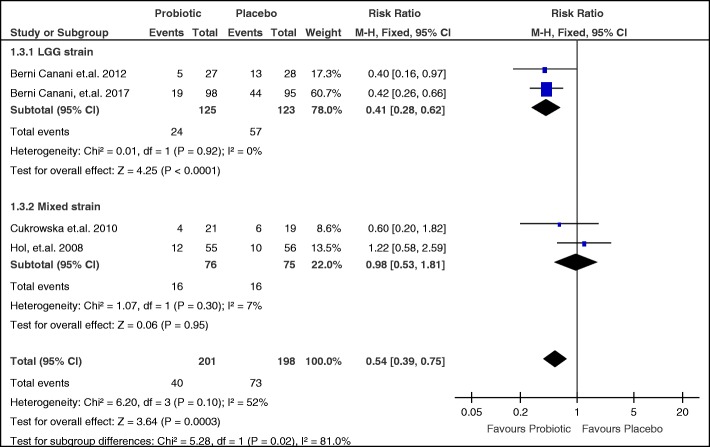
Nine trials involving 895 pediatric patients with cow's milk allergy (CMA) were included in the review. The primary outcome of interest, relief of symptoms, was measured using the scoring index for eczema. Pooled results from two studies showed larger reduction in the scoring index among patients given probiotics, but this effect was imprecise (MD -1.30, 95% CI -3.88, 1.28). For the secondary outcome of interest, pooled results from four studies showed benefit of probiotics in inducing tolerance, but again this result is imprecise with significant heterogeneity (RR 0.58, 95% CI 0.34, 1.00). Subgroup analysis per probiotic strain showed benefit of GG in inducing tolerance based on two studies involving infants with suspected cow's milk allergy (RR = 0.41, 95% CI 0.28 to 0.62). Another subgroup analysis showed a duration-dependent effect associated with probiotic usage, with inducement of tolerance noted after at least 2 years (RR = 0.44, 95% CI 0.29 to 0.67).
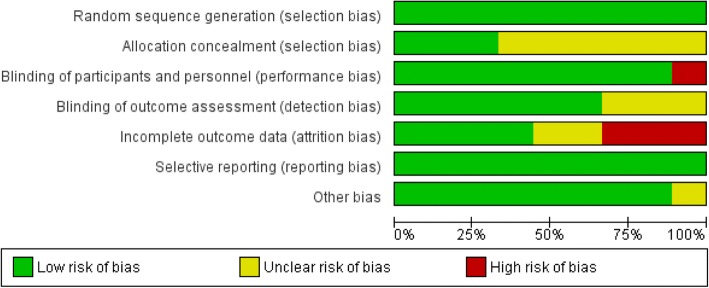
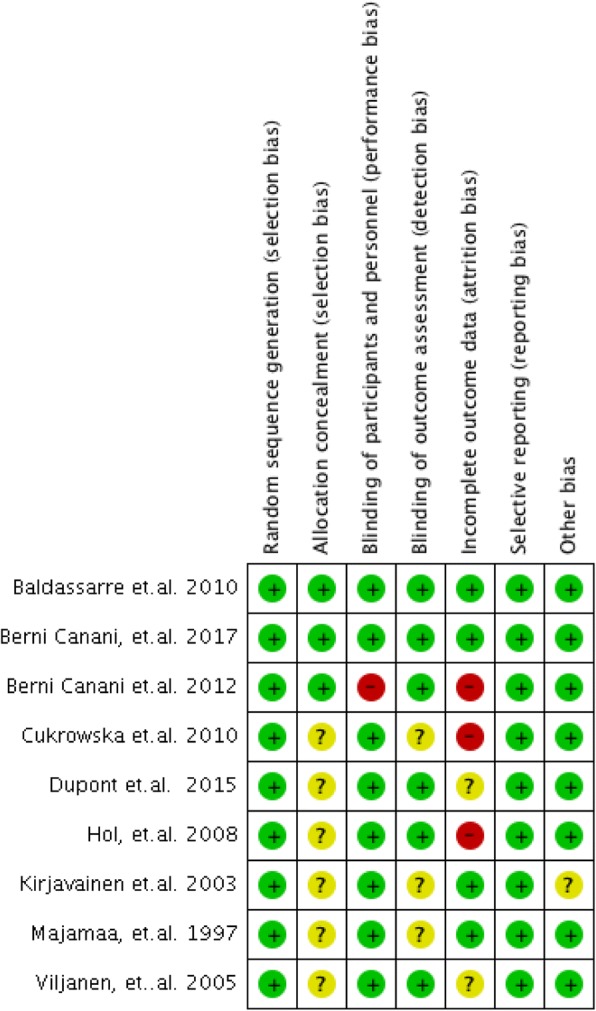
Analysis of available evidence shows moderate certainty that the use of probiotics can relieve symptoms of children with cow's milk allergy. The reduction in certainty is due to imprecise results. Moreover, there is low certainty that probiotics can induce tolerance among children with cow's milk allergy, due to problems of imprecision and attrition bias. In the subgroup analysis, GG administration likely results in inducing tolerance among infants with suspected cow's milk allergy. Only studies on CMA were analyzed since no studies were found on probiotics as treatment for other types of food allergy among children.
食物过敏的疾病负担在全球范围内不断增加。管理标准是避免接触过敏原和对症治疗。有人提出益生菌对食物过敏的治疗和预防有益。
确定给予益生菌治疗小儿食物过敏的有效性。
对电子医学文献数据库进行系统检索。还对手动检索参考文献列表和查找未发表文章进行了操作。检索了从开始到2018年2月19日的所有随机对照试验。感兴趣的主要结局是过敏症状的缓解,而感兴趣的次要结局是诱导耐受。由两名独立作者进行检索、筛选、评估和数据提取。使用RevMan 5.3软件进行数据分析和综合。根据益生菌菌株和测量结局的时间段进行亚组分析。还进行了排除敏感性分析。
该综述纳入了9项涉及895名牛奶过敏(CMA)小儿患者的试验。使用湿疹评分指数测量感兴趣的主要结局,即症状缓解。两项研究的汇总结果显示,给予益生菌的患者评分指数下降幅度更大,但这种效果不精确(MD -1.30,95%CI -3.88,1.28)。对于感兴趣的次要结局,四项研究的汇总结果显示益生菌在诱导耐受方面有好处,但同样,这个结果不精确且存在显著异质性(RR 0.58,95%CI 0.34,1.00)。根据益生菌菌株进行的亚组分析显示,基于两项涉及疑似牛奶过敏婴儿的研究,GG在诱导耐受方面有好处(RR = 0.41,95%CI 0.28至0.62)。另一项亚组分析显示,益生菌使用存在持续时间依赖性效应,至少2年后出现诱导耐受(RR = 0.44,95%CI 0.29至0.67)。
现有证据分析显示,使用益生菌可缓解牛奶过敏儿童的症状具有中等确定性。确定性降低是由于结果不精确。此外,由于不精确和损耗偏倚问题,益生菌能否诱导牛奶过敏儿童产生耐受的确定性较低。在亚组分析中,给予GG可能会使疑似牛奶过敏的婴儿产生耐受。由于未找到关于益生菌治疗儿童其他类型食物过敏的研究,因此仅分析了关于CMA的研究。