Lynch Elizabeth A, Mudge Alison, Knowles Sarah, Kitson Alison L, Hunter Sarah C, Harvey Gill
Adelaide Nursing School, Faculty of Health and Medical Sciences, The University of Adelaide, Adelaide, South Australia, 5000, Australia.
Internal Medicine and Aged Care, Royal Brisbane and Women's Hospital, Corner Butterfield Street and Bowen Bridge Road, Herston, QLD, 4019, Australia.
BMC Health Serv Res. 2018 Nov 14;18(1):857. doi: 10.1186/s12913-018-3671-z.
A multitude of theories, models and frameworks relating to implementing evidence-based practice in health care exist, which can be overwhelming for clinicians and clinical researchers new to the field of implementation science. Clinicians often bear responsibility for implementation, but may be unfamiliar with theoretical approaches designed to inform or understand implementation.
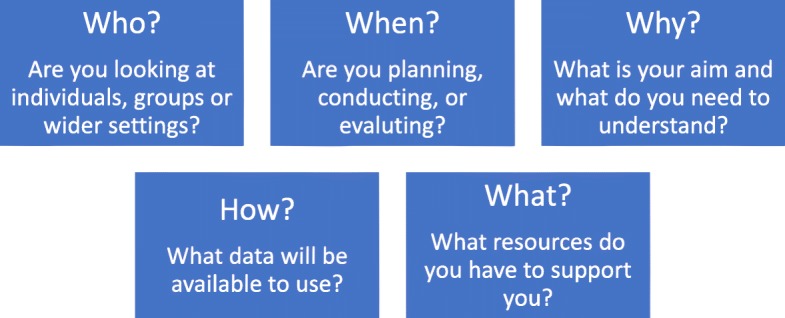
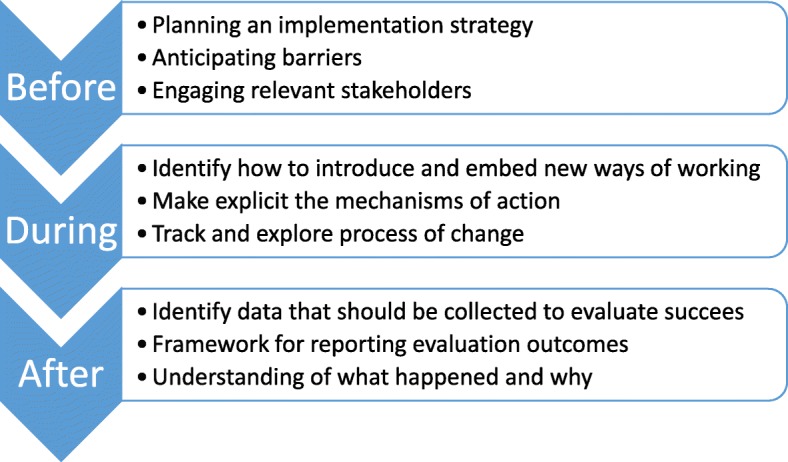
In this article, a multidisciplinary group of clinicians and health service researchers present a pragmatic guide to help clinicians and clinical researchers understand what implementation theories, models and frameworks are; how a theoretical approach to implementation might be used; and some prompts to consider when selecting a theoretical approach for an implementation project. Ten commonly used and highly cited theoretical approaches are presented, none of which have been utilised to their full potential in the literature to date. Specifically, theoretical approaches tend to be applied retrospectively to evaluate or interpret findings from a completed implementation project, rather than being used to plan and design theory-informed implementation strategies which would intuitively have a greater likelihood of success. We emphasise that there is no right or wrong way of selecting a theoretical approach, but encourage clinicians to carefully consider the project's purpose, scope and available data and resources to allow them to select an approach that is most likely to "value-add" to the implementation project.
By assisting clinicians and clinical researchers to become confident in selecting and applying theoretical approaches to implementation, we anticipate an increase in theory-informed implementation projects. This then will contribute to more nuanced advice on how to address evidence-practice gaps and ultimately to contribute to better health outcomes.
在医疗保健领域,存在大量与实施循证实践相关的理论、模型和框架,这对于刚接触实施科学领域的临床医生和临床研究人员来说可能会应接不暇。临床医生通常承担着实施的责任,但可能不熟悉旨在指导或理解实施过程的理论方法。
在本文中,一组由临床医生和卫生服务研究人员组成的多学科团队提供了一份实用指南,以帮助临床医生和临床研究人员理解什么是实施理论、模型和框架;如何运用理论方法进行实施;以及在为实施项目选择理论方法时需要考虑的一些要点。文中介绍了十种常用且被大量引用的理论方法,然而迄今为止,这些方法在文献中均未得到充分利用。具体而言,理论方法往往是在事后应用,用于评估或解释已完成的实施项目的结果,而不是用于规划和设计基于理论的实施策略,而直观地看,后者更有可能取得成功。我们强调,选择理论方法没有对错之分,但鼓励临床医生仔细考虑项目的目的、范围以及可用的数据和资源,以便他们选择最有可能为实施项目“增值”的方法。
通过帮助临床医生和临床研究人员有信心选择并应用理论方法来进行实施,我们预计基于理论的实施项目会有所增加。这进而将有助于就如何弥合证据与实践之间的差距提供更细致入微的建议,并最终有助于实现更好的健康结果。